


Bangladesh’s Cattle Farming Industry: Growth, Challenges and Future Potential
The cattle farming industry in Bangladesh has evolved from a traditional rural activity into one of the country’s most important agricultural sectors. Driven by rising meat consumption, rapid urbanisation, and the enormous economic impact of Eid-ul-Azha, the industry now supports millions of farmers, traders, transport workers, feed suppliers, and livestock businesses.
Although Bangladesh is still far from becoming a fully industrialised livestock economy, the country has made major progress in domestic cattle production over the last decade. Local farms now supply most of the nation’s beef demand, reducing dependence on imported cattle and creating a large rural economy around beef and dairy production.
Today, the industry sits at a turning point. Demand continues to rise, but farmers are struggling with high feed costs, unstable pricing, limited infrastructure, and market inefficiencies. At the same time, growing investment in commercial farming, digital livestock trading, and improved breeding systems suggests strong long-term potential.
The Importance of Cattle Farming in Bangladesh
Agriculture remains central to Bangladesh’s economy, and livestock plays a major role within it. According to recent academic and industry studies, more than one-third of rural households are involved in cattle rearing in some form. The livestock sector contributes billions of dollars to the national economy and supports employment across rural Bangladesh.
Cattle farming in Bangladesh mainly serves two purposes:
- Beef production
- Dairy production
However, beef cattle farming has grown especially fast because of increasing domestic meat consumption and the huge seasonal demand during Eid-ul-Azha.
The cattle market connected to Eid is one of the largest seasonal economic activities in the country. Millions of animals are traded during this period, creating business opportunities across transport, feed, veterinary services, and local markets.
Research published in 2026 noted that nearly half of Bangladesh’s annual cattle slaughter occurs around Eid-ul-Azha, highlighting how deeply the festival shapes the economics of the industry.
Rise of Domestic Cattle Production
In the past, Bangladesh relied heavily on cattle imports from neighbouring India, especially before Eid-ul-Azha. That situation has changed significantly.
Over the last decade, stricter border controls and government efforts to encourage local livestock farming pushed domestic farmers to increase production. As a result, Bangladesh now produces the majority of its sacrificial animals locally.
This shift has transformed cattle farming into a profitable seasonal business for many rural families. Farmers buy calves months before Eid, fatten them using concentrated feed, and sell them at higher prices during the festival season.
Districts such as Pabna, Sirajganj, Kushtia, Rajshahi, Rangpur, and parts of Dhaka division have become major cattle production hubs.
The growth of local farming has also encouraged:
- Expansion of dairy farms
- Growth in feed mills
- Increased veterinary demand
- Development of livestock transportation networks
- Growth of temporary cattle markets, known locally as “haats”
Eid-ul-Azha: The Industry’s Economic Engine
No discussion about Bangladesh’s cattle industry is complete without understanding Eid-ul-Azha.
Every year, thousands of temporary cattle markets are established across the country ahead of the festival. Dhaka alone hosts dozens of major markets, including Gabtoli, Meradia, and Jatrabari.
According to multiple reports, millions of cattle are prepared annually for the sacrificial market.
For many small farmers, Eid sales represent their largest yearly income source. Some families depend entirely on seasonal cattle fattening profits to support household expenses, education, or agricultural investments.
The industry also reflects changing consumer preferences. Buyers increasingly prefer locally raised, healthier cattle instead of imported or artificially fattened animals.
The Growth of Commercial Cattle Farming
While most cattle farms in Bangladesh remain small and family-run, commercial farming is expanding steadily.
Modern farms are increasingly using:
- Artificial insemination
- Improved cattle breeds
- Scientific feeding systems
- Digital livestock management
- Veterinary monitoring
- Online cattle marketplaces
Crossbred cattle such as Friesian and Sahiwal varieties are becoming more common because they grow faster and produce higher yields.
Research also shows that educated young entrepreneurs are entering the sector in larger numbers. Many see cattle farming as a profitable agribusiness rather than just a traditional rural occupation.
Social media and digital marketing are also reshaping the industry. Before Eid, many farms now promote cattle through Facebook pages, livestreams, and online marketplaces, allowing buyers to purchase animals remotely.
This digital shift became especially important after the pandemic, when online cattle sales increased significantly.
Major Challenges Facing the Industry
Despite its rapid growth, Bangladesh’s cattle industry faces several structural challenges.
High Feed Costs
Feed is the biggest expense for most cattle farms.
Farmers continue to struggle with rising prices for:
- Corn
- Soybean meal
- Straw
- Commercial feed
- Transportation
Recent reports suggest cattle production costs rose by around 10–15% because of higher feed and labour expenses.
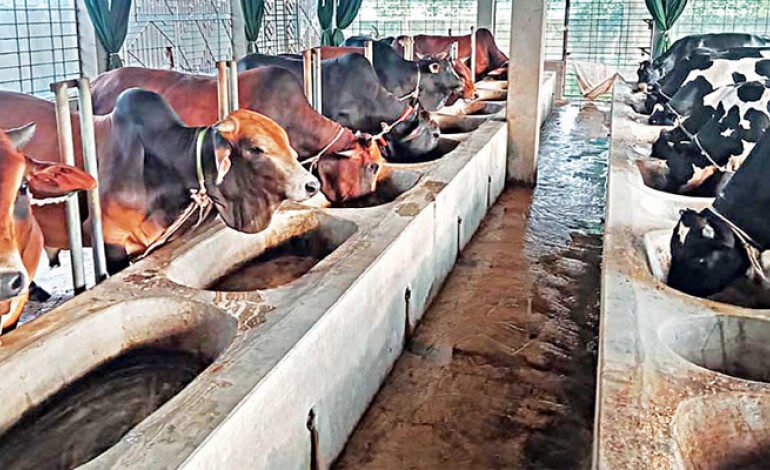
Since Bangladesh has limited grazing land due to its high population density, most farms rely on stall-feeding systems, which increase operational costs.
Price Instability
Another major problem is market volatility.
Some years see strong profits, while others result in losses due to oversupply or weak consumer demand. In recent Eid seasons, several reports showed farmers struggling to sell cattle despite large market supplies.
This creates uncertainty for small farmers who invest heavily months before the festival.
Weak Infrastructure
Bangladesh’s livestock infrastructure still remains underdeveloped compared to major global beef-producing nations.
Key limitations include:
- Limited cold storage systems
- Poor meat processing facilities
- Inadequate slaughterhouse standards
- Weak rural veterinary access
- Lack of export-quality certification systems
These weaknesses reduce efficiency and limit Bangladesh’s ability to enter larger international halal meat markets.
Disease and Farm Management Issues
Disease management remains another major concern.
Many rural farmers still lack proper veterinary support, vaccination services, and technical training. Poor farm hygiene and unregulated medicine use can also affect cattle health and meat quality.
Climate-related challenges such as floods and heat stress further increase risks for livestock farmers.
Relevance of Bangladesh’s Cattle Industry
Bangladesh’s cattle sector reflects broader global trends in livestock farming.
Across developing countries, rising urban populations and higher incomes are increasing demand for animal protein. Bangladesh is experiencing the same transition.
The industry also demonstrates how religious festivals can shape national economies. Similar patterns can be seen in countries like Pakistan and Indonesia, where Eid-ul-Azha drives seasonal livestock trade worth billions of dollars.
Globally, cattle industries are also facing rising production costs linked to:
- Feed inflation
- Transportation expenses
- Labour shortages
- Climate pressures
These issues are not unique to Bangladesh. International discussions among farmers and agricultural communities frequently point to feed and operating costs as key drivers of rising beef prices worldwide.
Future Outlook
The future of Bangladesh’s cattle farming industry remains promising despite current challenges.
Several factors support long-term growth:
- Rising domestic meat demand
- Expanding middle class
- Increasing urbanisation
- Growth of commercial farms
- Improved livestock genetics
- Government support for domestic production
The halal meat export market also presents significant opportunities if Bangladesh can improve quality standards and processing systems.
Experts believe the sector could become far more productive through:
- Better feed management
- Modern slaughterhouses
- Stronger veterinary systems
- Improved farmer training
- Cold-chain development
- Digital market expansion
If these improvements continue, Bangladesh’s cattle industry could evolve into a more organised agribusiness sector capable of competing regionally.
Looking Ahead
Bangladesh’s cattle farming industry has become a major pillar of the rural economy. What was once largely a small-scale traditional activity is now a fast-growing sector linked to food security, employment, and national commerce.
Eid-ul-Azha remains the industry’s biggest economic driver, but demand for beef and dairy products continues to rise throughout the year. At the same time, the sector faces real challenges, including feed costs, market instability, weak infrastructure, and limited modernisation.
Even so, the long-term outlook remains positive. With better investment, technology, and policy support, Bangladesh has the potential to build a stronger and more sustainable cattle farming industry capable of serving both domestic and international markets.