



From Banker to Everest: Nurunnahar Nimni’s Historic Climb to the Top of the World
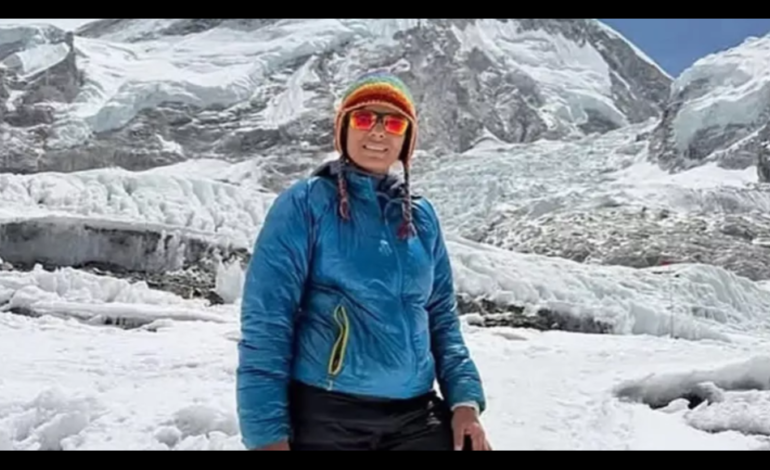

From Banker to Everest: Nurunnahar Nimni’s Historic Climb to the Top
Bangladesh’s mountaineering community has celebrated a landmark achievement after Bangladeshi climber Nurunnahar Nimni successfully scaled Mount Everest, becoming the third Bangladeshi woman to conquer the world’s highest peak and ending a 14-year gap for Bangladeshi female Everest summiteers.
Her successful ascent is being hailed as a major milestone for Bangladesh’s growing but still relatively small mountaineering movement, inspiring a new generation of adventurers, women athletes, and outdoor enthusiasts.
Reaching the summit of Mount Everest standing at 8,848.86 metres above sea level demands not only technical preparation and physical endurance but also extraordinary mental resilience against some of the harshest conditions on Earth.
For Bangladesh, a country without towering mountain ranges, Nimni’s accomplishment carries significance far beyond personal triumph.
A Historic Everest Achievement for Bangladesh
Nurunnahar Nimni reached the summit of Mount Everest on May 27 at approximately 5:24am Nepal time, successfully raising the red-and-green national flag of Bangladesh atop the world’s highest mountain. The achievement was confirmed by expedition officials from 8K Expeditions.
Her summit carries special historical importance because she became:
- The third Bangladeshi woman to summit Everest
- The first Bangladeshi woman to do so in 14 years
- Bangladesh’s only Everest summiteer of 2026 so far
Before Nimni, only two Bangladeshi women had achieved the feat:
- Nishat Majumdar in May 2012
- Wasfia Nazreen later the same month in 2012
For more than a decade afterward, no Bangladeshi woman returned successfully from Everest’s summit.
Nimni has now reopened that chapter.
From Rangpur to the Roof of the World
Nurunnahar Nimni’s story reflects determination, education, and disciplined preparation.
Raised in Rangpur, Nimni studied geology at the University of Dhaka, a background that naturally connects with mountains, rock formations, and Earth sciences. Professionally, she works as a Principal Officer in the General Banking Department of Pubali Bank PLC, which supported her Everest expedition.
Unlike athletes who begin mountaineering in childhood, Nimni’s climbing ambitions developed later.
According to reports, her inspiration intensified after visiting Australia Camp in Nepal in 2019. She later completed the Everest Base Camp trek in 2020 — an experience that strengthened her desire to pursue mountaineering more seriously.
In 2022, she received formal training at the Himalayan Mountaineering Institute in Darjeeling, India, one of South Asia’s most respected mountaineering training centers. The same year, she joined the Bangla Mountaineering and Trekking Club.
That progression, curiosity, trekking, technical training, club involvement, and high-altitude climbing illustrates how mountaineering careers are built through long-term preparation rather than spontaneous ambition.
The Grueling Route to Everest’s Summit
Climbing Everest is rarely a single dramatic moment. It is an extended process involving acclimatization, weather calculations, logistical coordination, and carefully timed summit pushes.
Nimni’s final climb followed a demanding schedule.
She departed Dhaka for Nepal on April 11 and gradually traveled toward Everest Base Camp through Kathmandu and Lukla while adapting to the severe altitude conditions.
Her final summit strategy involved multiple high-altitude camps.
According to expedition details:
- Camp-2: 6,400 metres
- Camp-3: 7,200 metres
- Camp-4: high-altitude launching point before summit push
On May 25, Nimni began her decisive climb from Camp-2 to Camp-3.
The following day she continued to Camp-4, reaching the camp during the afternoon before beginning the most dangerous section of the ascent — the overnight summit push toward Everest’s peak.
Like many Everest climbers, she also faced weather disruptions.
Reports indicate that an earlier attempt toward Camp-4 had been interrupted by poor weather conditions, forcing a temporary retreat before conditions improved.
This highlights one of Everest’s central realities: even the strongest climbers remain vulnerable to the mountain’s unpredictable environment.
Why Mount Everest Remains One of the World’s Toughest Challenges
Climbing Everest is not merely a test of physical strength.
Mountaineers face multiple extreme risks including:
- Oxygen deprivation
- Freezing temperatures
- Avalanche danger
- High-altitude sickness
- Sudden weather changes
- Exhaustion and dehydration
The so-called “death zone” above 8,000 metres presents severe physiological dangers because the atmosphere contains dramatically lower oxygen levels.
Every movement becomes harder.
Decision-making slows.
Simple actions consume enormous energy.
Successful climbers must combine:
- Physical conditioning
- Technical climbing knowledge
- Mental resilience
- Careful risk management
Nimni’s achievement therefore reflects months — and likely years — of disciplined preparation.
Bangladesh’s Growing Mountaineering Culture
Although Bangladesh is not traditionally associated with mountaineering, interest in high-altitude climbing has expanded steadily over recent years.
Bangladeshi climbers have increasingly participated in Himalayan expeditions involving:
- Everest
- Ama Dablam
- Lhotse
- Annapurna
- Other technical peaks
Recent achievements by Bangladeshi mountaineers have drawn growing public attention.
For example, physician-mountaineer Babar Ali became one of Bangladesh’s prominent recent Himalayan climbers through multiple major expeditions.
Organizations such as the Bangla Mountaineering and Trekking Club have also played an important role in:
- Training climbers
- Organizing expeditions
- Building technical knowledge
- Encouraging outdoor culture
Nimni’s success adds momentum to this emerging sporting landscape.
Women and Mountaineering in South Asia
Nimni’s achievement also resonates within broader conversations about women in adventure sports.
Mountaineering has historically been male-dominated worldwide.
Women climbers frequently confront additional challenges involving:
- Funding limitations
- Social expectations
- Safety concerns
- Limited representation
Across South Asia, however, female mountaineers have increasingly challenged these barriers.
Climbers from countries including Nepal, India, Pakistan, and Bangladesh have expanded female visibility in high-altitude expeditions.
Bangladesh’s own history of female Everest summiteers remains relatively short but symbolically powerful.
Nishat Majumdar’s breakthrough ascent in 2012 established an important precedent. Wasfia Nazreen expanded that legacy days later. Now, after a 14-year interval, Nurunnahar Nimni has renewed Bangladesh’s presence on Everest’s summit among women climbers.
Sponsorship, Support and the Economics of Everest
Everest expeditions are extremely expensive.
Costs typically include:
- Expedition permits
- Sherpa support
- Equipment
- Oxygen systems
- Training
- Insurance
- International travel
- High-altitude logistics
Corporate and institutional sponsorship often become essential.
In Nimni’s case, Pubali Bank PLC supported the expedition.
Funding remains one of the largest barriers preventing wider participation in high-altitude mountaineering among athletes from developing countries.
Greater sponsorship support could potentially allow more Bangladeshi climbers particularly women to compete internationally.
Inspiration Beyond Sports
Nimni’s ascent is likely to resonate beyond the mountaineering community itself.
Her background as:
- A banker
- A geology graduate
- A trained climber from Bangladesh
offers an example of how ambitious sporting achievements can emerge from unconventional professional paths.
For young Bangladeshis interested in outdoor sports, exploration, science, or endurance challenges, her story broadens the definition of what is possible.
Looking Ahead
Nurunnahar Nimni’s successful Everest summit represents much more than a mountaineering accomplishment.
It is:
- A landmark for Bangladeshi sports
- A major achievement for women in adventure athletics
- A milestone in Bangladesh’s mountaineering history
- A symbol of discipline, preparation, and perseverance
After 14 years without a Bangladeshi female Everest summiteer, Nimni has carried Bangladesh’s flag back to the top of the world.
Her climb from Rangpur to Everest’s summit demonstrates that extraordinary journeys can begin far from the mountains themselves powered by preparation, ambition, and the willingness to keep climbing toward seemingly impossible heights.


