




How Online Cattle Markets Are Transforming Bangladesh’s Eid Economy in 2026
Bangladesh’s traditional Eid-ul-Azha cattle trade is undergoing a significant digital transformation in 2026, as thousands of consumers increasingly choose smartphones over crowded cattle markets to purchase sacrificial animals.
What was once viewed as a risky and unreliable way to buy Qurbani cattle has evolved into one of the fastest-growing segments of Bangladesh’s seasonal digital economy. From Facebook livestreams and mobile banking payments to home delivery and complete Qurbani service packages, online cattle markets are reshaping how Bangladesh prepare for Eid-ul-Azha.
The shift is being driven largely by changing consumer behavior. Convenience, transparency, time-saving services and digital trust are becoming powerful factors influencing purchasing decisions, particularly among urban families and tech-savvy buyers.
As internet penetration, fintech services and logistics systems expand nationwide, online cattle trading is becoming a permanent feature of Bangladesh’s Eid economy.
Why Consumers Are Moving Away From Traditional Cattle Markets
For decades, buying sacrificial cattle meant physically visiting crowded makeshift cattle markets, often involving long travel times, heavy bargaining, intense heat, traffic congestion and logistical hassles.
For many consumers, especially city residents, the process could be exhausting.
But in 2026, growing numbers of buyers are choosing a different path.
Instead of spending hours navigating packed cattle markets, consumers can now browse dozens of cattle listings online, compare prices, inspect animal details through videos, and complete purchases from home.
Busy work schedules, worsening urban traffic and the desire for hassle-free experiences are accelerating this behavioral shift.
Industry insiders say convenience has become one of the strongest drivers behind online cattle buying.
Urban customers increasingly prefer avoiding crowded markets and using digital platforms that allow them to make informed decisions without leaving their homes.
Facebook, Live Videos and Digital Marketing Are Redefining Cattle Sales
Social media has emerged as the new cattle marketplace.
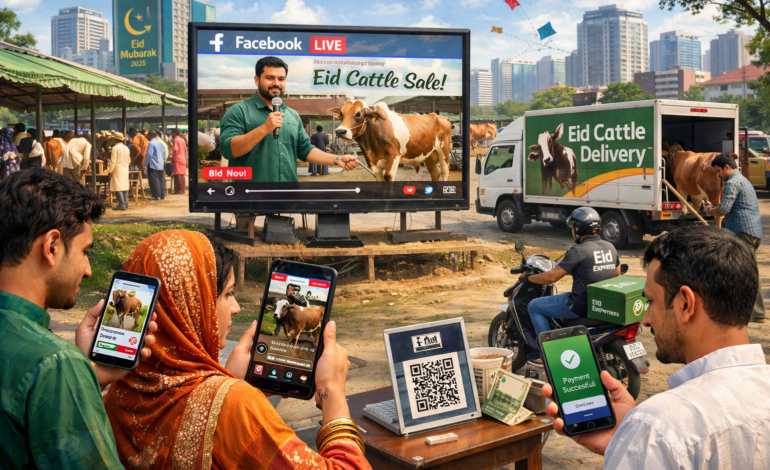
In Bangladesh, Facebook pages, livestreams and digital advertising campaigns are playing a central role in promoting sacrificial cattle ahead of Eid-ul-Azha.
Large cattle farms and small agro-entrepreneurs alike are investing heavily in digital marketing strategies.
Professional photography, high-resolution videos, drone footage and live cattle demonstrations are now standard marketing tools used to attract customers.
Instead of relying solely on word-of-mouth marketing or physical visibility inside traditional cattle markets, farms are building online brand identities.
Consumers can inspect cattle through:
- Facebook Live sessions
- Video calls with farm owners
- Detailed photo galleries
- Weight and pricing disclosures
- Feeding and health information
This increased transparency is helping build consumer confidence.
Many buyers who once hesitated to purchase cattle online now feel more comfortable because they can visually inspect animals and communicate directly with sellers.
For cattle businesses, digital marketing is also expanding market reach beyond local communities, allowing farms to attract customers from multiple districts and cities.
Mobile Banking and Fintech Are Fueling Online Cattle Commerce
The rapid growth of online cattle trading would be difficult without Bangladesh’s expanding fintech ecosystem.
Digital payment systems are making online cattle transactions faster, easier and more accessible.
Consumers now commonly use:
- Mobile banking platforms
- Online payment gateways
- Digital fund transfers
- Advance booking systems
Instead of traveling to farms or markets to make payments, customers can reserve cattle remotely.
This convenience has significantly improved transaction efficiency.
The widespread adoption of mobile financial services in Bangladesh has lowered entry barriers for digital cattle trading, particularly among middle-income consumers.
Online cattle businesses say digital payments have streamlined operations, reduced administrative complications and accelerated customer decision-making.
Some farms still maintain cash-on-delivery options for customers concerned about scams or payment risks, but confidence in digital transactions continues to improve.
The integration of fintech with agriculture and seasonal commerce is creating a new model of digitally enabled Eid trading.
Home Delivery Is Changing the Qurbani Experience
One of the biggest reasons behind the success of online cattle markets is logistics innovation.
Many farms now provide specialized delivery systems that transport cattle directly to customers’ homes.
Free home delivery services within Dhaka and surrounding urban areas are becoming common among major cattle businesses.
For consumers, this eliminates several traditional challenges:
- Transporting animals from markets
- Managing parking and vehicle access
- Negotiating third-party transport costs
- Dealing with traffic congestion
Some businesses have gone even further by introducing “end-to-end Qurbani solutions.”
These services may include:
- Cattle selection
- Home delivery
- Slaughtering arrangements
- Meat cutting and processing
- Packaged meat delivery
This service-oriented model reflects broader shifts in consumer expectations.
Modern buyers increasingly prioritize convenience, reliability and time efficiency.
For busy urban households, complete Qurbani service packages can significantly reduce stress associated with Eid preparations.
How Consumer Behavior Is Reshaping Bangladesh’s Eid Economy
The growth of online cattle markets highlights broader changes taking place within Bangladesh’s consumer landscape.
Consumers are becoming increasingly digital, service-focused and convenience-driven.
Traditional purchasing habits are evolving as people adapt to digital commerce across multiple sectors.
The cattle market is now experiencing the same transformation seen in:
- Food delivery platforms
- E-commerce retail
- Online grocery shopping
- Digital ticketing services
Consumers no longer judge purchases based solely on product quality or price.
Service quality, transparency, customer support and digital experience now influence buying decisions.
Online cattle farms are responding by investing in customer care teams, faster communication systems and professional branding strategies.
Trust-building has become a business priority.
Detailed information regarding cattle age, health status, weight and feeding practices is increasingly being shared online to reassure buyers.
Several farms are also emphasizing natural feeding systems, veterinary supervision and hygienic farming practices to appeal to health-conscious consumers.
Online Cattle Markets Are Opening New Opportunities for Businesses
The digital cattle boom is creating new economic opportunities for farms, entrepreneurs and service providers.
Small cattle farms that once depended mainly on neighborhood sales can now compete in broader digital marketplaces.
Some emerging businesses have expanded operations rapidly because of growing online demand.
Digital platforms are helping businesses reach:
- Urban buyers
- Corporate clients
- Overseas Bangladeshis
- High-convenience consumers
The online cattle ecosystem is also creating demand for supporting industries including logistics providers, digital marketers, payment processors, content creators and delivery operators.
In many ways, online cattle trading is becoming part of Bangladesh’s wider digital commerce economy.
Expatriate Bangladeshis Are Driving Cross-Border Eid Purchases
Another major development in 2026 is the growing participation of Bangladeshi expatriates.
Many overseas Bangladeshis living in the Middle East, Europe and North America are now purchasing Qurbani cattle online for relatives back home.
Digital platforms allow expatriate buyers to inspect cattle remotely, communicate with farms and complete payments without being physically present in Bangladesh.
This trend demonstrates how technology is connecting diaspora communities with local seasonal commerce.
Cross-border digital purchasing is expanding the market potential of online cattle businesses and introducing new revenue opportunities.
Challenges Still Remain for Online Cattle Trading
Despite strong growth, the sector still faces several important challenges.
Trust remains a major issue.
Some consumers continue to worry about:
- Online scams
- Misleading cattle descriptions
- Delivery delays
- Payment risks
Timely delivery can also become difficult during peak Eid periods due to severe traffic congestion and operational pressure.
Businesses must maintain reliable logistics systems while managing high order volumes.
Industry stakeholders believe stronger consumer protection practices, clearer verification systems and improved digital accountability could help strengthen confidence further.
Maintaining professionalism will be essential for the sector’s long-term sustainability.
The Future of Bangladesh’s Digital Eid Economy
The rapid rise of online cattle markets reflects a deeper transformation taking place inside Bangladesh’s economy.
Technology is modernizing one of the country’s most traditional seasonal business sectors.
What began as a niche alternative — accelerated initially by changing consumer habits and digital adoption is evolving into a mainstream commercial model.
As internet accessibility expands, fintech infrastructure improves and logistics networks become stronger, online cattle trading is likely to continue growing in the coming years.
For consumers, the appeal is clear: convenience, transparency and reduced hassle.
For businesses, digital platforms offer wider reach, operational efficiency and scalable growth opportunities.
Eid-ul-Azha 2026 may ultimately be remembered as another milestone in Bangladesh’s digital commerce journey, a year when online cattle markets firmly established themselves as a central part of the country’s evolving Eid economy.