

Past 100 Days of Tarique Rahman: What Has Bangladesh’s New Government Actually Done?
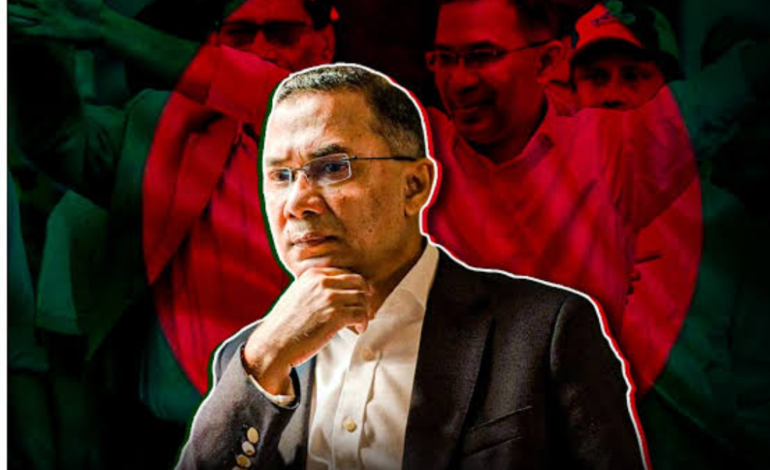
On February 17, 2026, BNP Chairman Tarique Rahman was sworn in as Prime Minister of Bangladesh, marking a fresh political chapter after nearly 18 months of uncertainty under the interim administration led by Muhammad Yunus. One hundred days later, on May 27, Bangladesh’s most closely watched new government reached its first major milestone and the country is still taking stock of what has actually changed.
Just a few months ago, Rahman was living in exile in southwest London. The 2024 ousting of Bangladesh’s then-Prime Minister Sheikh Hasina propelled the 57-year-old scion from opposition agitator to national leader, a destiny he fulfilled in February by winning an electoral landslide after 17 years away from his homeland. His return was shadowed by personal grief: his mother Khaleda Zia, Bangladesh’s first female Prime Minister, passed away just five days after his return to Dhaka.
He stepped into office carrying the weight of a nation’s expectations, a fragile economy, and a geopolitical neighbourhood watching Dhaka very carefully. So what has the first 100 days actually delivered?
The Mandate and the Moment
The BNP secured a decisive two-thirds majority in the February 12, 2026 elections, winning 212 of 299 parliamentary seats, ending eighteen months of interim governance and formally closing the post-Hasina transition.
Tarique Rahman’s inauguration signals a clear end to a volatile period in Bangladesh’s 55-year history. But the BNP administration faces significant challenges in security, the economy, and foreign policy. The government inherited, by every honest measure, a deeply difficult situation. It took office with high inflation, GDP growth plunging to 3.5 percent in FY2025, declining public and private investment, and a banking sector with non-performing loans of Tk 6.5 trillion, pointing to a deeply distressed financial system.
The 100-days milestone is therefore not a celebration. It is a barometer. And the picture it reveals is mixed.
What the Government Says It Has Done
The BNP-led government has launched more than 200 initiatives and projects in its first 100 days, with the Prime Minister’s Press Wing releasing a 31-page e-book on May 27 highlighting activities across various ministries.
In the first 100 days, speed of policymaking, indications of stability in economic management, discipline in administrative activities, and positive trends in investment and employment recovery have become evident, with the government claiming this is the first time a Bangladeshi administration has begun implementing election promises immediately after assuming office.
One of the more concrete economic signals came from the central bank. As of May 20, Bangladesh’s foreign exchange reserves had increased to US$34.38 billion, which is a meaningful recovery from the crisis lows of recent years, and a number that matters enormously for import capacity, investor confidence, and currency stability.
Some of Prime Minister Rahman’s personal decisions, including limiting state protocols, reducing government expenditure, instructions to quickly resolve field-level problems, and direct involvement with ordinary citizens have given a different dimension to the government’s political messaging. For a country exhausted by years of elite impunity and performative governance, these signals, however, have been noticed.
The Economy: Cautious Progress, Major Challenges Ahead
When Tarique Rahman addressed the nation in his first days in office, prices were his most immediate concern. With annual inflation at 8.58 percent in January 2026 and food prices straining household budgets, Tarique Rahman pledged to dismantle market syndicates that exploit consumers and strengthen mechanisms to protect both buyers and sellers.
He also outlined plans to overhaul and expand the national railway network and improve coordination among the rail, road, waterways and bridge ministries to create an integrated transport system.
The government’s survival hinges on immediate systemic reforms and economic diversification. Experts argue that preventing a financial collapse requires granting the central bank full independence, enforcing stricter governance of bank directors, and stabilising the law-and-order situation to restore public and investor confidence.
The bigger structural pressure is looming on the horizon. Bangladesh is set to graduate from Least Developed Country status in November 2026, which entails the gradual withdrawal of trade preferences currently covering approximately 70 percent of global exports. Without adequate preparation, this transition could erode export competitiveness and expose structural weaknesses. The government’s Trade and Investment Conference scheduled for June 13 in Dhaka is partly a response to this deadline — a public signal to global investors that Bangladesh is open and preparing for a post-LDC era.
Law and Order: The Most Urgent Unfinished Business
If there is one area where Bangladeshis across the political spectrum agree that progress has been insufficient, it is law and order.
The 18-month interim period leading to the February 2026 elections saw a worrying increase in mob violence and the controversial release of many Islamist extremists, creating a precarious security landscape. The vacuum in law enforcement resulted in widespread public fear, the rise of neighbourhood vigilante groups, and the frequent need for military intervention to maintain basic social order.
Rahman acknowledged this directly. He stated that improving law and order and enforcing strict anti-corruption measures would be the administration’s foremost priority, saying: “The rule of law will be the final word in governing the state not party influence, political power, or coercion.”
Strong words. The test will be whether those words produce institutional change reform of the police and judiciary, accountability for mob violence, and a consistent legal standard that applies regardless of political affiliation. Statements and e-books do not restore public safety. Sustained enforcement does.
Foreign Policy: Balancing China, India and the West
Perhaps the most consequential arena of Tarique Rahman’s early tenure has been foreign policy and here, the government has moved with notable deliberateness.
Tarique Rahman stated at a post-election press conference that Bangladesh’s foreign policy would be guided by “the greater interests of Bangladesh and its people,” with relations with China, India and Pakistan to be carefully balanced.
The China relationship has moved quickly. China’s Ambassador to Bangladesh attended a BNP-hosted dinner in May 2026, stating that Bangladesh-China relations have reached new heights and that Beijing will continue full cooperation in political stability, economic development, and public welfare. High-level contacts between the two countries have increased since the new government took office.
The India relationship is more complicated. This political transition fuelled an expansion of anti-India sentiment, particularly among younger Bangladeshis who reject any perceived “big brother” framing from New Delhi. India, China, the United States, and Pakistan have each signalled a willingness to engage, a rare convergence of goodwill that gives Bangladesh a genuine diplomatic opening. Whether Dhaka has the strategic clarity to capitalise on that opening remains the central foreign policy question of this government’s early months.
Fifty-four rivers cross the India-Bangladesh border, the Ganges Water Treaty expires in December 2026, and the unresolved Teesta agreement continues to irritate public opinion in Bangladesh. Water disputes are technical on paper but deeply political in practice and if mishandled, they could overshadow trade and security cooperation.
The Honest Verdict
BNP formed the government on February 17 amid political deadlock, a fragile economy, weak law and order and deep social divisions. One hundred days is not enough time to reverse the accumulated damage of years. And no serious observer expected it to be.
What these first 100 days have demonstrated is that the Tarique Rahman government understands the scale of the task, communicates with its citizens, and has made a credible start in some areas — particularly economic signalling, foreign policy repositioning, and administrative discipline.
What it has not yet demonstrated is a transformative grip on the structural problems that will define whether this government succeeds or fails: the banking crisis, inflation, export diversification, law enforcement, and the imminent loss of LDC trade advantages.
Rahman vowed to channel his grief over his mother’s passing into unifying his country of 175 million, while getting South Asia’s second biggest economy buzzing again. That is a large and honourable ambition. The next 100 days will tell us far more than the first about whether it is achievable.
Bangladesh has given Tarique Rahman its trust. The question now is what he does with it.