



Rabindranath Tagore: The Timeless Voice of Bengal and Humanity
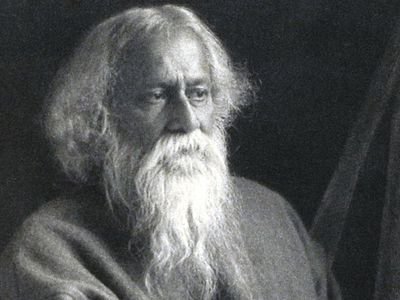

Rabindranath Tagore: The Timeless Voice of Bengal and Humanity
Every year on the 25th day of Boishakh, Bengalis across the world celebrate the birth anniversary of Rabindranath Tagore, one of the greatest literary and cultural figures in history. More than a poet, Tagore was a philosopher, novelist, composer, educator, painter, and humanist whose influence transcended borders, languages, and generations.
For Bangladesh, Tagore holds a uniquely emotional and cultural significance. His song “Amar Shonar Bangla” became the national anthem of Bangladesh, forever linking his legacy to the country’s identity and spirit.
On his birth anniversary, people across Bangladesh and beyond continue to revisit his works not merely as literature, but as reflections of humanity, freedom, love, and social consciousness.
The Early Life of Rabindranath Tagore
Rabindranath Tagore was born on May 7, 1861, in Kolkata, then part of British India, into the influential Tagore family of Jorasanko. The family was deeply involved in literature, music, philosophy, and social reform, shaping Tagore’s intellectual environment from an early age.
Unlike traditional students of his era, Tagore disliked rigid classroom education. Much of his learning came from home tutoring, nature, travel, and personal observation. These experiences later influenced his educational philosophy and artistic worldview.
He began writing poetry at a remarkably young age, publishing his first substantial works as a teenager.
A Literary Genius Beyond Borders
Tagore’s literary output was extraordinary. Over his lifetime, he wrote:
- More than 2,000 songs
- Hundreds of poems
- Novels and short stories
- Essays and plays
- Educational and philosophical works
His writing explored themes such as:
- Human emotion
- Nationalism and identity
- Nature and spirituality
- Social inequality
- Freedom and individuality
Among his most famous works is Gitanjali, a collection of poems that earned him the Nobel Prize in Literature in 1913.
The First Asian Nobel Laureate
In 1913, Rabindranath Tagore became the first non-European and the first Asian to win the Nobel Prize in Literature.
The Nobel Committee praised the spiritual depth and lyrical beauty of Gitanjali, which introduced Bengali literature to a global audience. His self-translated English versions of the poems captivated readers in Europe and America.
This achievement was historic not only for Bengal or India, but for the entire Asian literary world. At a time when colonial powers dominated global cultural narratives, Tagore’s Nobel Prize demonstrated that Eastern literature could command international respect.
Tagore and Bangladesh: A Deep Connection
Rabindranath Tagore’s connection with Bangladesh is profound and enduring.
His song “Amar Shonar Bangla” was adopted as the national anthem of Bangladesh after the Liberation War in 1971. The song reflects deep affection for Bengal’s natural beauty, culture, and people.
Even decades later, the anthem remains a powerful symbol of patriotism and emotional identity for Bangladeshis.
Tagore also spent considerable time in what is now Bangladesh, particularly at the family estate in Shilaidaha, Kushtia. During his stays there, he wrote many poems, songs, and letters inspired by rural Bengal.
The landscapes, rivers, and village life of Bengal deeply shaped his literary imagination.
Today, places associated with Tagore in Bangladesh continue to attract visitors, researchers, and admirers from around the world.
The Creator of Rabindra Sangeet
Tagore revolutionized Bengali music through what is now known as Rabindra Sangeet.
His songs combined:
- Classical Indian musical traditions
- Folk influences
- Spiritual themes
- Western musical elements
These songs remain deeply woven into Bengali culture. They are sung at festivals, national ceremonies, cultural events, and personal moments of joy and grief.
From love and devotion to patriotism and philosophy, Rabindra Sangeet captures the emotional spectrum of human life.
Even in the modern digital age, Tagore’s music continues to resonate with younger generations.
A Visionary Educator
Tagore was not only a literary icon but also an educational reformer.
In 1921, he founded Visva-Bharati University in Santiniketan with the vision of creating an institution that blended Eastern and Western learning traditions.
He believed education should:
- Encourage creativity
- Develop critical thinking
- Maintain harmony with nature
- Go beyond memorization and rigid discipline
His educational philosophy was far ahead of its time and continues to influence modern approaches to learning.
A Critic of Narrow Nationalism
Although Tagore loved his homeland deeply, he was also critical of aggressive nationalism and division.
He believed humanity should rise above:
- Religious intolerance
- Colonial oppression
- Blind political extremism
His essays and speeches often emphasized universal human values and cultural understanding.
Tagore’s perspective remains strikingly relevant in today’s polarized world, where identity politics and division continue to shape global discourse.
Friendship with Global Thinkers
Rabindranath Tagore interacted with many influential global intellectuals, including:
- Albert Einstein
- Mahatma Gandhi
- W.B. Yeats
His conversations with Einstein on science, philosophy, and truth remain historically significant.
These interactions reflected Tagore’s global stature not just as a writer, but as a thinker engaged with the intellectual currents of his time.
Tagore’s Influence on Bengali Identity
Few figures have shaped Bengali identity as profoundly as Rabindranath Tagore.
His works continue to influence:
- Literature
- Music
- Theatre
- Education
- National consciousness
For Bengalis, Tagore is more than a historical figure. He is a cultural presence woven into everyday life.
His poetry is recited in schools. His songs are sung during celebrations and commemorations. His philosophy continues to inspire artists and intellectuals.
Why Tagore Still Matters Today
More than 160 years after his birth, Tagore’s relevance remains extraordinary.
In an age dominated by rapid technology, political division, and cultural fragmentation, his ideas about humanity, creativity, and empathy feel increasingly important.
His writings encourage readers to:
- Appreciate beauty and nature
- Think independently
- Value compassion and dignity
- Embrace cultural openness
Tagore’s works are timeless because they speak to universal human experiences.
Celebrating Tagore in Bangladesh
Across Bangladesh, Tagore’s birth anniversary is observed through:
- Cultural programs
- Musical performances
- Poetry recitations
- Academic discussions
- Television specials
Educational institutions and cultural organizations organize events celebrating his contributions to Bengali heritage.
Social media has also played a role in introducing Tagore to younger audiences, with digital performances and online discussions keeping his legacy alive.
In a Nutshell
Rabindranath Tagore was not merely a poet or songwriter, he was one of humanity’s great creative minds.
His influence stretches across literature, music, philosophy, education, and national identity. For Bangladesh especially, his legacy is inseparable from the country’s cultural soul.
On his birth anniversary, remembering Tagore is not only about honoring the past. It is also about reconnecting with ideas that continue to inspire humanity: compassion, creativity, freedom, and the beauty of shared culture.
More than a century after winning the Nobel Prize, Rabindranath Tagore remains timeless, a voice of Bengal that belongs to the world.