




Saif-ul-Azam: The Bangladeshi-Origin Fighter Pilot Who Destroyed Israeli Warplanes and Made History
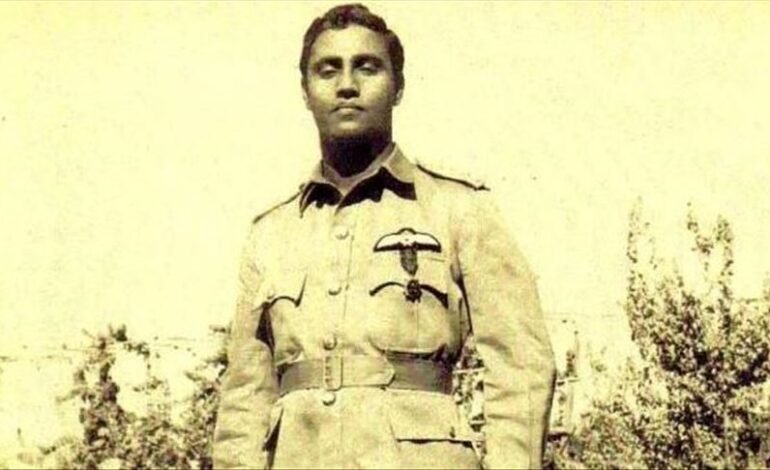

Saif-ul-Azam: The Bangladeshi-Origin Fighter Pilot Who Destroyed Israeli Warplanes and Made History
The story of Saif-ul-Azam is a tale of aerial combat with a rare chapter in global military history. A Bangladeshi-origin fighter pilot who flew for four nations and proved his skill across different battlefields, Azam carved out a legacy that remains unmatched.
Known for his remarkable role in the Six-Day War, he is widely remembered as one of the few pilots to successfully shoot down Israeli warplanes during one of the most intense conflicts in the Middle East.
A Unique Legacy in Military Aviation
Saif-ul-Azam’s career is defined by records that are unlikely to be repeated.
He is often described as:
- The only fighter pilot to serve in four air forces—Pakistan, Jordan, Iraq, and Bangladesh
- One of the very few to have shot down aircraft from two different air forces
- A pilot who demonstrated combat excellence across multiple wars
His ability to adapt to different aircraft, command structures, and combat environments made him stand out even among elite fighter pilots.
Early Life and Journey to the Skies
Born in 1941 in Pabna, in present-day Bangladesh, Azam’s early life was shaped by the political changes of the Indian subcontinent. His family later moved following the partition of 1947.
His journey into aviation began at a young age. At just 14, he left home to pursue education in West Pakistan, where he would eventually join the Pakistan Air Force.
In 1958, he entered the Pakistan Air Force Academy, where his skills as a pilot quickly became evident. His talent and discipline earned him advanced training, including time at Luke Air Force Base in the United States—one of the most respected training centers for fighter pilots.
The 1965 India-Pakistan War
Azam’s first major combat experience came during the Indo-Pakistani War of 1965.
Flying as part of Pakistan Air Force’s No. 17 Squadron, he engaged Indian aircraft in air combat. During the conflict, he successfully shot down an Indian Folland Gnat interceptor.
This achievement not only demonstrated his combat skill but also earned him the prestigious Sitara-e-Jurat, Pakistan’s third-highest military award.
The Defining Moment: 1967 Arab-Israeli War
While his performance in 1965 was notable, it was during the 1967 Arab-Israeli War that Saif-ul-Azam truly cemented his legacy.
In November 1966, he was deputed to the Royal Jordanian Air Force as an advisor. When war broke out in June 1967, Israel launched a devastating preemptive strike, crippling the Egyptian Air Force and targeting other Arab airbases.
Jordan’s Mafraq airbase was under imminent threat.
Defending Jordan’s Skies
On June 5, 1967, Israeli aircraft attacked Jordanian positions. Azam took off in a Hawker Hunter fighter jet to intercept the incoming strike.
In a high-intensity dogfight, he successfully shot down an Israeli Dassault Mystère IV.
This moment was critical. His intervention helped prevent further destruction of Jordanian air assets at a time when Arab air forces were already suffering heavy losses.
Continued Combat Success in Iraq
Just days later, Azam was transferred to Iraq to assist in defending its airspace.
There, he continued his extraordinary run.
Flying combat missions, he shot down two more Israeli aircraft:
- A Vautour IIA
- A Dassault Mirage III
Within a span of just 72 hours, Azam had downed three Israeli warplanes—an achievement that remains unmatched in modern aerial combat history.
His actions played a crucial role in protecting Iraqi airbases from destruction, similar to the fate suffered by Egypt earlier in the war.
Recognition Across Nations
Saif-ul-Azam’s bravery did not go unnoticed.
For his contributions:
- Jordan and Iraq both conferred him with military honours
- Pakistan had already awarded him the Sitara-e-Jurat
- In 2001, the United States recognized him with the prestigious “Living Eagles” title, reserved for exceptional aviators
His recognition across multiple countries underscores the global impact of his achievements.
Joining the Bangladesh Air Force
Following the independence of Bangladesh in 1971, Azam returned to serve his homeland by joining the Bangladesh Air Force.
He continued his service until his retirement in 1980 as a Group Captain.
Even after retiring from military service, he remained active in public life, contributing through civil service and later political engagement.
A Legacy Beyond Borders
What makes Saif-ul-Azam’s story remarkable is not just his battlefield achievements, but the broader significance of his career.
He represents:
- The global presence of Bangladeshi-origin excellence
- The role of individual skill in shaping military outcomes
- The ability to rise above national boundaries in times of conflict
His legacy is particularly significant in the Middle East, where his actions during the 1967 war are still remembered by military historians and defense experts.
Inspiration for Future Generations
Military experts often highlight Azam’s story as a case study in:
- Tactical awareness in aerial combat
- Precision under pressure
- Effective use of limited resources against stronger adversaries
Former military officials in Bangladesh have described him as a source of inspiration for soldiers, emphasizing how his courage and skill allowed him to overcome technologically superior opponents.
Final Years and Passing
Saif-ul-Azam passed away at the age of 80 in Dhaka after suffering from age-related health complications.
His death marked the end of an era, but his legacy continues to live on in the annals of military history.
Why His Story Still Matters
In an age of advanced technology and modern warfare, Azam’s achievements serve as a reminder that human skill and courage remain decisive factors.
His story is not just about destroying enemy aircraft, it is about:
- Defending allies under pressure
- Adapting across different air forces and combat environments
- Achieving excellence despite challenges
In a Nutshell
Saif-ul-Azam remains one of the most extraordinary figures in aviation history, a Bangladeshi-origin fighter pilot who made his mark on multiple battlefields and earned global recognition.
From the skies of South Asia to the battle zones of the Middle East, his legacy is defined by courage, precision, and unmatched achievement.
In the history of aerial warfare, few names stand as tall and as uniquely as Saif-ul-Azam.


