




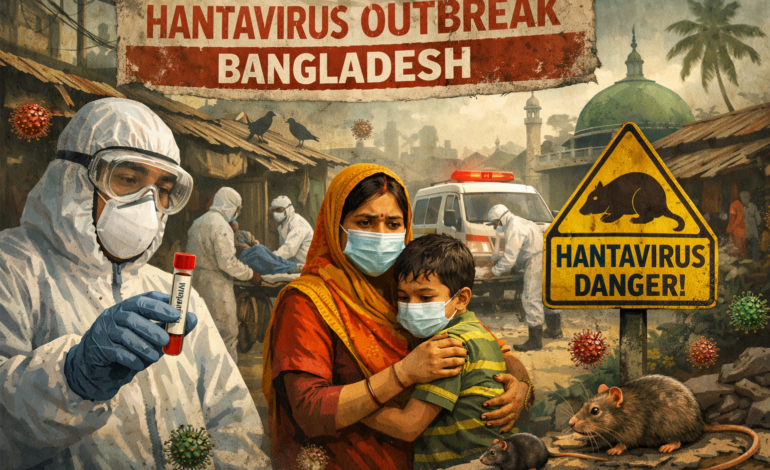

Hantavirus: How Big Is the Risk for Bangladesh?
Hantavirus infections in different parts of the world have sparked concern among public health experts and ordinary people alike. After a cluster of cases linked to a cruise ship outbreak and rising reports from South America, many in Bangladesh are looking at it as a threat.
Health specialists say there is currently no reason for panic in Bangladesh. The virus remains relatively rare, and experts believe the risk of a large-scale outbreak in the country is still low. However, the renewed global attention on hantavirus has highlighted the importance of hygiene, rodent control, and public awareness.
According to reports published by The Daily Star, health experts noted that the virus spreads mainly through contact with infected rodents and that human-to-human transmission remains extremely uncommon.
What Is Hantavirus?
Hantavirus is a group of viruses primarily carried by rodents. Humans can become infected after inhaling particles contaminated by rodent urine, saliva, or droppings. In rare cases, infection may also happen through rodent bites or direct contact with contaminated surfaces.
The disease can lead to severe respiratory illness known as Hantavirus Pulmonary Syndrome (HPS), which affects the lungs and can become life-threatening if not treated quickly. Some strains may also cause Hemorrhagic Fever with Renal Syndrome (HFRS), which mainly affects the kidneys.
The virus first gained global attention in the United States during the 1990s after a deadly outbreak in the southwestern region. Since then, sporadic cases have appeared in parts of North and South America, Europe, and Asia.
The recent concern emerged after an outbreak linked to the cruise ship MV Hondius, where multiple passengers reportedly became infected during a voyage connected to South America.
Why Has the Virus Returned to Headlines?
The latest wave of attention began after authorities investigated several hantavirus cases connected to travelers and maritime routes. According to global health monitoring agencies, the outbreak remains limited and contained, but the unusual nature of infections aboard a cruise ship generated international concern.
The World Health Organization reportedly stated that the overall global risk remains low, though countries are continuing surveillance efforts.
Experts believe environmental changes, climate conditions, and rising rodent populations in some regions may contribute to increased exposure risks. Agricultural activities, poor sanitation, and overcrowded living conditions can also create environments where rodents thrive.
How Dangerous Is Hantavirus?
Hantavirus is considered dangerous because severe infections can progress rapidly. Early symptoms often resemble common viral illnesses, making detection difficult during the initial stage.
Common symptoms include:
- Fever
- Fatigue
- Muscle aches
- Headache
- Dizziness
- Chills
- Nausea and vomiting
As the illness progresses, patients may develop coughing and shortness of breath as fluid builds up in the lungs. In serious cases, respiratory failure can occur.
Medical experts stress that early diagnosis and supportive treatment significantly improve survival chances. Although no specific antiviral cure exists for most hantavirus infections, intensive medical care can help patients recover.
The fatality rate can vary depending on the virus strain, but severe cases of Hantavirus Pulmonary Syndrome may have high mortality rates if treatment is delayed.
Is Bangladesh at Risk?
For Bangladesh, experts currently assess the threat as minimal. Reports indicate that there have been no major confirmed outbreaks of hantavirus in the country so far.
However, Bangladesh does have several factors that require caution:
- Dense population
- Urban sanitation challenges
- Flood-prone regions
- Rodent presence in rural and urban areas
- Informal waste management systems
Rodents are common in many Bangladeshi households, markets, warehouses, and agricultural fields. During monsoon seasons and floods, rodent movement often increases, potentially raising exposure risks to various diseases.
Despite these concerns, public health experts say Bangladesh is unlikely to face a major hantavirus crisis because the virus does not spread as easily as influenza or Covid-19.
Unlike airborne pandemic viruses, hantavirus transmission usually requires close exposure to contaminated rodent waste. Human-to-human transmission is considered extremely rare and mostly associated with certain South American strains.
How Can People Protect Themselves?
Health professionals say prevention mainly depends on proper hygiene and rodent control.
Some key safety measures include:
Keeping Homes Clean
Food waste should be disposed of properly, and kitchens must be kept clean to avoid attracting rodents. Storage areas, basements, and unused rooms should also be regularly cleaned.
Avoiding Dry Sweeping
Experts warn against dry sweeping or vacuuming rodent droppings because it can release contaminated particles into the air. Instead, contaminated areas should first be sprayed with disinfectant.
Sealing Entry Points
Holes, cracks, and gaps in buildings should be sealed to prevent rodents from entering homes and workplaces.
Safe Food Storage
Food should be stored in closed containers to reduce contamination risks.
Using Protective Gear
People cleaning rodent-infested spaces should wear gloves and masks, especially in enclosed environments.
International health agencies have emphasized “wet-cleaning” methods to reduce airborne exposure risks.
Could Climate Change Increase the Threat?
Scientists believe climate change may indirectly affect rodent-borne diseases worldwide. Changes in rainfall, temperature, and food availability can alter rodent populations and migration patterns.
Heavy rains and flooding can drive rodents closer to human settlements, while warmer conditions may help certain species reproduce more rapidly.
Bangladesh, being highly vulnerable to climate-related disasters, may need stronger disease surveillance systems in the future to monitor emerging zoonotic diseases, including hantavirus.
Public health researchers also warn that rapid urbanization without adequate sanitation infrastructure can increase human exposure to rodents.
Lessons From Recent Global Outbreaks
The recent hantavirus scare has reminded governments and health agencies about the importance of preparedness. While the virus is not considered a pandemic-level threat, experts say early detection systems remain critical.
Bangladesh already faces recurring public health challenges such as dengue, measles, and seasonal viral outbreaks. Strengthening laboratory testing, improving sanitation, and increasing public awareness can help the country manage future disease risks more effectively.
The ongoing measles crisis in Bangladesh has already shown how quickly infectious diseases can strain healthcare systems when preventive measures weaken.
Should People in Bangladesh Panic?
At this stage, experts strongly advise against panic. The overall risk of hantavirus spreading widely in Bangladesh remains very low.
However, the recent international cases serve as an important reminder about maintaining hygiene, controlling rodent populations, and strengthening disease surveillance systems.
Public awareness is crucial because many rodent-borne illnesses can be prevented through simple safety practices. As global travel and climate-related challenges continue to increase, countries including Bangladesh will likely pay closer attention to emerging infectious diseases in the years ahead.
For now, specialists agree that basic cleanliness, safe food storage, and avoiding contact with rodents remain the most effective ways to stay protected from hantavirus and similar infections.