




Bangladesh’s Facebook Monetization Boom Raises Ethical Concerns
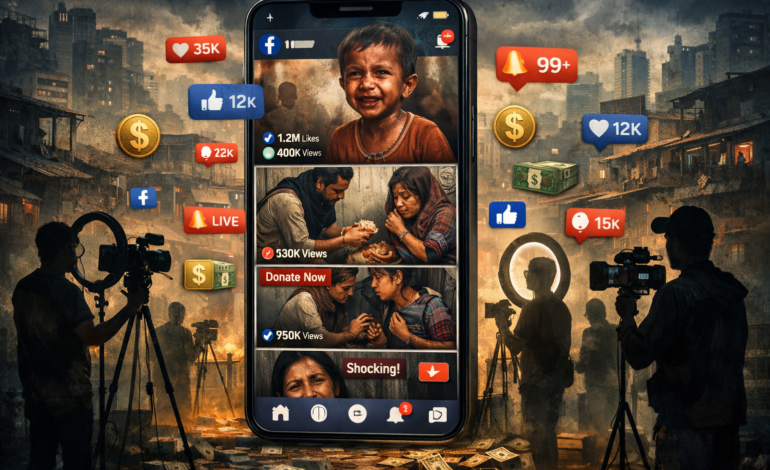

Bangladesh’s Facebook Monetization Boom Raises Ethical Concerns as Meta Earns Millions From Viral Content
Bangladesh’s rapidly growing Facebook content economy is generating serious ethical concerns as critics warn that the race for monetization and viral engagement is pushing many creators toward increasingly exploitative and disturbing behavior.
Across Facebook pages and short-video platforms, emotionally manipulative content has become one of the most powerful tools for gaining views, shares, and advertising revenue. Videos showing children crying, vulnerable people being humiliated, staged poverty scenes, family conflicts, accidents, and personal tragedies are increasingly being turned into viral entertainment.
At the same time, experts at a telecom seminar in Dhaka recently revealed that Meta, the parent company of Facebook reportedly earns more than $700 million annually from Bangladesh’s digital ecosystem, with little of that revenue remaining inside the country’s economy.
The combination of massive platform profits and a growing culture of exploitative viral content has sparked debate over digital ethics, platform regulation, child protection, privacy, and the social impact of monetized online engagement in Bangladesh.
The Rise of Facebook Monetization in Bangladesh
Over the last decade, Bangladesh has experienced explosive growth in social media usage.
Facebook remains the country’s dominant digital platform because of:
- Cheap smartphone access
- Affordable mobile internet
- Growing video consumption
- Expansion of digital advertising
- Youth-driven online culture
Millions of Bangladeshis now spend hours daily scrolling through:
- Facebook videos
- Reels
- Livestreams
- Viral clips
- Entertainment pages
At the same time, Facebook monetization programs have created financial incentives for content creators to maximize:
- Watch time
- Shares
- Reactions
- Comments
- Emotional engagement
For many creators, social media has become a full-time income source.
The possibility of earning through:
- Ad breaks
- Brand sponsorships
- Page monetization
- Livestream gifts
- Viral traffic
has transformed Facebook into a highly competitive digital economy.
But critics say the platform’s engagement-driven algorithms are increasingly rewarding sensationalism rather than quality or ethics.
Viral Content and the Erosion of Human Decency
One of the biggest concerns surrounding Bangladesh’s Facebook culture is the normalization of exploitative content.
Many viral videos now rely heavily on:
- Public humiliation
- Emotional manipulation
- Poverty exploitation
- Child suffering
- Fake social experiments
- Staged emotional scenes
Children are frequently used as content tools because emotional videos involving minors generate strong audience reactions and higher engagement rates.
In some cases, parents themselves film:
- Children crying
- Punishments
- Physical scolding
- Emotional distress
before uploading the clips online for views.
Critics argue that many children appearing in viral content cannot meaningfully understand or consent to being filmed and publicly exposed online.
Digital rights advocates warn this creates long-term privacy and psychological concerns for children growing up inside monetized social media environments.
Poverty as Entertainment
Another disturbing trend is the commercialization of poverty and suffering.
Some creators film vulnerable people during:
- Food donations
- Financial handouts
- Emotional confrontations
- Medical emergencies
- Public breakdowns
The videos are often edited with:
- Sad background music
- Emotional captions
- Dramatic thumbnails
designed specifically to maximize viewer sympathy and engagement.
While some creators claim they are helping disadvantaged communities, critics say many videos reduce human suffering into algorithm-driven entertainment.
Poor individuals are often filmed without proper consent or meaningful privacy protection.
Social observers increasingly question whether certain forms of “charity content” prioritize helping people or generating clicks and monetization revenue.
Fake Stories and Manufactured Emotions
Bangladesh’s viral content ecosystem has also seen a sharp rise in fabricated or staged emotional videos.
These include:
- Fake family disputes
- Invented tragedies
- Scripted social experiments
- False relationship dramas
- Misleading news clips
Because Facebook’s algorithms reward emotional intensity, creators often produce exaggerated or misleading content designed to trigger:
- Anger
- Sympathy
- Shock
- Outrage
Experts say this environment encourages creators to prioritize virality over accuracy or responsibility.
The result is an online culture where:
- Attention becomes currency
- Emotional manipulation becomes strategy
- Ethics become secondary to engagement
Meta’s Massive Earnings From Bangladesh
The ethical concerns surrounding Facebook’s content culture became even more significant after experts at a Dhaka telecom seminar reportedly stated that Meta earns more than $700 million annually from Bangladesh.
The claim reflects the enormous scale of Facebook’s influence in the country.
Meta generates revenue through:
- Digital advertising
- User engagement
- Video monetization
- Business promotion
- Data-driven advertising systems
Bangladesh has one of South Asia’s fastest-growing internet populations, making it a highly valuable market for digital platforms.
However, critics argue that while Meta benefits financially from Bangladesh’s growing digital economy, the country itself retains relatively little of the revenue generated by platform activity.
The discussion has renewed debate over:
- Digital taxation
- Revenue sharing
- Platform accountability
- Local economic contribution
Some analysts argue that global tech companies profit heavily from developing countries while avoiding meaningful local reinvestment.
Algorithm Culture and the Attention Economy
The problem extends beyond Bangladesh alone.
Globally, social media platforms operate on what experts call the “attention economy,” where algorithms reward content that keeps users emotionally engaged for longer periods.
This often means:
- Extreme content performs better
- Emotional manipulation spreads faster
- Outrage generates visibility
- Sensationalism becomes profitable
In Bangladesh’s context, this algorithm-driven system interacts with:
- High unemployment
- Youth income pressure
- Rapid digital growth
- Weak content regulation
For many young creators, viral success appears to offer a shortcut to financial stability.
As a result, some creators push ethical boundaries in pursuit of monetization.
The Impact on Children and Society
One of the most serious concerns involves children growing up in highly monetized online environments.
Digital experts warn that constant exposure to cameras and public attention can affect:
- Emotional development
- Privacy awareness
- Mental health
- Personal identity
When family life becomes monetized content, children may struggle to separate genuine experiences from performative online behavior.
Critics also warn that public normalization of humiliating or exploitative videos can gradually reduce social sensitivity toward:
- Violence
- Emotional abuse
- Poverty
- Privacy violations
Over time, audiences may become desensitized to harmful content because emotional suffering is repeatedly packaged as entertainment.
Weak Regulation and Enforcement
Bangladesh currently lacks strong platform-specific digital content regulation capable of effectively addressing these issues.
While laws exist regarding cybercrime and harmful online activity, enforcement around exploitative monetized content remains inconsistent.
Several challenges complicate regulation:
- Huge volume of uploaded content
- Cross-border platform ownership
- Limited moderation in Bengali language content
- Rapid spread of viral videos
- Lack of public awareness
Critics argue that Meta itself also bears responsibility because platform algorithms often continue promoting harmful content if it generates engagement.
Globally, Meta has faced criticism over moderation failures, misinformation, and harmful recommendation systems across Facebook and Instagram.
Calls for Digital Responsibility
The growing debate has led to increasing calls for:
- Better child protection policies
- Stronger content moderation
- Ethical creator guidelines
- Digital literacy education
- Platform accountability
Experts say audiences also play an important role.
Many harmful videos become viral because users continue to:
- Watch
- Share
- Comment
- React
Digital rights advocates argue that exploitative content should be:
- Reported
- Avoided
- Critically questioned
rather than rewarded with engagement.
The Future of Bangladesh’s Digital Culture
Bangladesh’s digital economy still holds enormous potential.
Social media has helped:
- Small businesses grow
- Young creators build careers
- Independent journalism expand
- Online education spread
- Entertainment industries evolve
However, critics warn that unchecked monetization culture risks damaging the ethical foundation of online communities.
The challenge now is balancing:
- Creative freedom
- Economic opportunity
- User safety
- Human dignity
- Platform accountability
without turning human suffering into a business model.
Looking Ahead
Bangladesh’s Facebook monetization boom reflects both the opportunities and dangers of the modern digital economy.
While thousands of creators now earn income online and Meta reportedly generates hundreds of millions of dollars annually from the country, the race for viral engagement is increasingly encouraging unethical and exploitative content.
The debate is no longer only about internet culture, it is about digital ethics, platform responsibility, and the long-term social impact of turning human emotion into monetized content.
As Bangladesh’s online ecosystem continues expanding, the question facing both society and platforms like Meta is becoming increasingly urgent: how much human dignity should be sacrificed for clicks, views, and advertising revenue?