
Late Inclusion, Big Impact: Nahid Rana Repays Faith in PSL 2026 Final

Late Inclusion, Big Impact: Nahid Rana Repays Faith in PSL 2026 Final
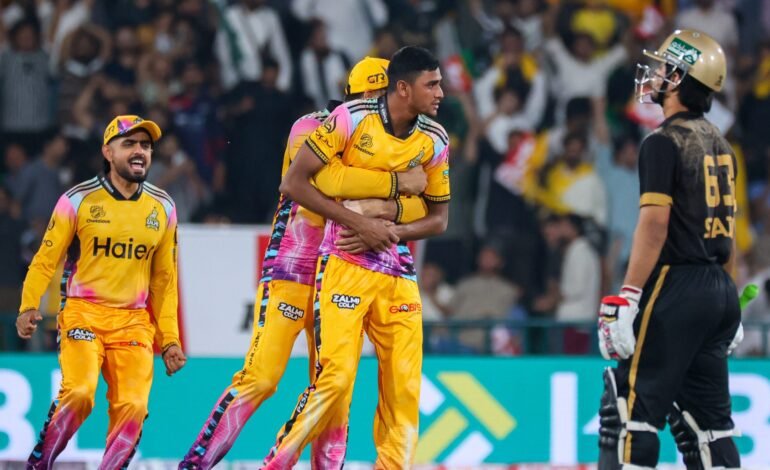
Nahid Rana, who was brought back into the Peshawar Zalmi squad just before the final, delivered a match-defining performance that powered his side clinch a five-wicket win over Hyderabad Kingsmen to secure the second Pakistan Super League 2026 title on Sunday.
Rana, who joined the Zalmi squad on special request, showed how narrative built on timing, trust, and execution under pressure, and he justified the decision emphatically.
A Calculated Return Before the Final
Rana’s journey in PSL 2026 wasn’t linear. In mid-April, he left the tournament due to workload management directives from the Bangladesh Cricket Board (BCB), raising questions about whether he would feature again in the competition.
However, in a strategic move, he was granted a special No Objection Certificate (NOC) to rejoin Zalmi specifically for the final at Gaddafi Stadium. The decision carried risk bringing in a player who had been out of the squad rhythm into the most important match of the season.
But Zalmi’s management backed Rana’s raw pace and temperament. That faith would prove decisive.
Tournament Impact: Quality Over Quantity
Despite playing only five matches, Rana’s numbers reflected elite efficiency:
- Wickets: 9
- Matches: 5
- Economy Rate: 5.44
In a format where bowlers are often punished, maintaining an economy below six is exceptional. Rana’s performances throughout the tournament had already established him as a control bowler capable of disrupting batting momentum.
But the final demanded something more, impact under extreme pressure.
The Final: From Early Setback to Complete Control
The PSL 2026 final began with early signs of trouble for Rana. Introduced during the powerplay, he faced immediate aggression.
Early Pressure: A Difficult Start
- Over 1 (7th Over of Innings):
Rana conceded 13 runs as Hyderabad’s Saim Ayub attacked him with a boundary and a six.
For many bowlers, such an over in a final could spiral into a loss of rhythm. But Rana’s response highlighted his composure and adaptability.
The Turning Point: Maxwell Falls
Over 2 (9th Over): The “Wicket of the Match”
Rana returned with a recalibrated approach, shorter lengths, sharper pace, and tighter lines.
- He dismissed Glenn Maxwell for a golden duck
- Delivery: A sharp, rising bouncer that Maxwell failed to connect with
The dismissal was instantly recognized as a turning point. Maxwell, known for his explosive middle-order batting, could have shifted momentum decisively. Instead, his early exit triggered uncertainty in Hyderabad’s lineup.
Rana conceded just 5 runs in that over, regaining control and swinging the momentum back toward Zalmi.
Middle-Order Collapse: Precision at High Speed
Over 3 (14th Over): Wicket-Maiden Masterclass
If the Maxwell dismissal shifted momentum, Rana’s third over dismantled it entirely.
- Bowled a wicket-maiden
- Dismissed Hunain Shah
- Delivery: A searing 148 kph yorker that shattered the stumps
This over effectively broke Hyderabad’s resistance. At a stage where teams typically accelerate, Rana applied the brakes completely—no runs conceded, a key wicket taken, and mounting pressure transferred onto incoming batters.
In T20 cricket, such overs are rare. In a final, they are often decisive.
Death Overs Discipline
Over 4 (17th Over): Composure Under Pressure
Returning for the death overs, Rana maintained remarkable discipline:
- Conceded just 4 runs
- Prevented any late surge
Hyderabad, already destabilized, needed acceleration in the closing overs. Rana’s tight lines and consistent execution denied them that opportunity.
Final Figures That Tell the Story
Rana’s spell ended with:
- 4 Overs
- 22 Runs
- 2 Wickets
- 1 Maiden
More importantly, he conceded just 9 runs in his final three overs, a remarkable recovery after his expensive first over.
“Superpower of the Match”: Recognition of Impact
Rana’s performance earned him the “Superpower of the Match” award—an acknowledgment of his decisive influence on the game’s outcome.
While T20 cricket often celebrates big hitters, this final underscored the value of high-quality fast bowling. Rana’s spell didn’t just contain runs—it broke the opposition’s structure at critical moments.
Tactical Breakdown: Why Rana Succeeded
Rana’s performance was not accidental; it was built on clear tactical execution:
1. Adaptability
After being attacked early, he adjusted his lengths and pace variations, avoiding predictability.
2. Use of Bounce and Pace
His dismissal of Maxwell showcased his ability to extract bounce—an asset on a high-pressure stage.
3. Yorker Execution
The delivery to Hunain Shah highlighted elite death-bowling skills, with precision at nearly 150 kph.
4. Mental Resilience
Recovering from a 13-run opening over to deliver a match-winning spell reflects strong psychological composure.
Strategic Gamble That Paid Off
Zalmi’s decision to bring Rana back for the final could have gone either way. Match fitness, rhythm, and pressure were all concerns.
But the management’s calculation was clear: a bowler with genuine pace and the ability to break partnerships is invaluable in a final.
Rana justified that belief with a performance that combined skill, control, and timing.
What This Means for Bangladesh Cricket
Rana’s success carries broader implications beyond the PSL:
- Reinforces Bangladesh’s emerging fast-bowling pipeline
- Demonstrates the ability of Bangladeshi players to perform in elite franchise leagues
- Enhances his prospects in other global T20 competitions
For years, Bangladesh has been associated primarily with spin bowling. Performances like this signal a shift toward a more balanced, pace-oriented attack.
A Career-Defining Night
For Nahid Rana, the PSL 2026 final may well be remembered as a turning point. Not just because of the numbers, but because of the context:
- Late inclusion
- High-stakes final
- Immediate impact
It is one thing to perform across a tournament. It is another to deliver when the stakes are highest, after uncertainty about participation.
Rana did exactly that.
Looking Ahead
The story of PSL 2026 will include many highlights, but Nahid Rana’s late return and decisive spell stand out as one of its defining narratives.
From conceding 13 runs in his opening over to finishing with 2/22, he demonstrated control, resilience, and match awareness at the highest level. His performance didn’t just contribute to Peshawar Zalmi’s victory—it shaped it.
In a final where margins are razor-thin, Rana’s spell created the difference. And in doing so, he repaid the faith placed in him with a performance that resonated far beyond the boundary ropes.