

chatgpt 80’s trend: Reasons Why Everyone Is Obsessed!
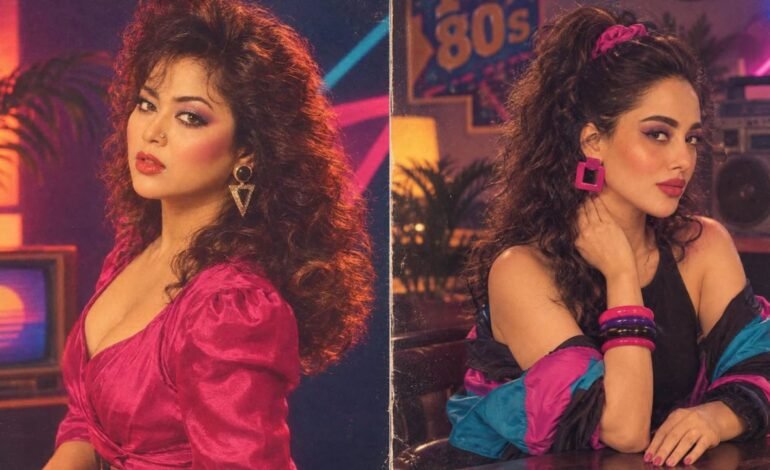

The Great Vibe Shift: Why Everyone is Obsessed with the chatgpt 80’s trend
The chatgpt 80’s trend is taking social media feeds by storm, turning modern timelines into nostalgic throwback galleries filled with feathered hair, acid wash denim, and warm analog film grain. Scroll through any platform today, and you will notice that ordinary selfies are being transformed into dramatic, vintage styled portraits that look straight out of a 1984 family album or classic cinema archive. But this viral movement is far more than a passing filter fad. It represents a deeper psychological craving for texture, history, and tactile authenticity in an era dominated by hyper crisp digital perfection. Let’s break down the mechanics, the cultural theory, and the socio cultural fascination driving this massive digital wave.
Decoding the Aesthetic: Why Imperfection and Frizzy Hair Entice Us
To truly understand why the chatgpt 80’s trend has struck such a massive chord, we have to examine why people are suddenly so drawn to visual flaws. Modern smartphones and social apps shoot in hyper-detailed, perfectly exposed 4K, smoothing out every line and delivering sterile, clinical clarity but honestly? We are so over the HD perfection and low-key starving for that grainy, unhinged analog soul.
-
The Fatigue of Clinical Perfection: Everyday digital life feels aggressively polished. The 80s aesthetic fights back by introducing organic warmth, light leaks, soft focus blurring, and tactile film grain that feels genuinely human.
-
The Romance of Volume and Drama: Voluminous hair, bold silhouettes, statement accessories, and saturated color palettes offer an injection of theatrical personality. In a world of minimalist corporate branding and neutral tones, the 1980s look vibrant and alive.
-
The Comfort of Manufactured Memory: AI-generated retro snapshots act as a psychological safety blanket. They provide the romantic weight of history without any of the actual baggage, offering historical cosplay for digital natives.
Cultural Theory Meets Gen Z Feeds: The Nostalgia Mode
Why does this aesthetic resonate so deeply with younger generations right now? Cultural and literary theory actually predicted this exact psychological loop decades ago.
Back in 1984, cultural theorist Fredric Jameson wrote about the “nostalgia mode,” noting that when a society struggles to represent its own dizzying present, it defaults to borrowing the shell and style of an earlier era. We are living through a chaotic, hyper-connected digital landscape filled with algorithmic feeds and information overload. Because our current era feels too overwhelming to define authentically, we put on the 1980s like a vintage jacket because it feels structured, cozy, and recognizable.
French philosopher Jean Baudrillard took it a step further in 1981 with his concept of the simulacrum, a copy without an original. Think about what these AI portraits actually are? You are feeling nostalgic for a photograph that was never taken, of a decade you may never have experienced. As Baudrillard predicted in analyses explored by digital culture archives like Wired, we find these hyper-real simulations more convincing than reality itself. The AI version of you doesn’t look like a real, awkward 1980s photo full of eye blinks and bad lighting. It looks like the decade’s idealized dream of itself.
Global Digital Echoes: How Platforms Amplified the chatgpt 80’s trend
Looking at global online discourse, viral digital creators and internet culture analysts note that the chatgpt 80’s trend mirrors earlier massive retro waves like the 2010s vaporwave explosion and the synthwave music resurgence. Major global media outlets and digital trend reports point out that every time technology takes a massive leap forward—such as the mainstream integration of generative AI into daily workflows human culture experiences a reflexive counter-reaction. We pull back from the cold, automated future by retreating into a comforting, digitized version of the past. This psychological pendulum swing explains why viral templates on TikTok and Instagram Reels focusing on vintage aesthetics consistently outperform modern minimalist filters by millions of views, proving that internet users worldwide are actively seeking an emotional anchor in history.
The Intersection of Historical Anxiety and Technological Escapism
When global viral trends sweep across the internet, they rarely happen in a vacuum. They act as barometers for collective societal anxiety. Cultural studies tracking the rise of AI portraiture reveal that users turn to retro face swaps during periods of intense geopolitical and economic uncertainty. The 1980s specifically marked by intense cultural shifts, the birth of personal computing, post-Cold War anxieties, and a booming pop-culture economy serve as a fascinating mirror to our current decade of rapid automation and post-pandemic recalibration. By dressing our digital avatars in the armor of 1980s corporate retro or suburban mall culture styles, we are subtly attempting to domesticate the frightening speed of technological change, wrapping the terrifying unknown of artificial intelligence in a familiar, nostalgic blanket of neon and synthesizer chords. For more deep dives into sociological shifts, check out cultural breakdowns on The Atlantic.
Literature from the Decade: What Was Actually Happening While the 80s Were Cooking?
To ground this digital obsession in real history, it helps to look at what the 1980s actually produced across global and South Asian literature. The works highlighted below capture the literary pulse of that exact decade:
-
Sei Samoy (Those Days) by Sunil Gangopadhyay (1981):
A massive 700-page historical fiction masterpiece exploring mid-19th-century Calcutta, capturing a sweeping generational canvas under one monumental cover.
-
Rita Hayworth and Shawshank Redemption by Stephen King (1982):
Published as a novella in King’s collection Different Seasons, proving the decade could craft timeless tales of hope far beyond traditional horror.
-
Durbin by Shirshendu Mukhopadhyay (1986):
A Bengali novel tracing the parallel lives of three men across distinct generations, exploring deep familial ties and psychological shifts.
-
Jibon O Rajnaitik Bastobota (Life and Political Reality) by Shahidul Zahir (1988):
A seminal work in Bangladeshi literature that injected brilliant, haunting magical realism into the psychological aftermath of censured political histories.
-
Global Milestones:
Salman Rushdie’s Midnight’s Children (1981) completely rewired English-language literature from South Asia, while music cassette revolutions (like Gulzar’s Mirza Ghalib adaptation in 1988) brought high poetic art straight into South Asian living rooms.
A Personal Observation: The Mirror of 2060
There is a brilliant irony running through the chatgpt 80’s trend that most people scrolling on Instagram miss. We are currently using cutting edge, twenty-first-century artificial intelligence at the absolute peak of our current technological anxiety. We desperately want to pretend we are living forty years in the past.
We are raiding the attic of history because our present feels algorithmically mediated and hollow. But history has a funny way of repeating itself as a costume party. Just as we are currently flattening an entire decade into a glossy, aestheticized filter pack, somebody sitting in the 2060s is undoubtedly going to look back at our 2020s decade. They will take our obsession with ring lights, aesthetic TikTok transitions, minimalist room decor, and algorithmic scrolling, and they will turn it into a retro costume. And just like us, they will get it wrong in a very specific, fascinating way while painting our era through a distorted lens of perfection that we cannot even begin to foresee today.