




Irrawaddy Dolphin Sundarbans Diary: Beauty on the Edge of Loss
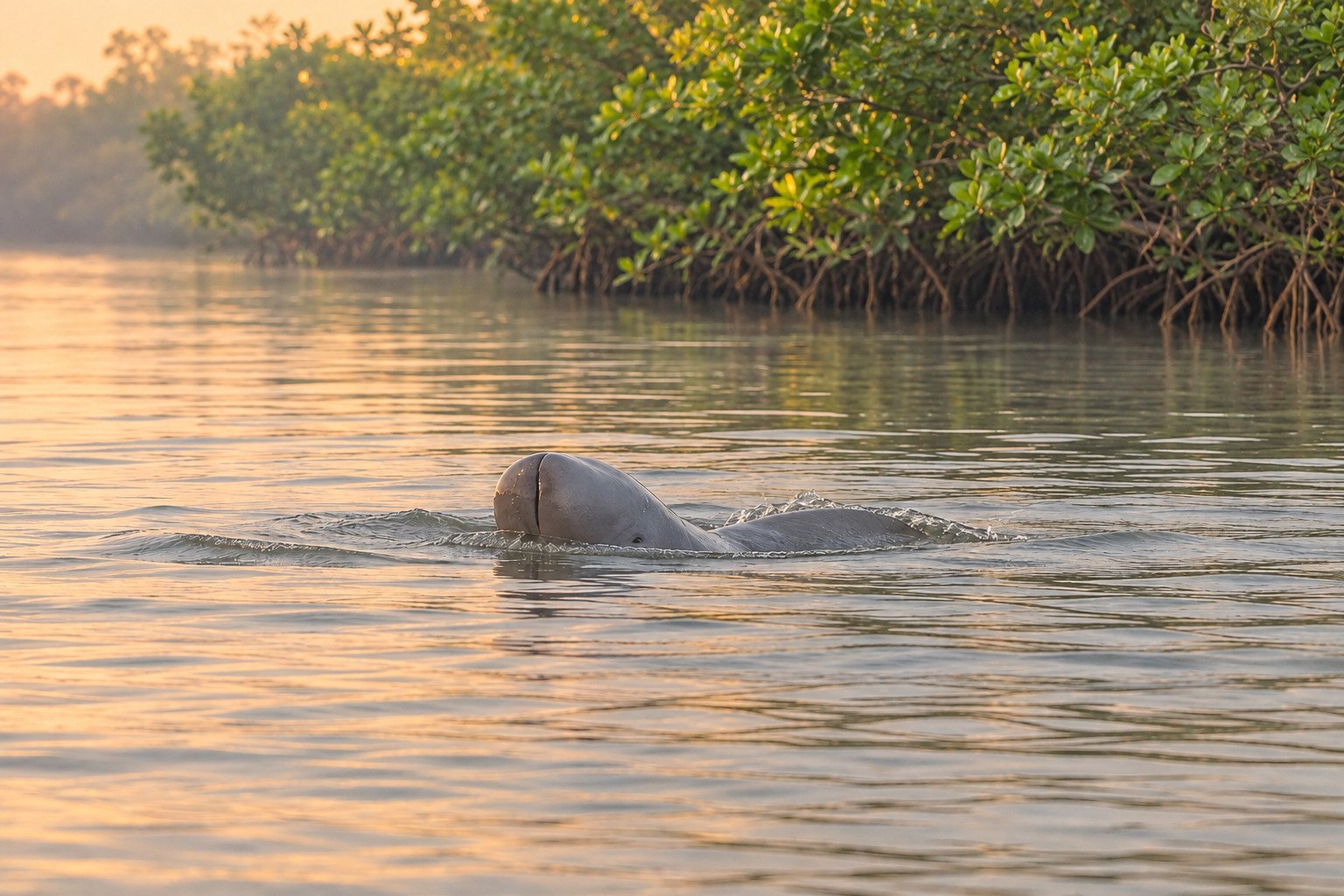
My first Irrawaddy dolphin Sundarbans sighting lasted a heartbeat. A slate-grey back rolled out of the water and slipped away. I left the forest enchanted and a little afraid, and the facts explain both feelings.
Irrawaddy Dolphin Sundarbans Waters: Where Calm Meets Fear
Dawn in the Sundarbans moves slowly. The tide pushes through narrow creeks twice a day, and mangrove roots stand in the mud like silent watchers. In that hush, every ripple feels like a message. UNESCO calls the forest the largest contiguous mangrove forest in the world. It also shelters a mammal that surfaces so briefly it is easy to miss. For the wider story, read our guide to the Sundarbans as Bangladesh’s natural jewel.
What Does an Irrawaddy Dolphin Really Look Like?
Forget the leaping dolphins of postcards. This species has a blunt, rounded head and an indistinct beak. Its small dorsal fin sits behind the middle of its back, and its skin runs from grey to slate-blue, paler underneath. In the Sundarbans, groups are small, usually up to six animals, according to the UNDP’s atlas of Bangladesh’s river dolphins. Bangladesh’s national Red List adds that surfacing is inconspicuous, with only part of the back showing. Leaps are infrequent. So the dolphin reveals itself in glimpses, and every glimpse feels like a gift.
How to Spot a Surfacing Dolphin
The same Red List gives an average dive of about 115 seconds. Therefore, scan a quiet channel and wait nearly two minutes before you give up. Look for a small curved back rather than a leap. Keep the engine low and your voice lower.
How Many Irrawaddy Dolphins Are Left in the Sundarbans?
The Irrawaddy dolphin Sundarbans counts tell an uneasy story. A 2006 survey recorded 451 animals in the Bangladesh Sundarbans. A later survey of about 1,340 kilometres of rivers counted 113, which researchers adjusted to roughly 198. The atlas does not reconcile the two figures, and The Business Standard asked whether the gap shows a real fall or different survey models. The global picture is sobering. IUCN lists the species as Endangered. In the Mekong, the Marine Mammal Commission says the latest estimate, from 2020, was 89 animals. In Laos, a 2016 WWF survey found three, and The Business Standard reported the species functionally extinct there.
What Is Pushing the Dolphin Toward the Edge?
Reports from officials and researchers name several dangers. Here are the main ones:
- Gillnets. Mongabay’s 2023 report described them as “banned but abundant” and the main threat to Bangladesh’s river dolphins.
- Boat traffic. Propellers strike dolphins, The Business Standard reported, and Dhaka Tribune said in October 2025 that rising traffic is shrinking the Irrawaddy dolphin’s range.
- Rising salinity. The same Dhaka Tribune report links the shrinking range to saltier water.
- Oil and pollution. About 350,000 litres of furnace oil spilled into Sundarbans waterways on 9 December 2014, according to the Marine Mammal Commission.
What the Death Records Show
UNB, citing the Wildlife Conservation Society, reported 108 dolphin deaths in the Sundarbans and nearby areas between 2007 and 2019. Of these, 80 were Ganges river dolphins and 24 were Irrawaddy dolphins, while four were porpoises. Most animals died in nets or after trawler strikes, and some were hunted. Each number was a living animal, and that thought followed me home.
Do the Dolphin Sanctuaries Really Protect Them?
Bangladesh declared three dolphin sanctuaries in the Sundarbans in January 2012. They are Dhangmari, Chandpai and Dudhmukhi, and together they cover about 32 kilometres of river channel, according to The Daily Star. One stretch follows the Dhangmari canal and the Pashur River, from Ghagmari check-post to Karamjal. Protection is only partial. The UNDP atlas says the sanctuaries cover priority Irrawaddy habitat only marginally. Meanwhile, IUCN’s World Heritage Outlook rates the Sundarbans “significant concern”. It also calls the dolphin’s population there relatively high and a global stronghold, though it could fall if threats go unchecked. That mix of worry and hope matches what I felt on the water.
Where Else Does the Sundarbans Still Take My Breath Away?
The Irrawaddy dolphin Sundarbans trip I took offered far more than dolphins. Mangrove roots rise from the mud as pneumatophores, or breathing roots, which take in air at low tide. Overhead, UNESCO counts 315 species of waterfowl, raptors and forest birds. They include nine kinds of kingfisher and the white-bellied sea eagle. Tigers swim these same channels, as our features on the Royal Bengal Tiger in Bangladesh and tigers and the future of the Sundarbans explain. Each spring, honey collectors enter the forest too, and our guide to natural honey in Bangladesh lists their harvest. Meanwhile, Karamjal on the Pashur River hosts a crocodile breeding centre, and Hiron Point can be visited only when the tide allows.
Dublar Char at Dusk
Dublar Char is a remote island at the southern edge of the forest. It is a tremendous place as an evening stop to watch the sunset. In late autumn, the Rash Mela, a Hindu festival that began in 1923, brings pilgrims who bathe in the Bay of Bengal at dawn. I would return for either.
How Can You Visit Without Harming the Dolphins?
The forest closes every year from 1 June to 31 August to protect breeding. In 2026 it reopened on 1 September with 14 designated tourist spots across its eastern and western divisions. October to March is usually the best time to visit. Treat the dolphins as the hosts. Ask your boatman to slow down in narrow channels, because propeller strikes are a documented threat. Never chase a surfacing animal, and remember that drones are banned in the forest. Finally, book through a registered operator, since no tour can promise a sighting.
Many travellers also stop at Bagerhat’s Sixty Dome Mosque, which features in our list of five mosques in Bangladesh you must visit. Since the Padma Bridge opened in 2022, getting south has become easier, as our Padma Bridge post explains.
Why the Irrawaddy Dolphin Sundarbans Story Is Not Over Yet
The dolphin is not gone from Bangladesh. A 2006 survey estimated about 5,383 in the country’s coastal waters, according to the national Red List. The Irrawaddy dolphin Sundarbans population is smaller, and its future depends on cleaner water, fewer nets and calmer boats. Travellers can help by choosing slow, quiet trips and respecting the rules. I hope that grey back keeps rising at first light for the every traveller who waits.