
Coxs Bazar Parjatan Carnival 2026

Cox’s Bazar Tourism Carnival: A Warm Welcome After Dark
The Cox’s Bazar tourism carnival has turned the pine grove beside Shaibal Point into a glowing seaside town. It opened on a trial basis on 22 November and is set to run until 31 January. Until now, many visitors found little to do here after sunset. This time, sand giants, music, camping and open-air cinema wait beyond the waves. Artists from three countries are carving an elephant and a Royal Bengal Tiger from sand. Whether you arrive from Dhaka or from abroad, the beach has made room for you. Here is what is new, and what to check before you pack.
What Makes This Carnival Different From Other Seasons?
Bangladesh Monitor reported in October that visitors had long complained about limited evening options. Gani Ul Azam, a director at the Bangladesh Parjatan Corporation, told Prothom Alo that little entertainment exists near the beach after sunset. So the carnival was designed to fill that gap. Channel I describes the Cox’s Bazar tourism carnival as the first such event held in the area. It covers about 35 acres, stretching from Kobita Chattar to Shaibal Point. The Parjatan Corporation is organizing it, and Spellbound Communications Limited is responsible for managing it.
The site stays open around the clock, and cultural programmes run every evening. The theme is “Wave of Experience”, and the slogan promises “Family Fun with Sun, Sea and Stars”. Authorities also say the area is being developed as a plastic-free, eco-friendly zone. Tourist police, lifeguards and CCTV will watch over it day and night. In addition, the corporation hopes longer stays will help hotels, traders and local artisans. Its chairman says the government wants to present Cox’s Bazar as an international destination, calling it the world’s longest unbroken sea beach.
Who Is Building Sand Giants Beside the Pine Grove?
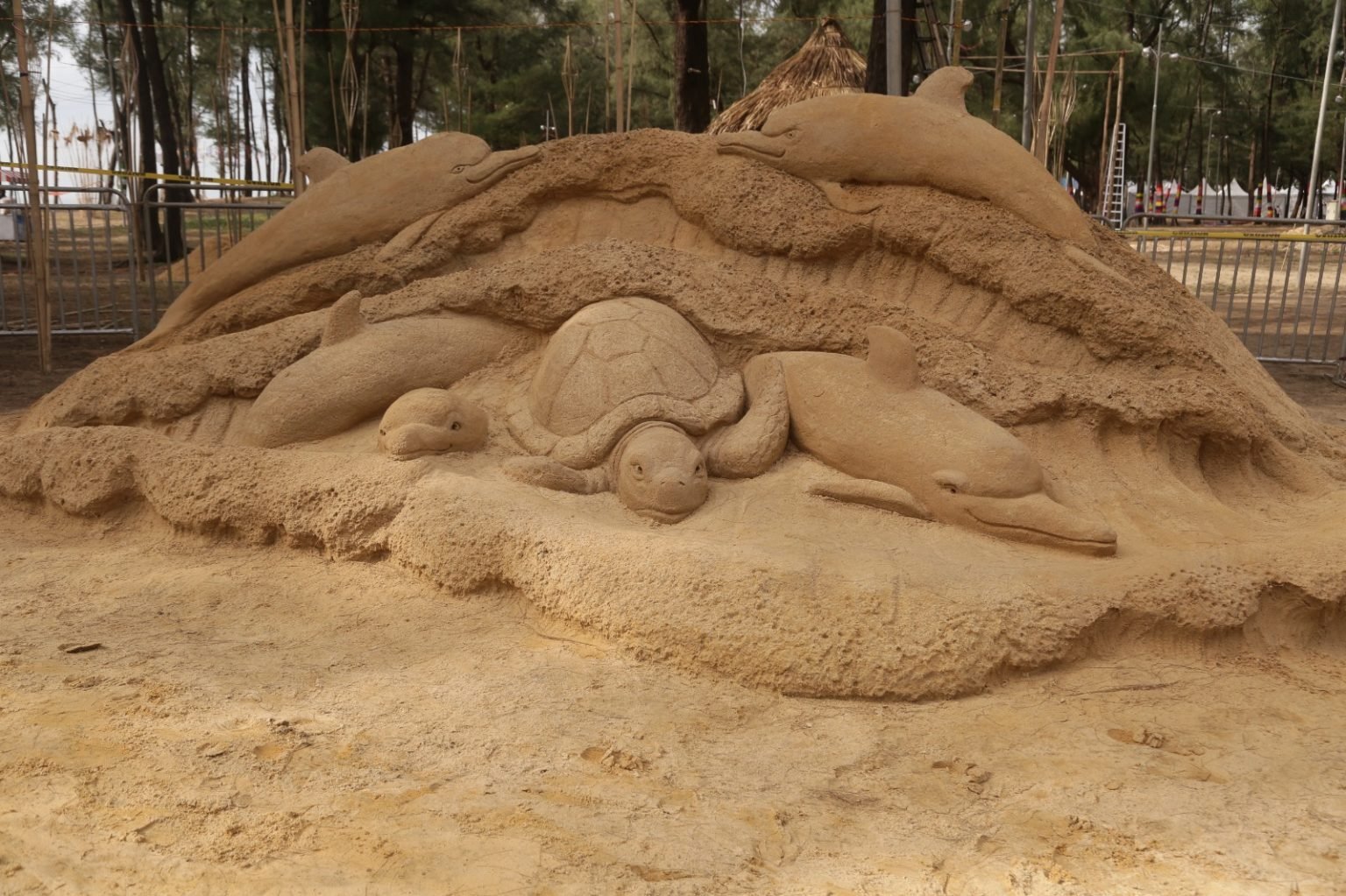
Paul and Remi Hoggard, about 60 and 50 years old, come from the Netherlands. They have made sand art in 32 countries, including at least 250 full elephant sculptures. David Billings from Canada was building the parliament sculpture, and Channel I says artists from the United Kingdom joined too. Jeevan Roy, a Bangladeshi artist with over a decade of experience, is assisting them. The works stand in the Jhau Bagan, the pine grove east of Shaibal Point. In an interview with Prothom Alo Paul exclaimed in an enthusiastic tone that he had never known a sand-art setting like this one, thanks to the sea and the pines.
A Trunk Raised in Greeting
A large elephant that seems to greet visitors with its trunk has been seen in the sand art. The Hoggards have built at least 250 full elephants in their careers. That experience shows in the scale of this one. Sand art rewards slow looking, so walk around it once before you take a photo. Then step back and let the whole shape settle.
The Tiger and the Sea Creatures
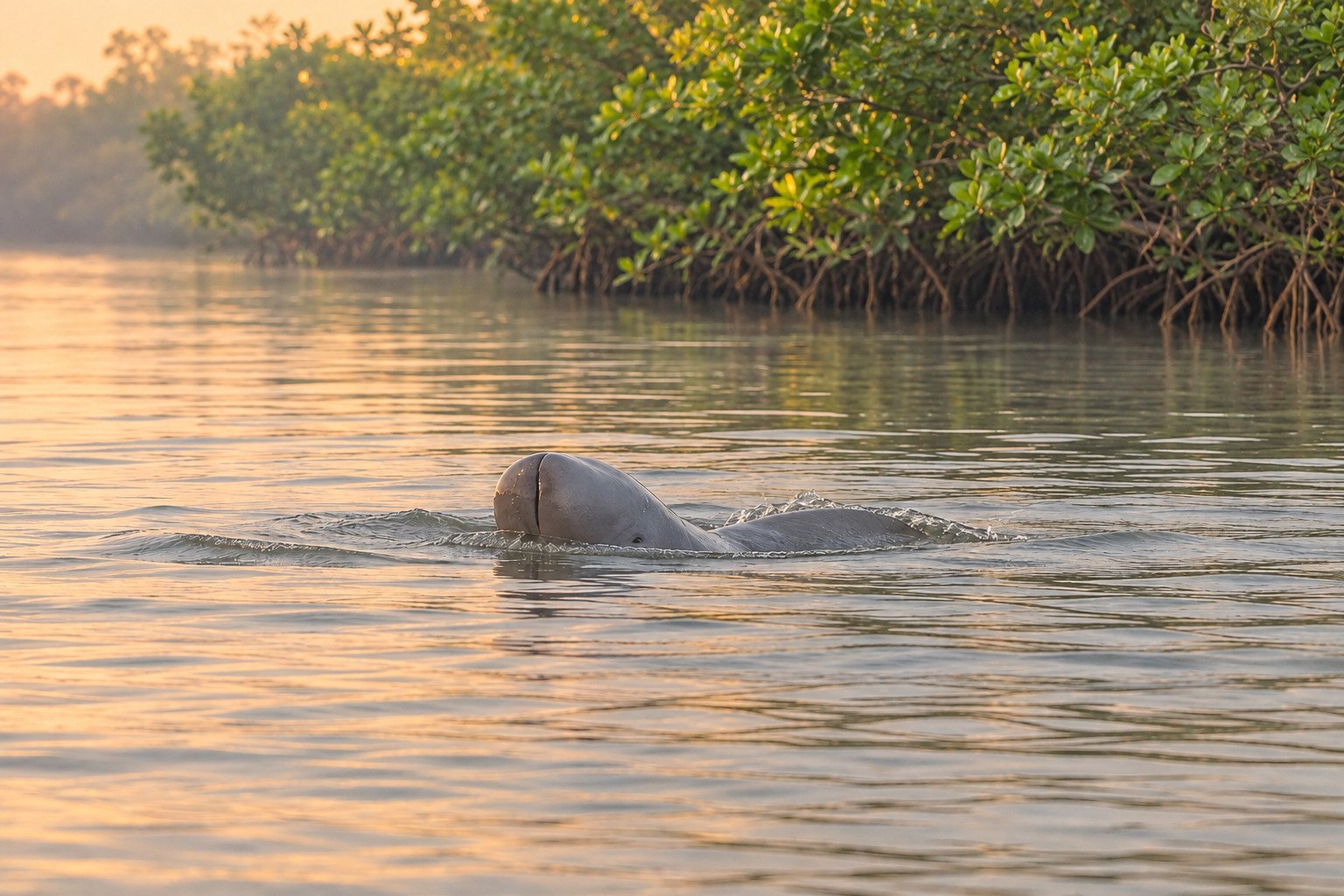
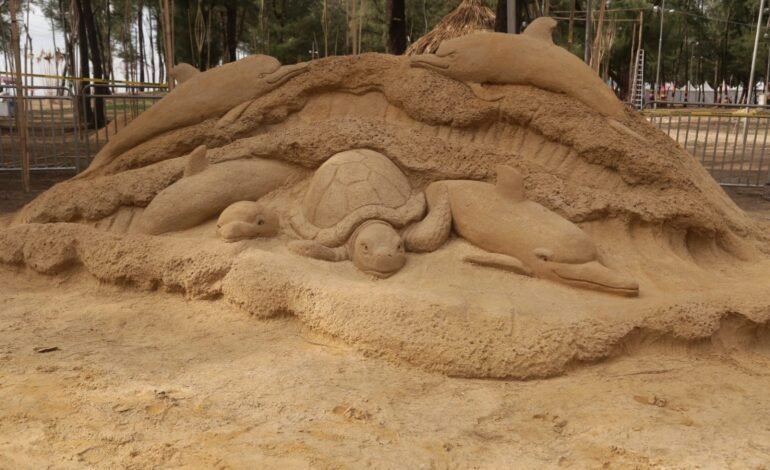
A Royal Bengal Tiger from the Sundarbans stands among the works. Our guide to the Royal Bengal Tiger in Bangladesh explains how the animal lives in that mangrove forest. Sea life fills other corners, including a whale, a shark and a hilsa fish. Channel I also lists a dolphin and a turtle. If the dolphin sparks your curiosity, our diary on the Irrawaddy dolphin in the Sundarbans shows how fragile the real animal’s future is.
Parliament, Memorial and Shaheed Minar in Sand
Three national landmarks appear in sand. They are the Jatiya Sangsad Bhaban, the National Martyrs’ Memorial at Savar and the Shaheed Minar. For visitors from abroad, these works offer a short lesson in Bangladeshi history. David Billings worked on the parliament sculpture. Together, the three place the nation’s story beside the sea.
Stories of Fishers and a Changing Climate
Some sculptures move beyond animals and monuments. Bangladesh is a land of rivers, and coastal life impacts our economy in many ways. the sand art also portrays the lives of coastal fishermen and the struggles of workers hit by climate change. Global climate change affects coastal communities and their livelihood and the intention behind the sand art was to showcase this essence of suffering to the world. Cox’s Bazar sits on a coast that faces real weather risks. Banglapedia notes that the district is prone to sea storms, tidal bores and cyclones.
What Else Waits Across the 16 Zones?
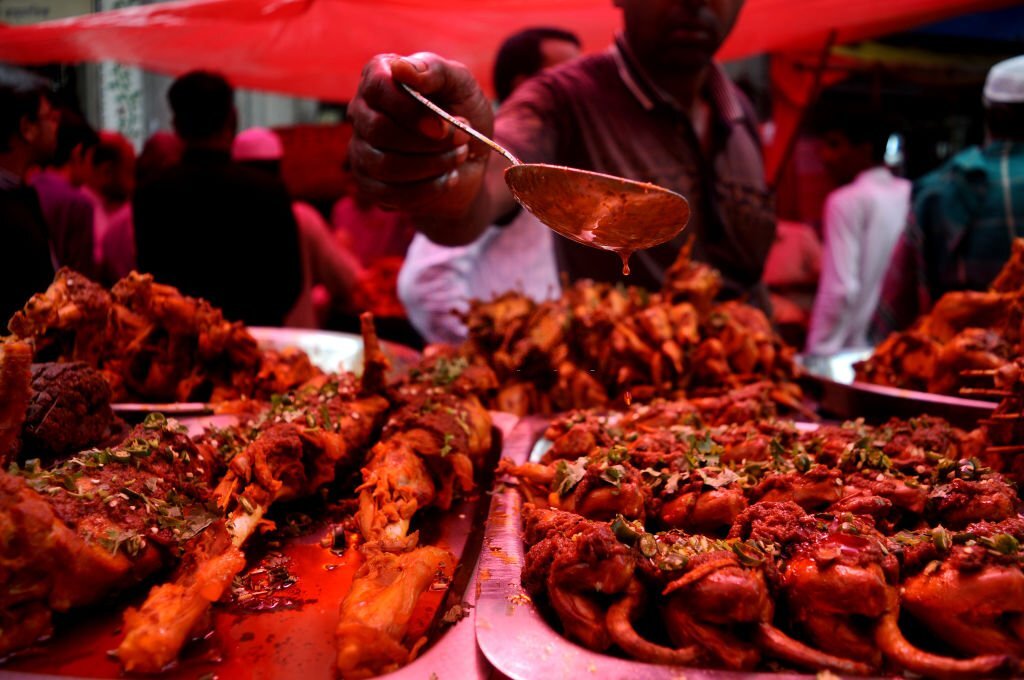
The Cox’s Bazar tourism carnival is split into about 16 zones. Families can head to a kids’ zone, a food zone with local dishes and a market for handicrafts and geographical indication (GI) products. Adventure fans can try kayaking, go-karting, beach sports, camping and stargazing. Quieter visitors can read in an open library by the sea or join yoga and wellness sessions. Evenings bring folk shows at an open theatre, concerts and open-air film screenings. The organisers also plan programmes for Victory Day, Christmas and New Year.
Camping is one of the calmer pleasures here. The organizers report that tent stays and food for more than 1,000 people at once are available. Local entrepreneurs and cottage artisans can sell their products on site. If you want to take home a local treat, our guide to natural honey in Bangladesh explains how to choose well. Ask each seller where the product comes from.
What Should Visitors From Abroad Check Before Booking?
A warm welcome still comes with a few catches. Bangladesh Monitor also notes that international arrivals to Cox’s Bazar have stayed limited. So plan the trip carefully rather than count on fixes on the day. Here are the checks that matter most:
- Visa. The Special Branch’s visa on arrival page lists strict conditions. They include a 30-day single-entry stay, a return ticket and at least USD 500 in cash or a card. Only some travellers qualify, so confirm your category with the authorities before you fly.
- Flights. Cox’s Bazar Airport has been declared international, and The Financial Express reported a proposed Biman Dhaka–Cox’s Bazar–Muscat service for 10 November.
- Tickets. Book your tickets from reliable booking sites. Bangladesh Post named Tickify Limited as the exclusive online booking partner, so check its listing before you go.
- Saint Martin’s Island. The 2026-27 season runs from 1 November to 15 March, and overnight stays are allowed only in December and January. Visitors need a travel pass and pay a Tk 100 conservation fee, and ships leave from Nuniyachhara jetty in Cox’s Bazar.
- Plastic. The carnival area is meant to be plastic-free, so carry a reusable bottle and a cloth bag.
Will the Beach Feel Safe and Clean?
Safety and cleanliness top the list of concerns around the Cox’s Bazar tourism carnival. Barlekha Today reports that tourist police, lifeguard teams and CCTV will provide round-the-clock safety. Security adviser Captain Mohammad Ashikur Rahman told news reporters that CCTV will cover the whole area, with AI-assisted face detection planned. Bangladesh Post reported earlier that magistrate-led teams would patrol tourist areas to prevent harassment and overcharging. Considering the tourists demand for cleaner beaches and lower food prices teams will be deployed to monitor the the situation carefully. Meanwhile, at Sugandha Point, a plastic-bottle monster built by the Bidyanondo Foundation shows how waste reaches the sea.
Where Can You Go When the Carnival Closes for the Night?
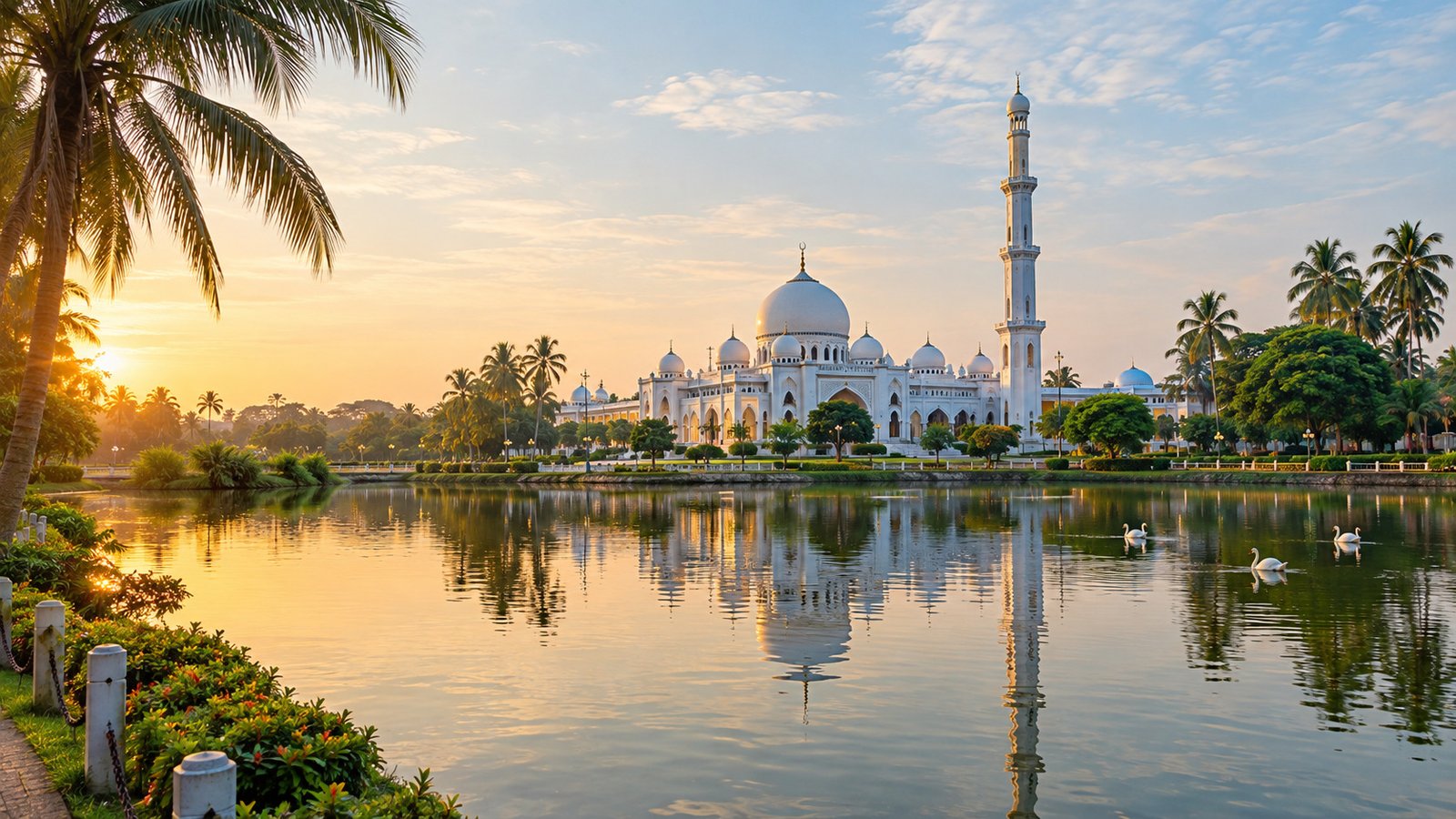
The Cox’s Bazar tourism carnival is a start, not the whole trip. Other tourist attraction like Inani, Himchari, the Adinath Temple on Maheshkhali Island, the Buddhist temples of Ramu and Dulahazara Safari Park among nearby sights. Saint Martin’s Island adds a coral-island day trip when the season allows. After the beach days end, our guide to the Sundarbans as Bangladesh’s natural jewel offers a very different coast to explore. Delta lovers can also read our guide to Barishal’s mosques and canals. For more ideas, browse Unseen Bangladesh, a platform that inspires young people to explore.
Why the Cox’s Bazar Tourism Carnival Deserves a Warm Welcome
The Cox’s Bazar tourism carnival gives the sea a second act after sunset. It brings artists, families and travellers together in one pine grove. Real questions remain, from flights to prices, so honest planning will help. Still, the idea is generous, and the sand sculptures are worth the journey. Come curious, carry your own bottle and leave the beach cleaner than you found it. Sand art is temporary, so come while the story is still standing.