



Women Entrepreneurs Driving the Economy of Bangladesh’s Hill Districts
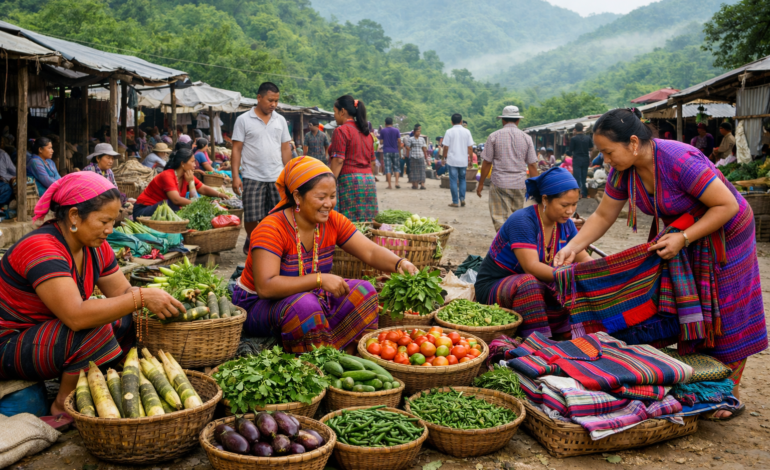
In the vibrant markets of Bangladesh’s hill districts, a unique economic pattern is visible. Unlike many other parts of the country where men dominate trade, women play a leading role in running businesses and managing market activities across the region.
From vegetable vendors and traditional weavers to modern entrepreneurs using digital platforms, women in the Chittagong Hill Tracts (CHT) including Bandarban, Rangamati, and Khagrachhari have become key contributors to the local economy. Their participation has not only supported household incomes but also helped preserve cultural traditions and create new opportunities for economic growth.
This distinctive economic landscape highlights how women-led entrepreneurship is shaping commerce in one of Bangladesh’s most culturally diverse regions.
Markets Where Women Lead
In many hill district markets, women are the most visible traders. Early each morning, they arrive with baskets of fresh vegetables, fruits, and wild plants collected from nearby forests and farms.
These vendors sell a variety of locally grown produce such as pumpkins, cucumbers, leafy vegetables, bamboo shoots, and seasonal fruits. The products often come directly from small plots of land or from traditional jhum cultivation, a shifting farming method widely practised by Indigenous communities in the hills.
The markets not only provide an outlet for agricultural products but also serve as a crucial income source for rural families.
For many households, the money earned from daily market sales helps pay for essential expenses such as food, education, and healthcare.
A Tradition Rooted in Indigenous Culture
The strong presence of women in local commerce is partly linked to the social structure of many Indigenous communities in the Chittagong Hill Tracts.
Unlike some traditional social settings elsewhere in the country, women in several hill communities have long participated actively in agricultural production and household economic decisions. Their involvement in farming naturally extends into market trading.
This cultural acceptance of women’s economic participation allows them to engage in business activities with fewer restrictions on mobility.
As a result, the markets of the hill districts have evolved into spaces where women can earn, negotiate, and manage their own small enterprises.
Beyond Farming: Expanding into Retail
While many women begin their entrepreneurial journey as vegetable vendors, others expand into retail businesses as they accumulate experience and savings.
In Bandarban’s popular Burmese Market, a significant portion of clothing stores are operated by women. These shops sell traditional garments produced by local Indigenous weavers.
Customers visiting the market can find colourful handwoven fabrics and traditional outfits that represent the cultural heritage of different ethnic communities in the region.
Women business owners often manage the entire operation from sourcing products from village weavers to selling them to tourists and local buyers.
This type of small retail entrepreneurship has gradually created a network of women-led businesses throughout the hill districts.
Preserving Traditional Crafts
The growth of women-led businesses has also played an important role in protecting traditional crafts that might otherwise disappear.
Many women entrepreneurs specialise in selling handmade textiles produced using traditional weaving techniques. These garments often feature intricate patterns that reflect the identity and history of Indigenous communities.
The demand for such traditional clothing helps support village-based weaving activities, providing income opportunities for artisans who might otherwise struggle to access larger markets.
Through their businesses, women traders act as a bridge between rural producers and urban consumers.
In this way, entrepreneurship not only improves livelihoods but also preserves cultural heritage.
Rise of a New Generation of Entrepreneurs
A new generation of young entrepreneurs is also emerging in the hill districts.
Some women have started using social media platforms and online marketplaces to sell traditional clothing, handicrafts, and local products to customers across Bangladesh.
Digital platforms allow these entrepreneurs to reach a much wider audience than local markets alone.
Online orders from major cities such as Dhaka and Chattogram have created new opportunities for small businesses that were once limited to local customers.
The combination of traditional craftsmanship and modern marketing tools is helping women entrepreneurs expand their reach and increase their income.
Breaking Stereotypes in Business
In recent years, women in the hill districts have also entered sectors traditionally dominated by men.
Some have launched businesses in areas such as sports equipment sales, retail distribution, and tourism-related services.
These ventures demonstrate how women entrepreneurs are gradually challenging conventional expectations about career choices.
By identifying market gaps and responding to consumer demand, they are building successful businesses that contribute to local economic development.
Their achievements also inspire younger generations to consider entrepreneurship as a viable career path.
Economic Impact on Local Communities
The growing number of women entrepreneurs has had a significant impact on local economies in the hill districts.
Women-run businesses generate employment, support agricultural production, and stimulate trade in rural areas.
Their activities also encourage financial independence within households. When women earn income, it often contributes directly to family welfare, including children’s education and healthcare.
This pattern has been observed in many communities where women’s economic participation leads to improved living standards.
In addition, markets dominated by women traders help create a stable supply chain for locally produced goods.
Challenges Still Exist
Despite their achievements, women entrepreneurs in the hill districts continue to face several challenges.
Limited access to financial services, including bank loans and credit facilities, often makes it difficult to expand businesses.
Infrastructure limitations such as poor transportation networks and limited market facilities also create obstacles for traders in remote areas.
Land ownership rights can also be complicated in some Indigenous communities, which restricts women’s ability to invest in agriculture or property-based businesses.
Addressing these challenges will require policy support, improved financial inclusion, and infrastructure development.
Opportunities for Inclusive Growth
Economists and development experts say the hill districts provide an important example of how women’s participation can drive local economic growth.
Encouraging women entrepreneurs through training, financial assistance, and better market access could significantly strengthen regional development.
Programs focused on supporting traditional crafts, promoting eco-tourism, and expanding digital commerce could further boost income opportunities for women-led businesses.
At a national level, Bangladesh has made progress in improving women’s participation in the workforce, but many sectors still remain male-dominated.
The experience of the hill districts demonstrates how inclusive economic practices can unlock new sources of productivity and innovation.
A Unique Model of Local Economy
The markets of Bangladesh’s hill districts reveal a distinctive model of economic activity where women are not only participants but leaders.
Their involvement in farming, trading, retail, and entrepreneurship highlights the powerful role women can play in shaping local economies.
From small roadside markets to growing online businesses, women entrepreneurs are transforming commerce across the hills.
Their success shows that when communities support women’s economic participation, the benefits extend far beyond individual businesses strengthening families, preserving culture, and driving sustainable economic growth.