



The Role of Women in the Handicraft Industry of Bangladesh
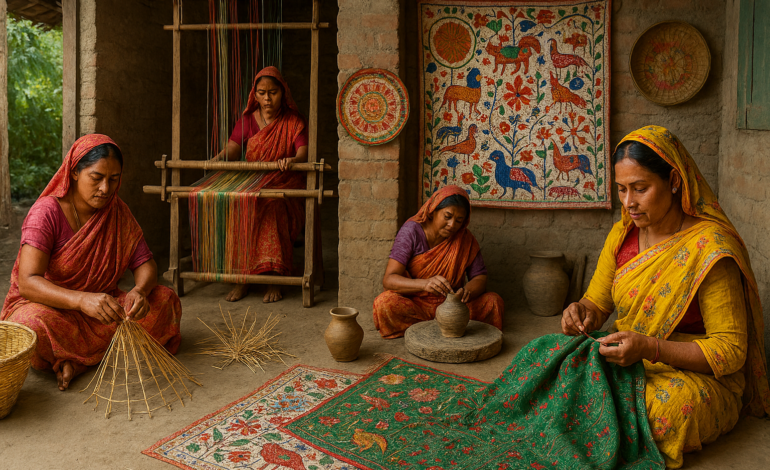
In the vibrant tapestry of Bangladesh’s cultural and economic life, the handicraft industry holds a distinctive place, blending tradition, creativity, and community identity. Central to this sector are the countless women artisans whose skills have shaped some of the nation’s most beloved crafts. From intricate weaving and pottery to bamboo craft, pottery, embroidery, and traditional textiles, women bring not only artistic mastery but also economic resilience to their families and communities.
As Bangladesh increasingly positions itself as a hub for ethical and sustainable artisanal products, the role of women in the handicraft industry is gaining deserved recognition, not merely as artisans, but as cultural ambassadors, economic contributors, and agents of social change.
A Historical Tradition of Women’s Craftsmanship
The roots of handicraft traditions in Bangladesh extend deep into history. For centuries, weaving, embroidery, pottery, and rural artisanal practices were often passed down through generations within families and communities. Women frequently learned these skills from mothers, aunts, or female neighbours, creating a living legacy of craftsmanship that reflects regional identity and community aesthetics.
Women’s role in craft production was traditionally complementary to household life, fitting into routines such as child care, farming cycles, and social obligations. Over time, these activities evolved from part time work into sustained economic participation, particularly as demand for unique, handmade products increased.
Today, women artisans sustain and innovate on centuries-old methods, blending traditional aesthetics with contemporary sensibilities. Their work not only preserves cultural memory but also adapts it to modern markets.
Women as Economic Contributors
The contribution of women to the handicraft industry is not only cultural but also economic in significance. For many rural and semi-urban households, craft production offers a viable source of income that operates alongside agricultural labour or informal trade.
A substantial number of women engaged in handicrafts are either sole earners or contribute a meaningful share to household income. This economic role has positive ripple effects:
- Financial independence and bargaining power within households
- Support for children’s education and health expenses
- Investment in local community activities and savings groups
- Skill development and capacity building through craft cooperatives
According to industry observers, empowering women in the handicraft sector can help reduce rural poverty, especially in regions where limited agricultural land or seasonal work creates economic vulnerability.
Craft Specialties Where Women Excel
Women in Bangladesh contribute across a wide range of handicraft specialities. Some of the most notable include:
Traditional Textiles and Weaving
Women weavers produce fabrics such as jamdani, kantha embroidery, and ikat, each with its own heritage and stylistic markers. These textile traditions are labour intensive and require high skill, patience, and creativity, traits that women artisans bring to the fore.
Pottery and Ceramic Art
In many rural areas, women participate in pottery production shaping clay by hand, decorating with traditional motifs, and firing in local kilns. This craft sustains livelihoods and maintains an art form that connects contemporary makers with ancestral practices.
Bamboo and Cane Crafts
Bangladesh’s abundant bamboo resources support an industry of baskets, mats, furniture, and decorative items. Women often contribute to weaving and finishing processes, infusing simple raw materials with intricate designs.
Embroidery and Needlework
Bangladesh’s rich embroidery traditions, spanning multiple ethnic and regional styles, owe much to women’s creativity. Embellished textiles, cushion covers, and garments showcase detailed needlework that elevates everyday fabrics into objects of art.
Women’s Leadership in Craft Cooperatives
One of the most transformative trends in Bangladesh’s handicraft sector is women’s rising leadership in craft cooperatives and community-based organisations. These cooperatives serve not only as production units but also as platforms for training, collective marketing, and peer mentorship.
In many regions, women’s craft cooperatives have:
- Organized training sessions on quality control and design innovation
- Facilitated access to urban and international markets
- Improved bargaining power with buyers
- Enabled shared workshop spaces and bulk purchasing of materials
Through collective action, women artisans are asserting greater control over production decisions, pricing strategies, and supply chain relationships. This shift from informal home-based work toward organisation and collective bargaining marks a significant step in economic empowerment.
Challenges Faced by Women in Handicrafts
Despite their critical role, women artisans face persistent challenges that can limit their full potential. These include:
Limited Market Access
Many women producers, especially in rural areas, struggle to connect with larger, paying markets. Middlemen and fragmented supply chains often capture the majority of profit margins, leaving artisans with limited financial reward for their work.
Lack of Formal Recognition
Craft work is often undervalued in formal economic statistics, which hinders policy attention and targeted support. Many women artisans remain excluded from social protections or credit facilities available to formal workers.
Education and Skill Gaps
Reduced access to formal education in some regions can limit the ability of women artisans to navigate pricing negotiations, digital marketing, or design adaptation for global markets.
Balancing Domestic Responsibilities
For many women, craft work must be balanced with household duties, childcare, and seasonal agricultural labour. This multitasking can constrain time available for production scaling or formal training participation.
Addressing these challenges requires coordinated efforts from policymakers, craft organisations, commerce platforms, and civil society.
Digital Platforms and Market Expansion
The rise of e-commerce and digital marketing platforms has opened new avenues for women artisans to reach national and international buyers. Online marketplaces, social media showcases, and craft-focused retail platforms offer ways for individual and cooperative brands to display products, tell their stories, and receive direct payment.
This shift has particular relevance for women who may have limited mobility due to social or familial obligations. Digital connectivity allows them to:
- Expand customer reach beyond local markets
- Control pricing and branding directly
- Craft stories that appeal to conscious consumers
- Participate in virtual craft fairs and promotions
Though digital literacy and internet access can still be barriers, many NGOs and training initiatives are helping women acquire essential digital skills to succeed online.
Craft Tourism and Cultural Exchange
Bangladesh’s growing tourism sector presents an additional opportunity for women in handicrafts. Craft villages, homestays, and cultural tours that highlight artisanal production offer tourists immersive experiences tied to local identities. Women artisans often play central roles in these experiences, demonstrating techniques, narrating cultural histories, and engaging with visitors.
Craft tourism not only boosts income but also encourages cultural exchange and appreciation for Bangladesh’s intangible heritage.
Policy and Institutional Support
Recognizing the value of women’s contributions, government initiatives, non-governmental organisations, and development partners have introduced programs to support handicraft artisans. These include:
- Skill development workshops on design, quality, and business management
- Microfinance and credit access tailored to craft producers
- Exhibitions and trade fairs showcasing handmade products
- Export facilitation programs connecting artisans with overseas buyers
While progress has been made, many advocates call for expanded policy support that integrates craft work into national economic planning, promotes fair trade practices, and ensures women artisans receive social protections.
Cultural Preservation Through Women’s Work
Women’s craft work is deeply tied to cultural memory and identity. By sustaining traditional motifs, musical patterns, weaving techniques, and functional arts, women act as custodians of cultural heritage. Their continued practice not only preserves historical knowledge but also enriches contemporary design trends.
In academic and cultural circles, there is growing recognition of handicraft as a living heritage dynamic, evolving, and rooted in community experience. Women’s voices and stories are central to this understanding.
The Future of Women in Bangladesh’s Handicraft Industry
Looking ahead, the role of women in Bangladesh’s handicraft industry is poised to expand further as the global economy increasingly values sustainability, craftsmanship, and ethical sourcing. Bangladesh’s artisanal products handmade, locally inspired, and skillfully produced are well positioned to meet demand for products that reflect culture, quality, and authenticity.
Women artisans, empowered through organisation, technology, and market access, can lead this evolution. Their contributions will not only sustain livelihoods but also shape how Bangladesh presents itself to the world: as a country where tradition, creativity, and economic participation intersect.
Handicraft Industry in Nutshell
The handicraft industry of Bangladesh is more than a collection of products. It is a living expression of community identity, cultural continuity, and creative resilience. At the heart of this sector are women whose skills, dedication, and entrepreneurial spirit have sustained and enriched it.
From rural workshops to digital showrooms, women artisans are redefining what it means to be craft producers in a globalising world. Their work continues to shape cultural narratives, support economic inclusion, and inspire future generations.
By recognising and supporting their role, Bangladesh not only honours its heritage but also unlocks pathways for sustainable growth and shared prosperity.