



Why major reforms are essential in Bangladesh’s health sector?


Bangladesh stands at a pivotal moment in its development journey, and few areas reflect this urgency more clearly than Bangladesh’s health sector. The country has made notable progress over the past decades in reducing child mortality, improving immunisation and expanding primary health care, yet the system now faces immense pressure from demographic shifts, rapid urbanisation, climate vulnerability and an increasingly complex disease burden.
There is growing consensus among national planners, international observers and public health experts that Bangladesh’s health sector must undergo major reforms to remain fit for purpose. The need is not only structural but also strategic, financial and administrative.
Rising Pressure on an Underprepared System
Bangladesh’s health sector was built around a strong foundation of primary health care that helped the country make fast gains during the 1990s and early 2000s. Community clinics, expanded immunisation drives, a nationwide network of health assistants and a policy focus on family planning allowed Bangladesh to stand out as a low income country that achieved remarkable social development outcomes. International development agencies frequently cited Bangladesh as an example of how resource constrained nations could deliver strong results through community oriented models.
As economic growth accelerated and the population became more urbanised, Bangladesh’s health sector slowly shifted away from its community based origins toward a mixed system increasingly dominated by private providers. The private sector today delivers the majority of outpatient services, especially in urban areas, while the public sector remains the backbone for rural, emergency and specialised care. This fragmentation has created disparities in access, quality and affordability. Bangladesh’s health sector did not experience parallel growth in regulatory oversight, digital health infrastructure or standardised training frameworks, which means that the system is uneven in both capacity and governance.
During the COVID pandemic, Bangladesh’s health sector came under unprecedented stress, revealing long standing weaknesses. Shortages of oxygen, ICU beds, trained personnel and diagnostics exposed years of underinvestment. Although frontline workers demonstrated extraordinary resilience, the crisis clearly showed that the country needs a more robust and coordinated system that can withstand emergencies, serve a large population and adapt to future shocks.
Current State Reveals Progress and Persistent Gaps
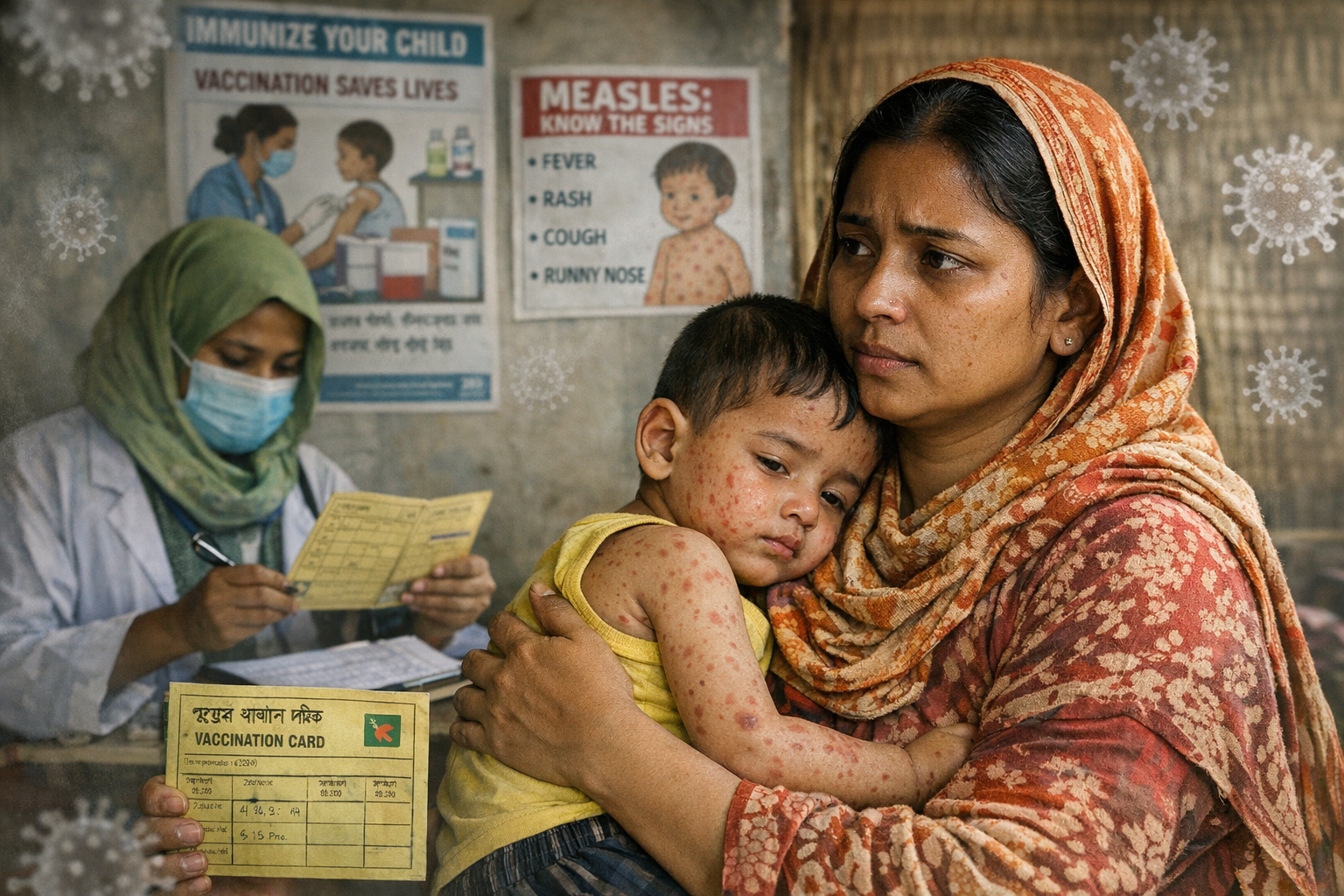
Despite these challenges, Bangladesh’s health sector has achieved several measurable gains. The country continues to perform well in vaccination coverage, maternal mortality has declined although the pace has slowed, and life expectancy remains relatively high compared to income peers. Public private partnerships have expanded access to diagnostics, and digital health initiatives like telemedicine grew rapidly after the pandemic.
However, the gaps in Bangladesh’s health sector remain stark. Public spending on health as a proportion of GDP is among the lowest in South Asia. According to international health financing benchmarks, low public investment also forces households into high out of pocket expenditure. As a result, millions of families face financial hardship every year due to medical bills. This limits health seeking behaviour for early stage illnesses and increases long term costs for the system.
Bangladesh’s health sector faces severe human resource shortages. The number of doctors, nurses and midwives per capita is significantly below the WHO recommended threshold. Nurse to doctor ratios are critically low, especially outside major cities. Many facilities lack essential specialists, and the distribution of trained medical personnel skews heavily toward Dhaka and Chattogram. This imbalance affects service quality and creates crowded tertiary hospitals that cannot function efficiently when basic care is absent at lower tiers.
Infrastructure gaps also persist. Bangladesh’s health sector continues to operate many outdated facilities that either lack modern equipment or operate with insufficient maintenance. Procurement systems are often slow or inefficient. As a result, even when new technologies are available globally, local hospitals may lag years behind in adoption. This contributes to limited diagnostic capacity and delays in treatment.
Governance Challenges Create Negative Outcomes for Public Trust
Governance remains one of the biggest concerns facing Bangladesh’s health sector. Fragmented decision making, bureaucratic delays, lack of coordination between ministries and insufficient regulatory enforcement all reduce the effectiveness of reforms. Licensing, monitoring and quality control require substantial strengthening. Many private clinics operate without consistent oversight, and variations in service quality continue to widen.
Corruption remains a sensitive but unavoidable challenge. Informal payments, inefficiencies in procurement and irregularities in staffing appointments have been frequently discussed by health policy experts. These governance weaknesses reduce public trust in Bangladesh’s health sector and discourage many qualified professionals from pursuing public service careers.
The absence of strong health information systems further complicates governance. Bangladesh’s health sector needs unified and reliable data to support evidence based planning. Without consolidated digital records, policymakers struggle to track disease trends, measure service quality or allocate resources strategically. Although digitalisation efforts are underway, they remain far from comprehensive.
Comparison With Neighbouring Countries Highlights Urgent Needs
When compared with neighbouring nations, Bangladesh’s health sector shows both strengths and weaknesses. The country has historically outperformed Pakistan in key maternal and child health indicators and has shown more equitable health outcomes than India in some categories. However, the gap is widening as regional neighbours strengthen their systems.
India has invested heavily in tertiary facilities, insurance schemes and technological infrastructure. Its Ayushman Bharat program has created a wide insurance network that reduces financial burden for millions of families. Sri Lanka continues to maintain one of the best public health systems in Asia with strong primary care and universal service access. Nepal, despite limited resources, has implemented structural reforms including decentralised health governance that has led to improvements in service delivery.
In contrast, Bangladesh’s health sector still spends a far lower share of its GDP on public health compared to India and Sri Lanka. The country also lags in hospital bed capacity, availability of trained nurses and coverage of financial protection schemes. While Bangladesh has made progress in community health services, it has not matched the pace of its neighbours in modernising public hospitals or expanding social health insurance.
This comparison underscores the need for major reforms. To remain competitive and meet the needs of a growing middle income population, Bangladesh’s health sector must evolve in both capacity and strategy. Regional benchmarks show that without significant investment and structural change, the gap will widen and public expectations will continue to rise.
Human Resource Crisis Generates Impact on Health Outcomes
Bangladesh’s health sector cannot achieve universal health coverage without addressing its workforce shortages. The country faces a long standing imbalance in the doctor nurse technician mix. The healthcare workforce is also ageing, with many experienced clinicians nearing retirement. Public sector recruitment processes are slow, and training opportunities for nurses and midwives remain insufficient.
Medical education quality varies widely across institutions. The rapid expansion of private medical colleges has not always been matched by rigorous accreditation. As a result, Bangladesh’s health sector produces graduates with uneven competencies, placing additional strain on hospitals and limiting patient safety. Continuous professional development is limited, and specialists are concentrated in a handful of major hospitals.
Migration compounds the problem. Many trained Bangladeshi health professionals seek work abroad due to better pay and working conditions. This brain drain weakens local capacity and increases the burden on the remaining workforce.
Urban Rural Divide Poses Serious and Unequal Results
Bangladesh’s health sector must contend with a significant urban rural divide. Rural communities often rely on community clinics for basic care, yet these clinics face staffing shortages, irregular supply chains and limited diagnostic tools. Many rural patients travel long distances to reach sub district or district hospitals, which themselves may lack specialists or essential equipment.
Urban health systems face a different set of challenges. Rapid population growth in Dhaka, Chattogram and other cities has led to overcrowding in emergency rooms and outpatient departments. Private hospitals offer better quality but are unaffordable for a large segment of the population. Public hospitals, while more affordable, struggle with overwhelming patient loads and limited infrastructure.
Middle income countries that successfully bridged this gap invested heavily in rural health workforce development, regional medical universities and decentralised management. Bangladesh’s health sector must adopt similar actions if it wants to create equitable service delivery across the entire population.
Way Forward and Positive Opportunities for Transformative Change
Despite the sizable challenges, Bangladesh’s health sector has enormous potential for reform. The country has a young population, rising literacy, digital connectivity and strong political commitment to achieving universal health coverage. With coordinated policy shifts, Bangladesh can modernise its system and set a regional example in resilient, cost effective health care.
Reform must begin with investment. Bangladesh’s health sector needs a substantial increase in public financing to reduce out of pocket expenditure and strengthen service delivery. Health insurance schemes, whether community based or national in design, should be expanded so that families are protected from financial shocks. Increased investment must also target public hospitals, modern equipment, emergency preparedness and digital health infrastructure.
Strengthening human resources is equally essential. The country must upgrade nursing education, expand midwifery programs, modernise medical curricula, establish stricter accreditation and create incentives to deploy skilled staff to rural areas. Bangladesh’s health sector will benefit from competitive salaries, structured career pathways and partnerships with international training institutions. Retention strategies can reduce the rate of migration and ensure continuity of skilled professionals.
Governance reform is a central pillar. Bangladesh needs transparent procurement, stronger regulatory enforcement, unified health information systems and decentralised service management. Effective governance will reduce regional disparities, increase efficiency and build public trust.
Finally, the country must embrace technology. Digital health records, telemedicine platforms, AI assisted diagnostics and supply chain automation can significantly increase efficiency. Bangladesh’s health sector is already experimenting with mobile health solutions, and scaling these innovations could transform patient access in both rural and urban settings.
Major reforms in Bangladesh’s health sector are no longer optional. They are essential for ensuring that the country can serve its growing population, respond to emerging challenges and meet global development goals.
The strengths of Bangladesh’s health sector lie in its history of community driven success, but the future depends on how effectively the system modernises, invests and innovates. Learning from neighbouring countries, addressing workforce shortages, closing the urban rural gap and strengthening governance can create a health system that is resilient, equitable and sustainable. With the right reforms, Bangladesh has the potential to transform Bangladesh’s health sector into a model for other developing nations.