




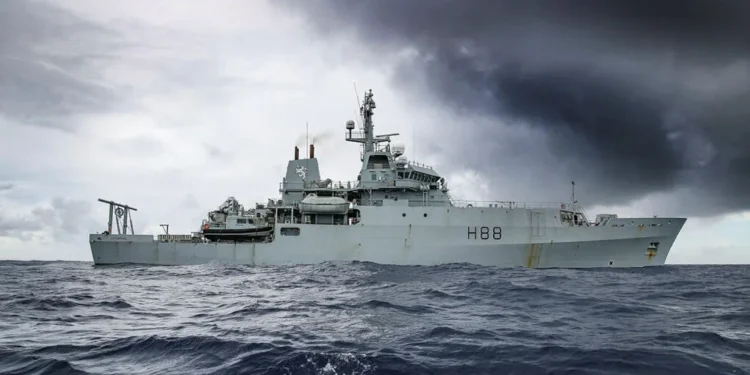

UK–Bangladesh Sign Deal to Acquire Former Royal Navy Vessel: A Strategic Boost for Bangladesh Navy
In a significant step toward modernising maritime capabilities, the Government of the United Kingdom and the Bangladesh Navy have signed a formal agreement for the acquisition of the former Royal Navy survey vessel, HMS Enterprise. This development marks a milestone in bilateral defence cooperation, enhancing Dhaka’s naval capacity in hydrographic surveying, maritime security, and oceanographic research.
The deal reflects Bangladesh’s growing focus on maritime development and regional engagement, particularly in the Bay of Bengal and broader Indo-Pacific theatre, where naval capabilities are increasingly central to national security, economic interests, and strategic partnerships.
Overview of the HMS Enterprise Acquisition
The agreement between the UK and Bangladesh was signed amid diplomatic and defence engagements that underscore shared interests in improving interoperability, technical capacity, and maritime domain awareness. Under the terms, the Bangladesh Navy will acquire HMS Enterprise, a vessel with a long history of service in the Royal Navy.
The ship — originally commissioned in 2003 — will undergo a transfer process that includes refitting and training support, enabling the Bangladesh Navy to deploy it for various missions. Although financial details of the acquisition have not been fully disclosed, the framework is structured to support capacity building and operational readiness.
Officials on both sides described the deal as part of a broader defence and security relationship, aligned with mutual priorities in maritime stability, humanitarian assistance, and scientific collaboration.
HMS Enterprise: Capabilities and Role
HMS Enterprise (H88) is a multi-purpose survey vessel built for hydrographic missions, oceanographic research, and maritime mapping. As a former asset of the Royal Navy, Enterprise brought decades of experience charting sea lanes, conducting research, and supporting naval operations.
Key Capabilities of HMS Enterprise
- Hydrographic survey equipment: Enables detailed mapping of seabed topography and underwater features.
- Oceanographic sensors: Collects environmental and marine data.
- Navigation and charting systems: Useful for safe passage planning and maritime domain awareness.
- Advanced communications: Supports coordination during joint missions and civilian operations.
These capabilities make Enterprise a valuable platform not only for traditional naval missions but also for scientific and environmental fields such as coastal monitoring, seabed mapping, and offshore resource assessment.
Bangladesh Navy’s Maritime Priorities
Bangladesh’s maritime interests have expanded significantly in recent decades. With more than 700 km of coastline along the Bay of Bengal and a legally recognised Exclusive Economic Zone (EEZ) under the United Nations Convention on the Law of the Sea (UNCLOS), Bangladesh has stepped up efforts to protect its maritime rights, resources, and strategic interests.
Strategic Objectives for the Acquisition
- Hydrographic Surveying: Accurate nautical charting improves maritime safety for commercial and defence navigation.
- Maritime Domain Awareness: Enhances monitoring of coastal waters, shipping routes, and offshore assets.
- Resource Management: Supports sustainable fisheries, offshore energy exploration, and environmental protection.
- Search and Rescue (SAR): Improves capacity to respond to maritime emergencies.
- Training and Capacity Building: Provides operational experience and technical training for naval personnel.
Officials say that the acquisition will help Bangladesh better manage its maritime territory while enhancing cooperation with friendly navies in the region.
Why This Acquisition Matters for Bangladesh
Dhaka’s decision to acquire a vessel like HMS Enterprise fits within its broader naval modernisation strategy. Until the transfer, Bangladesh had relied largely on patrol boats, frigates, and auxiliary vessels designed for surface security and coastal defence. The arrival of a survey vessel fills a niche that supports data-driven operations and scientific understanding of maritime spaces.
This capability is increasingly important for several reasons:
1. Economic Significance
Accurate hydrographic data underpins safe shipping and port operations, which are essential for Bangladesh’s export-oriented economy. Enhanced nautical maps reduce risks for large cargo vessels visiting ports like Chattogram and Mongla.
2. Offshore Resource Security
Bangladesh’s EEZ holds potential for natural gas, fisheries, and marine resources. A vessel like Enterprise enables structured exploration support, environmental monitoring, and baseline data collection that contribute to long-term economic planning.
3. Regional Collaboration
Enterprise can participate in joint missions with allied navies such as those of the United Kingdom, India, Japan, and others engaged in Bay of Bengal maritime security frameworks — promoting interoperability and diplomatic ties.
4. Climate and Environmental Research
With climate change impacts rising, coastal communities in Bangladesh face storms, tidal surges, and erosion. Hydrographic and oceanographic data collected by Enterprise can feed into climate models and coastal resilience planning.
UK–Bangladesh Defence and Diplomatic Relations
The transfer of HMS Enterprise comes at a time when Bangladesh and the United Kingdom are broadening strategic engagement, especially in defence, training, and maritime security.
In recent years, the UK has deepened cooperation with Asian partners through initiatives such as:
- Support for capacity building in Southeast Asia
- Naval exercises and joint training missions
- Defence industry collaboration
For Bangladesh, the UK remains a valuable partner for technology transfer, maritime training, and institutional strengthening.
Officials from the UK Ministry of Defence have described the initiative as part of their commitment to supporting partner nations in improving maritime governance and capacity enhancement.
Training and Capacity Building
The acquisition agreement includes provisions for training Bangladesh Navy personnel in operation, maintenance, and technical use of Enterprise’s systems.
Training programmes are expected to cover:
- Navigation and bridge management
- Hydrographic and oceanographic equipment
- Charting and geospatial information systems
- Operational planning and risk assessment
By combining hands-on training with classroom instruction, the Bangladesh Navy aims to build a cadre of specialists capable of running sophisticated maritime operations.
This capacity building aligns with long-term objectives of self-reliance and technical proficiency within the naval workforce.
Complementing the Maritime Strategy
Bangladesh’s maritime strategy includes not just defence preparedness but also economic growth and environmental stewardship.
Enterprise’s capabilities support multiple pillars:
Maritime Safety
Enhanced surveys contribute to safer navigation channels.
Scientific Research
Oceanographic data supports fisheries management and environmental monitoring.
International Cooperation
Participation in maritime research missions improves diplomatic and scientific collaboration.
National Security
Improved domain awareness helps deter illicit activities and reinforces coastal defence.
Maritime experts have noted that acquiring a dedicated survey vessel underscores Bangladesh’s maturing approach to managing its maritime interests.
Global and Regional Implications
The Bay of Bengal is a region of growing economic and strategic importance. With expanding shipping lanes, offshore energy development, and rising geopolitical focus, countries in the region are investing in maritime capability.
Bangladesh’s acquisition of a survey vessel aligns with regional developments such as:
- India’s hydrographic fleet expansion
- Cooperation among BIMSTEC member states
- Maritime research partnerships with ASEAN nations
As navies increasingly engage in non-traditional security roles (including disaster response and resource protection), platforms like Enterprise offer versatile utility in scenarios beyond conventional defence.
Future Prospects and Implementation
The agreement between the UK and Bangladesh sets the stage for several follow-on steps:
- Formal transfer of the vessel
- Refitting and modification for Bangladesh’s needs
- Training for Bangladesh Navy personnel
- Operational deployment within the Bay of Bengal
Officials have emphasised that the transition will be carefully managed to ensure the vessel enters service smoothly and effectively.
In addition, there are indications that future partnerships may include collaboration with other friendly navies on training exercises, research expeditions, and shared maritime domain awareness initiatives.
A Strategic Maritime Enhancement
The acquisition of the former HMS Enterprise by the Bangladesh Navy represents a major strategic milestone in the country’s maritime development trajectory. By expanding capabilities in surveying, research, and domain awareness, Bangladesh enhances both national security and economic resilience.
As the vessel joins Bangladesh’s fleet, its impact is likely to extend beyond naval operations into areas such as environmental research, international cooperation, and regional security engagements.
For a nation with a long coastline and expansive maritime interests, the integration of Enterprise into naval service reflects a thoughtful, forward-looking approach, one that balances defence priorities with scientific enquiry, economic opportunity, and diplomatic engagement.