




How Soft Shell Crab Exports Are Sustaining Bangladesh’s Southwest
In the southwestern coastal regions of Bangladesh, a unique farming and export opportunity is emerging as a lifeline for local communities which is soft shell crab farming and export. These delicate crustaceans, prized in international markets for their tender texture and culinary versatility are creating sustainable income streams, driving economic activity and transforming the livelihoods of thousands of coastal families.
Once viewed as a niche product, soft shell crabs are now one of Bangladesh’s most promising aquaculture exports. With global demand rising steadily, especially in East Asia and Europe, producers in Khulna, Bagerhat and Satkhira are finding new markets and new opportunities.
A Rising Export Pillar in Coastal Bangladesh
Bangladesh’s southwest region is known for its extensive networks of rivers, floodplains and estuaries. These natural conditions have long supported traditional fishery and shrimp farming. However, the emergence of soft shell crab cultivation is adding a new dimension to the regional economy.
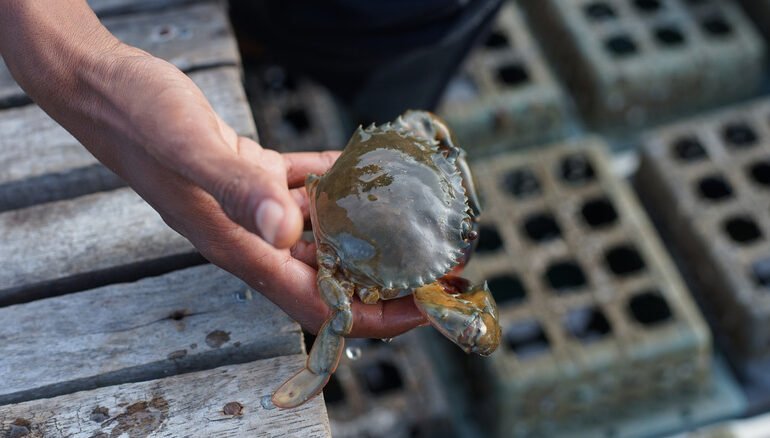
Soft shell crabs are simply blue crabs that are harvested just after they shed their old shell and before the new shell hardens. At this stage they are entirely edible, and their popularity has grown rapidly among global consumers especially in China, Japan, Thailand and parts of Europe where soft shell crab dishes are regarded as gourmet delicacies.
Unlike hard shell crab products, soft shell crab exports carry a premium price, increasing earnings for farmers and exporters alike. With proper training, infrastructure support, and improved supply chains, this segment of aquaculture is poised to become a stable contributor to the national economy.
Why Soft Shell Crab Farming Works in Bangladesh
Several factors make soft shell crab farming particularly suitable for the southwest region:
1. Ideal Natural Environment
The tidal rivers, mangrove ecosystems and saline waters of the Sundarbans delta provide excellent habitats for blue crabs, the species most commonly used for soft shell crab production. These conditions support faster growth and moulting cycles, which farmers can leverage through proper aquaculture practices.
2. Low Capital Requirements
Unlike some forms of aquaculture that require heavy infrastructure investment, soft shell crab farming can begin with relatively modest capital. Many farmers adapt existing shrimp ponds or fish enclosures to produce soft shell crabs, enabling them to diversify incomes without large upfront expenses.
3. Multipurpose Utilisation of Resources
Soft shell crab production often coexists with existing aquaculture. Farmers can cultivate crabs as a rotational crop alongside shrimp or fish production, optimising pond use and reducing idle periods in production cycles.
4. High Market Value
Global demand for quality soft shell crab remains high, and Bangladesh producers have shown they can compete effectively in terms of size, texture and price. As a result, exporters are now able to secure premium contracts that were previously dominated by producers in Southeast Asia.
Transforming Local Livelihoods
The economic impact of soft shell crab farming is visible across coastal villages. Where agricultural incomes fluctuate with rainfall and crop prices, aquaculture provides a more consistent revenue stream. Farmers, fishers and labourers are earning stable incomes through production, processing and logistics work.
In communities where opportunities have been limited, especially for women and young adults, involvement in soft shell crab value chains offers new earning possibilities. Local entrepreneurs are now engaged as:
-
Crab farmers
-
Hatchery operators
-
Processing and packaging workers
-
Transport and cold chain service providers
This wider participation strengthens rural economies and reduces dependence on seasonal agricultural work.
Integration Into Global Supply Chains
Bangladesh’s soft shell crab producers are now benefiting from integration into international markets. Exporters are forming partnerships with buyers in China, Japan, Thailand, and several European countries where demand is robust. These markets value the delicate quality of soft shell crab and are willing to pay premium prices for consistent supply.
To meet international standards, exporters are investing in:
-
Cold chain infrastructure to ensure freshness
-
Quality control measures to meet food safety regulations
-
Improved packaging technologies for long distance shipping
These investments are not only raising product standards but are also helping Bangladesh’s aquaculture industry gain credibility on the global stage.
Challenges Facing the Industry
Despite the opportunities, several challenges remain:
1. Supply Chain Vulnerabilities
Maintaining cold chain logistics from the rural southwest to international ports is costly and complex. Investments in refrigerated transport and storage are essential to ensure quality and avoid spoilage.
2. Knowledge and Skill Gaps
Soft shell crab farming requires specialised knowledge about moulting cycles, water salinity control and disease management. Many farmers still rely on traditional aquaculture practices and need training to maximise yields.
3. Financing and Credit Access
Small farmers often face challenges in accessing affordable credit, which limits their ability to invest in improved ponds, nets, shelters and feeding systems.
4. Climate Change Risks
Sea level rise, salinity fluctuations and unpredictable weather patterns could affect crab habitats and production cycles. Adaptation strategies are needed to ensure long term sustainability.
Government and Institutional Support
Recognising the potential of soft shell crab exports, government agencies, non profits and aquaculture researchers are stepping in with support programs. These initiatives aim to:
-
Provide training on crab farming best practices
-
Facilitate access to better production inputs
-
Promote quality control and certification for export standards
-
Support microfinance schemes for small producers
Partnerships with universities and research institutes are also helping to improve breed quality, feeding regimes and disease resilience. These collaborative efforts are essential for scaling up production and ensuring competitiveness in global markets.
Environmental and Social Impacts
Soft shell crab farming has implications not only for economies but also for social well being and environmental stewardship. When managed responsibly, crab cultivation can:
-
Reduce pressure on wild crab populations
-
Support sustainable resource use
-
Provide alternative livelihoods that ease poverty
-
Reduce migration pressure as income opportunities rise locally
However, sustainability must remain a priority. Overexploitation of wild broodstock, poor waste management and unregulated pond expansion can pose ecological risks. Industry stakeholders and policymakers are increasingly discussing frameworks to ensure ecofriendly practices become standard.
A Model for Coastal Resilience
The story of soft shell crab exports in Bangladesh’s southwest offers a model for how local communities can leverage indigenous resources for global markets. By combining traditional knowledge with modern aquaculture techniques, producers are building value chains that benefit both rural households and national export earnings.
This model demonstrates that even in regions prone to climate and economic challenges, innovative uses of local biodiversity can create scalable and sustainable opportunities.
Looking Ahead: Future Prospects
As Bangladesh continues to strengthen its position in global aquaculture and seafood exports, soft shell crab production is likely to play an increasingly important role. Future growth may be driven by:
-
Expanded hatchery and breeding infrastructure
-
Certification for organic or ecofriendly practices
-
Greater private sector investment
-
Entry into new consumer markets in the Middle East and North America
-
Integration with tourism and culinary branding initiatives
With supportive policies and continued investment, soft shell crab exports could become a cornerstone of Bangladesh’s coastal economy, sustaining livelihoods and enhancing global visibility.
Conclusion
Soft shell crab exports are more than just another item on Bangladesh’s export roster. They represent innovation rooted in local ecology, economic resilience in coastal communities, and global market potential. In the southwest where saline skies meet tidal rivers, a new chapter in aquaculture is unfolding, one that blends tradition with opportunity and local ingenuity with international demand.
As the world’s appetite for quality seafood grows, Bangladesh’s soft shell crab industry stands ready to make its mark — sustaining communities, supporting sustainable livelihoods, and contributing meaningfully to the nation’s export economy.