


Russia Gifts 30,000 Tonnes of Fertiliser to Bangladesh: Implications for Agriculture, Food Security, and Global Cooperation
The Russian Federation handed over 30,000 tonnes of fertiliser to Bangladesh as a gift under the framework of the World Food Programme (WFP). The fertiliser, a substantial donation of muriate of potash (MOP) was formally delivered during a ceremony in Dhaka on January 21, highlighting a gesture of international cooperation aimed at supporting agricultural productivity and global food security.
The handover event, held at the Bangladesh Agricultural Research Council (BARC) auditorium, was attended by senior government officials, representatives of the WFP, and the Russian ambassador, among others. This donation reflects ongoing efforts to strengthen bilateral relations between the two countries and to address pressing challenges facing the global agricultural sector.
The Donation and Why It Matters
The fertiliser donated by Russia’s leading fertilizer manufacturer Uralchem, consisted of muriate of potash (MOP), a key source of the nutrient potassium, essential for healthy plant growth. Potash plays an important role in crop yield, drought resistance, and overall plant health, making it critical for Bangladesh’s diverse farming systems.
Agricultural advisers at the ceremony described the current global agricultural environment as challenging due to climate change impacts, volatility in global markets, and pressure on food production systems. In this context, securing a reliable supply of fertiliser is considered crucial for stabilising agricultural productivity and supporting farmers.
International Cooperation Through WFP
The donation was facilitated under the auspices of the World Food Programme, the United Nations’ food assistance arm, which works globally to combat hunger and strengthen food systems in vulnerable regions. Partnerships like this one illustrate how multilateral frameworks can enable resource sharing among countries facing diverse agricultural and economic pressures.
WFP’s involvement as a coordinating body helps ensure that such contributions are channelled efficiently and in ways that contribute to both humanitarian support and long-term development goals. While the fertiliser is provided as a gift, its deployment within Bangladesh’s agricultural framework can have multiplier effects on crop production and rural livelihoods.
The Ceremony and Official Statements
The official signing and handover event in Dhaka was attended by several dignitaries:
Lieutenant General (Retd) Md Jahangir Alam Chowdhury, Agriculture and Home Affairs Adviser, served as the chief guest and underscored the importance of international collaboration in food systems.
Alexander G. Khozin, Russian Ambassador to Bangladesh, highlighted the long-standing friendship between Russia and Bangladesh as well as Russia’s commitment to supporting global food security.
Dr. Mohammad Emdad Ullah Mian, Secretary of the Ministry of Agriculture, presided over the programme and reiterated the value of the donation for Bangladesh’s agriculture sector.
Speakers at the event framed the donation as a clear example of constructive global cooperation in the face of shared challenges. They emphasised that in an era marked by shifting climate patterns and supply chain uncertainties, such gestures help reinforce food security and resilience.
Fertiliser Stocks and Bangladesh’s Agricultural Context
Officials noted that Bangladesh’s fertiliser stock levels were currently at historically high levels, with the Bangladesh Agricultural Development Corporation (BADC) reporting over 1.035 million metric tonnes of non-urea fertilisers on hand, the highest since the agency’s establishment in 1961.
This strong stock position suggests that the country is better prepared than in past years to meet crop nutrient demands, even as global markets remain unpredictable. Still, the additional supply from Russia is expected to provide farmers with greater flexibility and security, especially for soil fertility and crop nutrition planning throughout the upcoming planting seasons.
The combination of domestic stocks and international support can help Bangladesh achieve consistent crop yields for staples like rice, potatoes, and vegetables, crops that form the backbone of both household nutrition and national food supply chains.
Fertiliser Challenges and Food Security
Globally, fertiliser supply chains have been under pressure due to a mix of factors, including geopolitical tensions, rising energy costs, and climate change impacts on agricultural outputs. Many countries have experienced supply disruptions or price volatility, making access to fertiliser one of the pressing concerns for sustaining productivity.
In this regard, international partnerships and donations are part of a broader strategy to ensure that farmers, especially in emerging economies, have access to the inputs necessary for food production. While such contributions do not replace long-term investment in agriculture, they provide critical support at times when global markets are strained.
The role of organisations like the WFP in facilitating these exchanges emphasizes the importance of collaborative mechanisms that can bridge resource gaps between food-producing and food-receiving nations.
Russia-Bangladesh Relations and Agricultural Diplomacy
The fertiliser donation is part of wider Russia-Bangladesh cooperation efforts. Historically, both countries have engaged in diplomatic and economic ties spanning energy, education, and trade. Agriculture, a sector deeply tied to livelihoods and national development, has increasingly become a focus area for partnerships both bilateral and multilateral.
Officials described the donation as a reaffirmation of enduring partnership and mutual respect between Dhaka and Moscow. Agriculture advisers highlighted how such gestures deepen bonds of trust and create pathways for future cooperation beyond immediate humanitarian or supply needs.
Potential Impact for Farmers and Food Systems
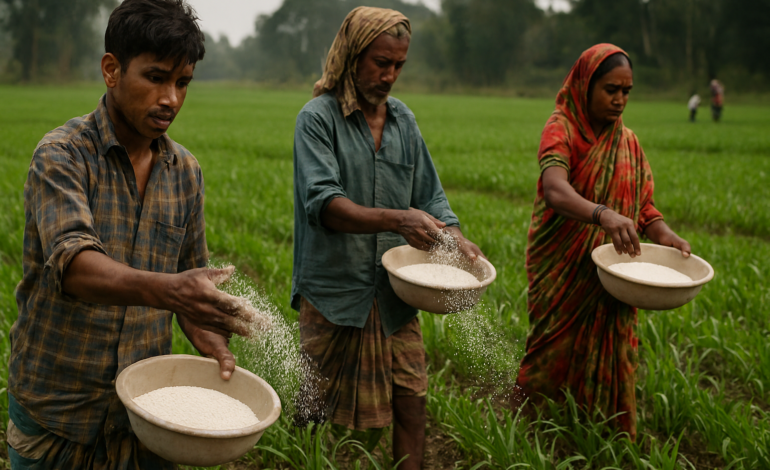
For farmers, particularly smallholder cultivators who depend on affordable fertiliser for crop cycles, the additional supply could translate into:
- More stable input availability during critical growing periods
- Enhanced nutrient management options for soils
- Potential cost savings if market prices ease due to increased supply
Strengthened fertiliser access supports better crop nutrition and can contribute to higher yields, which in turn influences food availability and rural incomes. While the precise distribution mechanisms are determined by national agricultural agencies, the expectation is that the donated fertiliser will augment existing resources and contribute to more resilient production systems.
Sustaining Agricultural Gains
The donation arrives at a time when Bangladesh continues to modernise its agricultural sector and scale up food production. Strategic use of fertiliser, coupled with technological improvements and climate-smart practices, will be key to sustaining these gains.
As countries confront interconnected challenges related to climate change, supply chain disruptions, and socio-economic inequalities, mechanisms for international support, whether through governments, private sector partners, or multilateral bodies will remain important.
Gifts such as this fertiliser donation symbolize broader efforts to ensure food security globally while fostering cooperation that transcends borders.
Looking Ahead
Russia’s gift of 30,000 tonnes of fertiliser to Bangladesh represents a multifaceted development with agricultural, diplomatic, and humanitarian implications. Facilitated through the World Food Programme, the donation underscores how international cooperation can support national food systems in a tumultuous global context. With this additional supply, Bangladesh is better positioned to support its agricultural sector and contribute to food security for millions of its citizens.
This event also highlights the evolving nature of global partnerships in addressing agricultural challenges, emphasising that collaborative, multilateral efforts will remain essential as nations navigate an increasingly complex food and climate landscape.