



Runner to Manufacture BYD Electric Vehicles in Bangladesh: A New Era for the Auto Industry
Bangladesh’s automobile industry is entering a transformative phase as Runner Group partners with Chinese electric vehicle giant BYD to manufacture electric vehicles (EVs) locally.
The move is expected to reshape the country’s transport sector, reduce dependence on imported vehicles, and accelerate the transition toward cleaner energy solutions.
A Strategic Partnership for Local EV Manufacturing
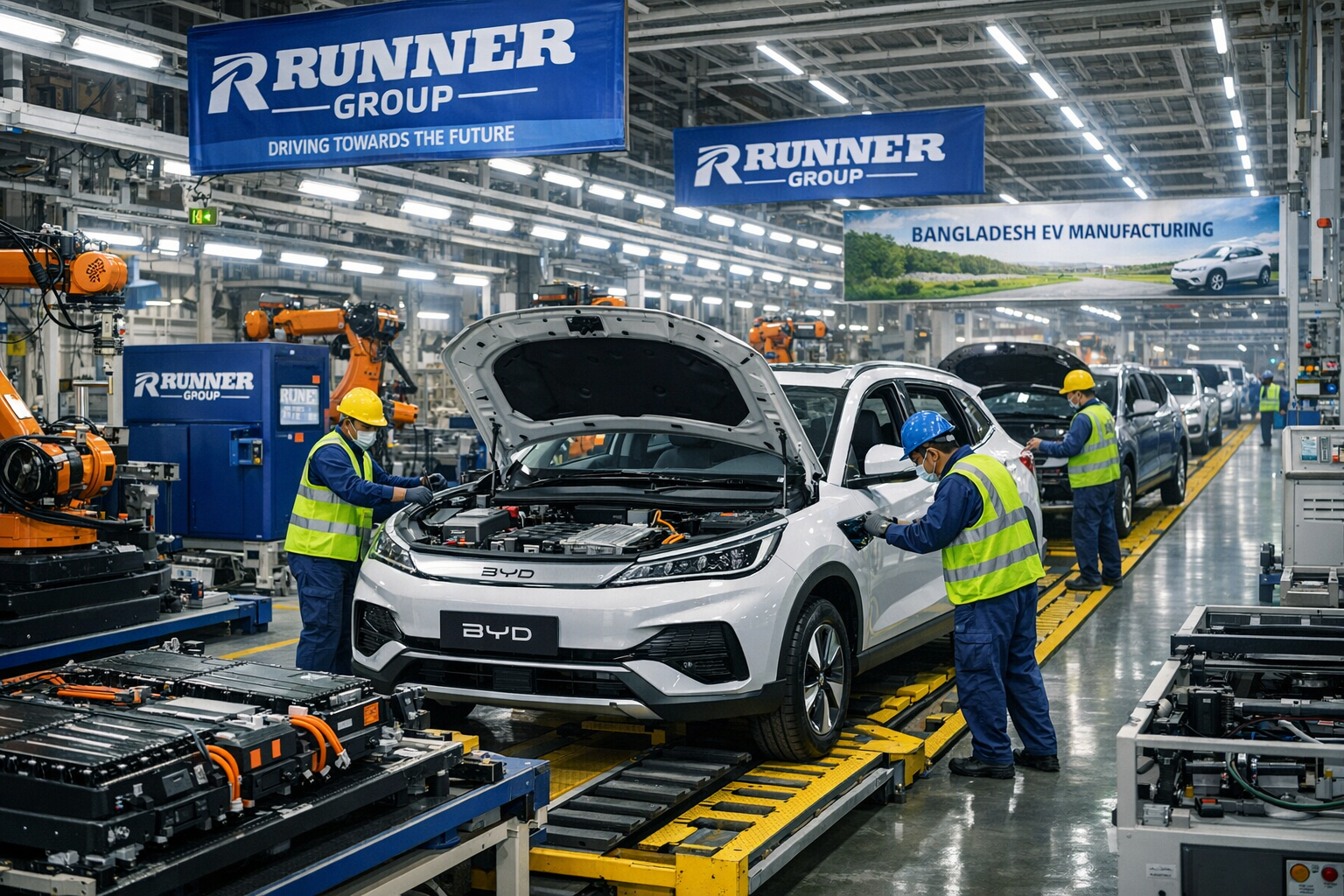
The collaboration between Runner Group and BYD marks one of the most significant developments in Bangladesh’s emerging EV sector. Under this initiative, Runner will assemble and potentially manufacture BYD vehicles within the country.
BYD, short for “Build Your Dreams,” is one of the world’s leading EV manufacturers, known for its advancements in battery technology and electric mobility solutions. Its entry into Bangladesh through local production signals growing confidence in the country’s industrial potential.
For Runner Group, this partnership represents a major expansion beyond motorcycles and conventional vehicles into the rapidly growing electric mobility segment.
Why This Move Matters for Bangladesh
1. Reducing Import Dependency
Bangladesh currently relies heavily on imported vehicles, which increases costs due to taxes and logistics. Local manufacturing of EVs can significantly reduce these costs and make electric vehicles more accessible.
2. Boosting Industrial Growth
The partnership is expected to create new opportunities in manufacturing, supply chains, and skilled employment. It could also encourage other global automakers to explore Bangladesh as a production hub.
3. Supporting Green Energy Goals
As Bangladesh faces rising environmental challenges, including air pollution and fuel dependency, EV adoption offers a cleaner alternative. Electric vehicles produce zero tailpipe emissions, making them an important tool in reducing urban pollution.
BYD’s Global Influence in Electric Mobility
BYD is one of the world’s leading electric vehicle and battery manufacturers, headquartered in Shenzhen, China. Founded in 1995, the company initially focused on rechargeable batteries before expanding into automobiles, becoming a global pioneer in electric mobility.
BYD produces a wide range of vehicles, including electric cars, buses, and commercial trucks, and is known for its advanced battery technologies such as the Blade Battery. With operations in multiple continents, BYD has played a crucial role in accelerating the global shift toward sustainable transportation and reducing reliance on fossil fuels.
BYD has rapidly grown into a global leader in the EV market, competing with major international brands. The company produces a wide range of vehicles, including:
- Electric cars
- Buses
- Trucks
- Battery systems
Its expertise in battery technology, particularly Blade Battery innovation, has made it a dominant force in the global EV transition.
By partnering with Runner, BYD is expanding its footprint in South Asia, a region with significant untapped potential for electric mobility.
Runner Group’s Role in Bangladesh’s Auto Sector
Runner Group is already a well-established name in Bangladesh’s automotive industry, particularly in the motorcycle segment. It is widely recognized for its motorcycles, scooters, and three-wheelers.
Established in Bangladesh, Runner Group has played a pivotal role in shaping the country’s two- and three-wheeler markets by offering affordable, durable, and locally assembled vehicles.
Over the years, the company has expanded its operations to include partnerships with international brands, enabling access to modern technologies and improved vehicle quality. With a strong domestic presence and a growing interest in electric mobility, Runner Group is now positioning itself as a key player in Bangladesh’s future automotive and EV landscape.
With the experience in local assembly and manufacturing, which positions it well to handle EV production. With existing infrastructure and market presence, Runner can facilitate faster adoption of BYD vehicles in Bangladesh.
This partnership also signals Runner’s strategic shift toward future-ready technologies.
Challenges Facing EV Adoption in Bangladesh
While the partnership is promising, several challenges remain for the EV sector in Bangladesh:
Charging Infrastructure
The country currently lacks a widespread network of EV charging stations. Without proper infrastructure, large-scale adoption may face delays.
High Initial Costs
Even with local assembly, EVs may remain expensive compared to traditional vehicles in the short term.
Policy and Regulation
Clear government policies, incentives, and tax benefits will be essential to encourage both manufacturers and consumers to adopt electric vehicles.
Public Awareness
Many consumers are still unfamiliar with EV technology, maintenance, and long-term benefits.
Government Support and Policy Direction
The government of Bangladesh has shown increasing interest in promoting electric mobility. Various initiatives have been discussed, including:
- Reducing import duties on EV components
- Encouraging local manufacturing
- Developing charging infrastructure
- Promoting renewable energy integration
The Runner-BYD collaboration aligns with these broader national goals and could accelerate policy implementation.
Economic and Environmental Impact
Economic Benefits
Local EV manufacturing can reduce foreign currency expenditure on imports and strengthen domestic industries. It also opens the door for Bangladesh to become a regional manufacturing hub.
Environmental Gains
Transportation is a major contributor to air pollution in cities like Dhaka. Transitioning to EVs can significantly improve air quality and reduce greenhouse gas emissions.
Future Outlook: A Turning Point for the Industry
The partnership between Runner and BYD could be a turning point for Bangladesh’s automotive landscape. If successful, it may:
- Encourage more foreign investment in the EV sector
- Accelerate the development of supporting infrastructure
- Increase competition and innovation
- Make EVs more affordable for consumers
In the long term, Bangladesh could emerge as a key player in South Asia’s electric vehicle market.
Looking Ahead
The decision by Runner Group to manufacture vehicles from BYD marks a significant step forward for Bangladesh’s automotive and industrial sectors.
While challenges remain, the collaboration reflects a broader shift toward sustainable transportation and technological advancement. With the right policies, infrastructure, and investment, Bangladesh has the potential to embrace electric mobility and reduce its environmental footprint.
As the country moves toward a greener future, this partnership could serve as a foundation for long-term growth and innovation in the EV industry.