


Patuatuli Market: The Heaven of ‘Master Copies’

Patuatuli Market: Where Fashion Meets Affordability
Just steps away from the Buriganga River, lies Patuatuli, a marketplace that has long been known as a hub of affordable fashion accessories and eyewear. Over decades, this area has grown into a bustling centre where shoppers from across the country come to find budget-friendly alternatives to luxury brands and stylish accessories.
While Patuatuli’s reputation is tied closely to the sale of imitation branded sunglasses and watches, the market also reflects broader trends in Dhaka’s informal economy, changing consumer behaviour, and evolving small-business resilience in the face of economic uncertainty.
A Market Built on Style and Affordability
Unlike traditional shopping malls or branded showrooms, Patuatuli’s appeal lies in its wide range of products at significantly lower prices than retail outlets. Here, shoppers can choose from imitation versions of luxury items that mimic the appearance of top global brands often at a fraction of the original cost.
Among the most popular products are:
- Sunglasses resembling designs from Ray-Ban, Prada, Gucci, Cartier, and others
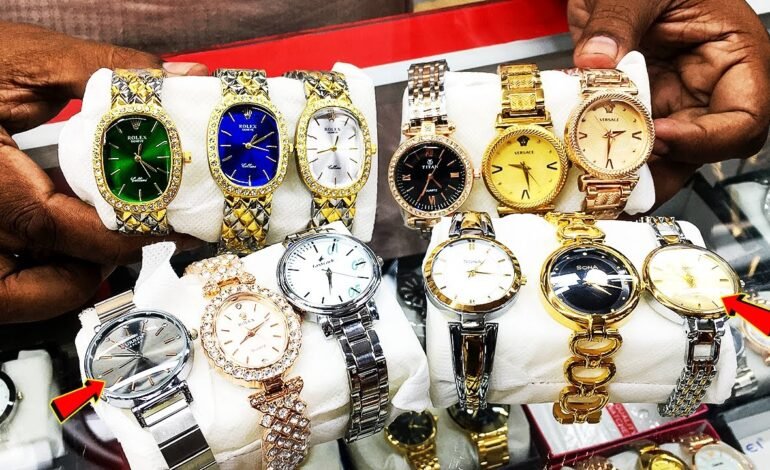
- Watch replicas similar in style to Rolex, Seiko, Omega and Patek Philippe
Traders refer to many of these as ‘master copies’ — imitation items that have detailed designs and close resemblance to originals, largely imported from specialised factories in Guangzhou, China.
The presence of such products has made Patuatuli a go-to destination for fashion on a budget, attracting customers who value style and affordability over authenticity.
The Business Ecosystem of Replicas
Patuatuli’s economy is deeply rooted in the trade of replicas. For generations, this market has supplied an ecosystem where traders, importers, and local businesses thrive on the demand for low-cost, stylish accessories.
From Importers to Local Makers
Many traders spend months in China, visiting factories and placing customised orders based on what local customers demand. Others work with sourcing agencies that help bring in products tailored to specific preferences.
Many businesses start with a small local factory that produces plastic frames, adding a homegrown manufacturing dimension to the largely import-driven business.
Inside these shop, eyewear is arranged carefully, with products stratified into different quality tiers:
- First-grade frames: around Tk 25,000–30,000
- Second-grade frames: around Tk 18,000–20,000
- Third-grade frames: around Tk 8,000–10,000
- Ungraded or basic frames: around Tk 2,000–5,000
This pricing structure allows shoppers to choose based on their budget, making stylish eyewear accessible to customers from many walks of life.
Wholesale and Retail Dynamics
Patuatuli operates on a hybrid system of wholesale and retail, serving both small vendors and end consumers. Many sellers report wide variations in monthly sales, for example:
- Wholesale sales averaging around Tk 10 lakh a month, and rising up to Tk 30–40 lakh during peak seasons
- Retail sales typically ranging between Tk 3 lakh and Tk 7 lakh
The diverse customer base reflects the market’s broad appeal. Buyers travel from across Dhaka and beyond specifically to seek out affordable accessories, making Patuatuli an important economic node in the city’s informal trading landscape.
Watches and Eyewear: A Shift in Consumer Habits
Shops like Maqbool Watch House, which has operated in Patuatuli for more than 15 years, started the business in 2010 with an investment of around Tk 30 lakh. Like many others in the market, he sources his watch stock from factories in Guangzhou, often spending 10–12 days in China placing orders that reach Dhaka within 20–30 days.
The watch market in Patuatuli reflects a shift in how people value accessories, particularly in the age of smartphones. “Watches have survived the smartphone era because they are no longer just about telling time they are about style,” the owner of the shop stated.
Here’s how prices range:
- Affordable fake watches: Tk 500–30,000
- Genuine luxury watches: often around Tk 4 lakh or more (beyond the reach of most buyers)
This pricing makes a compelling case for many Dhaka shoppers. For example, the Seiko-style watch worth around Tk 10,000, a convincing replica compared with the original model’s retail price of Tk 70,000–80,000.
Stories of Resilience and Opportunity
Patuatuli is not just about low-cost goods; it is also a space of entrepreneurial diversity and generational business continuity.
Small Traders and New Entrepreneurs
Younger traders are joining the family watch business, which has been a mix of optimism and challenge. He notes that recent economic sluggishness has slowed sales, and logistical delays from overseas suppliers add uncertainty to the business cycle.
Other business owners started with a modest weekly wage, eventually invested Tk 10 lakh to launch their own business and growing it to a Tk 50 lakh business that offers a variety of prices and product sources.
Some business owners also highlighted the need for government support to develop a stronger local optical industry that could expand manufacturing without sacrificing quality.
Legacy Businesses
Patuatuli also hosts long-standing enterprises such as Mehboob Optics, one of Dhaka’s oldest optical shops. Founded in 1948, the business has survived decades of change. Its second branch opened on Green Road in 1977, alongside a factory that once represented a closely guarded optical craft. Today, under fourth-generation owner, Mehboob Optics continues to draw loyal customers by offering everything from affordable plastic frames priced around Tk 200 to gold-plated eyewear worth Tk 80,000.
Consumer Perspective: Trust and Value
For many shoppers, Patuatuli represents trustworthy value for money. While products may not be genuine luxury items, buyers appreciate their durability and cost-effectiveness when compared with expensive branded goods from malls. In a market where everyday consumers are navigating rising living costs, Patuatuli offers a viable alternative that balances style and affordability.
Challenges and Market Trends
Despite its vibrancy, Patuatuli’s fashion and accessories trade faces broader challenges:
- Slower delivery timelines from overseas suppliers
- Economic variability affecting consumer spending
- Dependence on imports from China for most inventory
- Lack of formal quality control standards
Some traders have adapted by sourcing through agencies rather than making frequent trips abroad, while others explore local production for certain components like plastic frames.
At the same time, Dhaka’s wider retail landscape, including malls and imported clothing markets has been impacted by economic shifts that drive consumers toward more affordable options, making markets like Patuatuli increasingly relevant.
The Future of Patuatuli’s Fashion Economy
Surviving in the midst of an evolving retail ecosystem, Patuatuli’s market demonstrates the enduring demand for affordable fashion accessories and watches. With customers from across Bangladesh and generations of traders committed to the marketplace’s continuity, Patuatuli remains a testament to how style and accessibility can coexist in one of Dhaka’s oldest commercial districts.
As fashion trends shift and consumer priorities evolve, the market’s ability to adapt through local manufacturing, diversified price points, and a blend of legacy and new businesses will determine how it continues to shape Dhaka’s fashion identity.