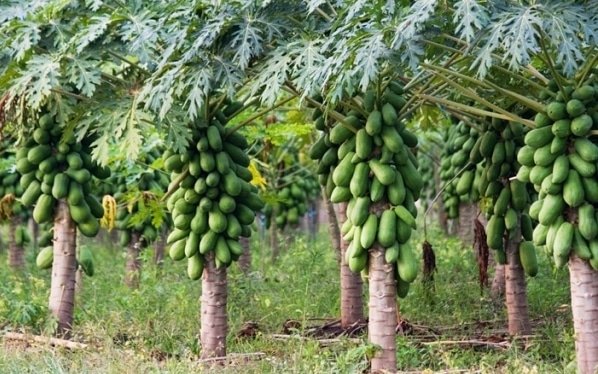





Papaya Farming Boom in Khagrachhari: How One Farmer Transformed an Entire Village
In the hilly district of Khagrachhari, a quiet agricultural revolution is taking place. What was once a region struggling with poverty and limited economic opportunities is now witnessing a remarkable transformation driven by papaya farming.
At the center of this change is a young farmer whose success has not only reshaped his own future but also uplifted an entire village. His journey reflects a broader shift in rural Bangladesh, where smart agricultural practices and market access are opening new doors for income and employment.
A Young Farmer’s Journey to Success
The story begins in Durchhari village under Manikchhari upazila, where 22-year-old farmer Remrachai Marma made a bold decision that would change his life. In 2021, while still a student, he started small by planting just 200 papaya trees. At the time, it was a modest attempt to earn extra income.
Over the years, his small garden expanded into a large-scale operation. Today, he cultivates around 3,000 papaya trees across 10 acres of land. His success is not just symbolic, it is measurable. This year alone, he has earned approximately Tk 20 lakh from his farm, with an additional Tk 5 lakh worth of produce still growing.
His ambitions do not stop there. He plans to expand further by planting another 3,000 seedlings, indicating strong confidence in the profitability of papaya farming.
The Role of Technology and Market Access
One of the most interesting aspects of Marma’s success is how digital exposure helped scale his business. During a visit to a local market, he shared photos of his papaya garden on social media. This simple act connected him to traders from Dhaka, opening up a steady supply chain.
This highlights a crucial shift in rural agriculture farmers are no longer limited to local markets. With access to digital platforms, even remote producers can reach urban buyers directly, improving both pricing and demand stability.
For many farmers in Bangladesh, lack of market access has historically been a major barrier. Marma’s experience demonstrates how even basic digital engagement can significantly enhance income opportunities.
From Poverty to Prosperity: A Village Transformed
The impact of Marma’s success extends far beyond his own farm. Durchhari village, home to around 60 families, was once heavily dependent on jute farming, which often yielded low and unstable income. Poverty was widespread, and employment opportunities were scarce.
Today, the situation has dramatically changed. Inspired by Marma, many villagers have shifted to papaya cultivation, creating a ripple effect of economic growth. Families that once struggled to make ends meet are now generating steady income from their farms.
This transformation is not just about agriculture, it is about community development. Increased income has improved living standards, reduced financial insecurity, and created a sense of optimism among residents.
Other Farmers Following the Trend
The success of papaya farming in the region has encouraged many others to join the movement. Farmers like Rabai Marma have started cultivating hybrid varieties such as Green Lady papaya. With an initial investment of around Tk 40,000, he expects to earn several lakhs in return, thanks to favorable market prices.
Similarly, farmers like Anghalapru Marma are entering the sector, seeing it as a viable alternative to traditional crops. The trend is not limited to a single village. Farmers from nearby areas, including Sadar upazila, are also adopting papaya cultivation.
In another example, Joyram Chakma and Kalparanjan Chakma converted 4.5 acres of unused land into a productive papaya farm. With an investment of Tk 15 lakh, they have already generated sales worth Tk 65 lakh, demonstrating the high return potential of this crop.
Economic Impact and Employment Growth
The rise of papaya farming is not just increasing individual incomes—it is also contributing to employment generation. According to agricultural officials, the success of farmers like Marma has significantly reduced unemployment in the area.
Young people, who might otherwise migrate to cities in search of work, are now finding opportunities within their own communities. This shift is crucial for balanced economic development, as it reduces urban pressure while strengthening rural economies.
Currently, around 436 hectares of land in Khagrachhari are dedicated to papaya cultivation, with approximately 350 farmers actively involved in the sector. The district aims to produce about 6.5 metric tons of papaya this year, reflecting the growing scale of this agricultural transformation.
Why Papaya Farming Is So Profitable
Papaya farming offers several advantages that make it attractive to farmers. Firstly, it has a relatively short cultivation cycle compared to many traditional crops, allowing farmers to generate income more quickly. Secondly, the demand for papaya remains strong in both local and urban markets.
Additionally, papaya plants require moderate investment but can yield high returns if managed properly. Hybrid varieties further enhance productivity, making the crop even more profitable.
Another key factor is the ability to harvest continuously over time, providing a steady stream of income rather than a single seasonal payout.
Government Support and Future Potential
The Department of Agricultural Extension (DAE) has been actively supporting farmers in the region by providing guidance and technical assistance. This includes advice on cultivation techniques, pest management, and market linkage.
Officials believe that if more young people follow the example set by successful farmers, papaya cultivation could become a major driver of economic development in hilly regions.
With proper support, infrastructure, and training, the sector has the potential to expand further, benefiting thousands of families across Bangladesh.
Challenges That Still Remain
Despite its success, papaya farming is not without challenges. Farmers must deal with issues such as disease management, price fluctuations, and transportation difficulties, especially in remote areas.
Access to better storage and logistics systems could help farmers reduce losses and increase profitability. Additionally, continued training and support are essential to ensure sustainable growth.
Looking Ahead
The rise of papaya farming in Khagrachhari is a powerful example of how innovation, determination, and community effort can transform rural economies.
What started as a small initiative by one young farmer has now become a widespread movement, improving livelihoods and creating new opportunities for hundreds of people. As more farmers embrace this model, papaya cultivation could play a key role in shaping the future of agriculture in Bangladesh.
This story is not just about farming it is about resilience, adaptation, and the potential of rural communities to drive their own economic growth.