

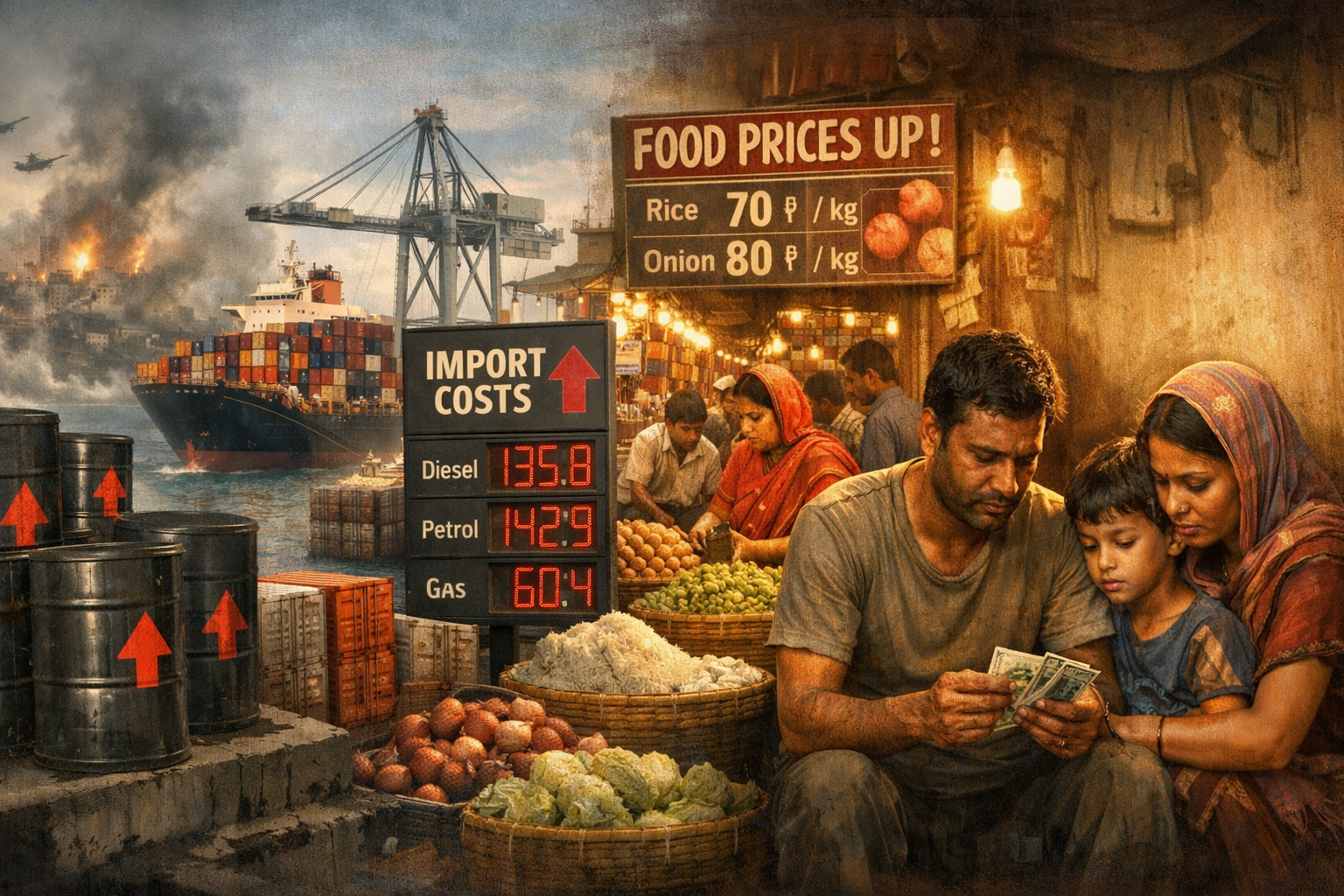


The aviation sector in Bangladesh entered 2026 with cautious optimism. Passenger traffic was rebounding after the pandemic, outbound labour migration to Gulf countries remained strong, and airlines were gradually expanding regional connectivity. However, this fragile recovery was abruptly disrupted when the Middle East conflict involving the United States, Israel and Iran escalated on 28 February 2026.
The immediate trigger of the crisis was the closure of key airspace corridors across the Gulf. Countries including Iran, Iraq, Qatar, the United Arab Emirates and Kuwait shut their skies due to security concerns, forcing airlines worldwide to cancel or reroute flights.
The aviation sector globally plunged into turmoil, with more than 21,000 flights grounded and key hubs such as Dubai and Doha severely disrupted. For Bangladesh, whose aviation sector is deeply tied to Middle Eastern routes, the impact was immediate and severe.
Bangladesh’s aviation sector is uniquely dependent on the Gulf. Millions of Bangladeshi migrant workers travel regularly between Dhaka, Chattogram and destinations such as Dubai, Doha, Jeddah and Abu Dhabi. These routes account for a significant share of passenger traffic and airline revenue. Any disruption in this corridor therefore directly destabilises the aviation sector.
Within days of the conflict, flights to several Middle Eastern destinations were suspended, leaving airports in chaos and exposing the structural vulnerability of Bangladesh’s aviation sector to geopolitical shocks.
Flight disruptions: A severe operational collapse
The most visible blow to the aviation sector came in the form of mass flight cancellations. According to the Civil Aviation Authority of Bangladesh, at least 447 flights between Dhaka and Middle Eastern destinations were cancelled within the first two weeks of the conflict.
The situation worsened rapidly. Estimates suggest that more than 450 Bangladesh-linked flights were cancelled as the crisis deepened, while globally the aviation sector saw unprecedented disruption.
At Chattogram’s Shah Amanat International Airport, the impact was particularly acute. At the peak of the crisis, 277 international flights were cancelled, leaving thousands of passengers stranded, many of them migrant workers heading to or returning from the Middle East.
Flight operations became highly irregular. Services to Doha were completely suspended, while routes to Dubai, Sharjah and Abu Dhabi operated only partially. Only a few destinations such as Muscat, Jeddah and Medina maintained relatively stable operations.
Even where flights continued, schedules were erratic. Airlines including Biman Bangladesh Airlines, US-Bangla Airlines, Air Arabia and SalamAir cancelled multiple inbound and outbound flights due to safety risks and operational constraints.
The aviation sector was effectively paralysed across key corridors, with uncertainty replacing regular schedules.
Economic losses: A deep financial shock
The disruption of the aviation sector quickly translated into significant financial losses. Aviation-linked businesses including airlines, travel agencies, cargo operators and airport services suffered severe revenue declines.
Early estimates indicated losses of USD 15 to 16 million in the aviation and hospitality sectors within the initial phase of the crisis. However, industry insiders suggest that cumulative losses have already reached several thousand crore taka when factoring in prolonged disruption, reduced passenger flow and cargo decline.
The aviation sector’s cargo segment was equally affected. The Middle East is a major destination for Bangladeshi exports, particularly perishables and garments. Flight cancellations and reduced frequency disrupted supply chains, delaying shipments and increasing costs.
Globally, rising fuel prices further intensified the financial burden. Jet fuel prices nearly doubled within weeks, driven by supply disruptions linked to the conflict. Airlines were forced to increase fares, impose fuel surcharges and cut capacity, further dampening demand.
For Bangladesh’s aviation sector, which operates on thin margins, this combination of falling revenue and rising costs created a perfect storm.
Passenger suffering: A humanitarian dimension
Beyond financial losses, the aviation sector crisis triggered widespread human suffering. Thousands of passengers were stranded at airports across Bangladesh, particularly migrant workers with expiring visas or urgent travel needs.
Many workers were unable to reach their jobs in the Middle East, risking employment loss. Others returning home faced prolonged delays and uncertainty. The disruption affected an estimated 7.5 million Bangladeshi expatriates connected to Gulf countries.
Scenes of overcrowded terminals, cancelled tickets and anxious travellers highlighted the human cost of the aviation sector’s collapse. The crisis also exposed the lack of contingency planning in handling large-scale disruptions.
Fuel crisis and cost escalation, A negative spiral
The aviation sector’s troubles were compounded by a global fuel crisis triggered by the conflict. The closure of the Strait of Hormuz and disruption of oil supply chains led to acute shortages and price spikes.
Jet fuel prices surged dramatically, forcing airlines worldwide to cut flights and raise ticket prices. For Bangladesh, which relies heavily on imported fuel, the impact was particularly severe.
Fuel shortages also affected ground operations, airport logistics and related industries. The government introduced energy-saving measures, including reduced working hours and restrictions on fuel use, reflecting the broader economic strain.
This created a negative feedback loop within the aviation sector, higher costs led to fewer flights, which reduced revenue, further weakening the sector.
Cargo and trade disruption, A hidden crisis
While passenger disruptions drew immediate attention, the aviation sector’s cargo segment faced a quieter but equally damaging crisis.
Air cargo is critical for Bangladesh’s export economy, especially for high-value and time-sensitive goods such as garments, seafood and pharmaceuticals. Reduced flight frequency and route suspensions disrupted these supply chains.
Exporters faced delays, higher freight charges and uncertainty in delivery schedules. The aviation sector’s inability to maintain stable cargo operations threatened Bangladesh’s competitiveness in global markets.
The Middle East conflict also disrupted transit routes, forcing longer flight paths and increasing operational costs for cargo carriers.
Regional and global context, A widespread aviation crisis
The crisis in Bangladesh’s aviation sector is part of a broader global disruption. Airlines across Europe, Asia and the United States have cancelled thousands of flights and reduced capacity due to rising fuel costs and airspace restrictions.
Major carriers have grounded aircraft, cut routes and increased fares. Some airlines reported fuel costs doubling, forcing significant operational adjustments.
Airports in conflict-affected regions have been partially or fully closed, while rerouted flights have increased travel time and operational complexity.
In this global context, Bangladesh’s aviation sector is particularly vulnerable due to its heavy reliance on a single geographic corridor.
Future challenges: A difficult road ahead
The aviation sector in Bangladesh now faces multiple long-term challenges.
First, route dependency remains a critical weakness. Over-reliance on Middle Eastern destinations exposes the aviation sector to geopolitical risks. Diversifying routes to Southeast Asia, Europe and East Asia will be essential.
Second, fuel vulnerability is a major concern. The aviation sector’s dependence on imported fuel makes it highly sensitive to global price shocks. Developing fuel hedging strategies and exploring alternative energy options could provide some resilience.
Third, infrastructure and crisis management need improvement. The recent disruption exposed gaps in passenger handling, communication and contingency planning.
Fourth, financial sustainability is under threat. Airlines may struggle to recover losses, especially if high fuel prices persist and demand remains subdued.
Finally, global uncertainty continues to loom. As long as the Middle East conflict remains unresolved, the aviation sector will operate under conditions of volatility and risk.
Conclusion: A sector at a crossroads
The ongoing Middle East conflict has delivered a severe shock to Bangladesh’s aviation sector, exposing its structural vulnerabilities and dependence on external factors.
From mass flight cancellations and financial losses to stranded passengers and disrupted trade, the crisis has affected every segment of the aviation sector. The ripple effects extend beyond aviation, impacting the broader economy and millions of livelihoods.
Yet, the crisis also offers a critical lesson. Building a resilient aviation sector will require diversification, strategic planning and investment in infrastructure and energy security.
As Bangladesh prepares for its next phase of economic growth, the future of its aviation sector will depend on how effectively it can adapt to an increasingly uncertain global landscape.