



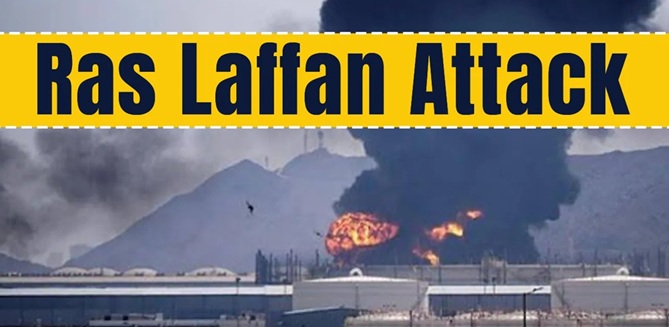

The recent missile and drone attack on Ras Laffan Industrial City in Qatar has sent shockwaves through global energy markets. As one of the world’s largest liquefied natural gas export hubs, Ras Laffan plays a critical role in supplying energy-hungry nations across Asia. For Bangladesh, which relies heavily on imported LNG to meet domestic demand, the consequences are immediate and severe.
The phrase “gas crisis in Bangladesh” is no longer a warning, it is becoming an unfolding reality. With infrastructure damage disrupting exports, supply chains are tightening, prices are rising, and Bangladesh’s already fragile energy sector is under immense strain.
A fragile dependency exposed
Bangladesh’s dependence on LNG imports has grown significantly over the past decade. Domestic gas reserves have struggled to keep pace with rising consumption driven by industrialisation, urbanisation, and population growth. To bridge this gap, Bangladesh turned to LNG imports, with Qatar emerging as a primary supplier under long-term agreements.
The attack on Ras Laffan exposes a structural vulnerability in Bangladesh’s energy strategy. A large portion of its LNG imports originates from Qatar, making the country highly susceptible to disruptions in that region. Even a temporary outage can lead to cascading effects across the entire gas supply chain.
The current disruption is not just a supply issue, it is a systemic risk that highlights the dangers of over-reliance on a single source.
Immediate supply disruptions hit hard
The most immediate impact of the attack is a sharp reduction in LNG shipments. Damaged liquefaction facilities and export terminals at Ras Laffan have forced Qatar to curtail production and delay cargo deliveries.
For Bangladesh, this translates into fewer LNG cargoes arriving at its regasification terminals. The country’s floating storage and regasification units, already operating near capacity, are now facing underutilisation due to supply shortages.
Gas distribution companies are beginning to report declining pressure in pipelines, particularly in industrial zones. Power plants that rely on gas are being forced to reduce output, increasing the risk of electricity shortages across the country.
The gas crisis in Bangladesh is no longer confined to policy discussions, it is being felt in factories, households, and power grids.
Rising prices amplify economic pressure
Global LNG prices have surged in response to the disruption. Spot market rates have climbed sharply as countries scramble to secure alternative supplies. For Bangladesh, which already faces foreign exchange constraints, the cost implications are severe.
Long-term contracts with Qatar offer some price stability, but supply disruptions mean Bangladesh must turn to the volatile spot market to fill the gap. This exposes the country to significantly higher prices, placing additional strain on public finances.
Energy subsidies, already a burden on the national budget, are likely to increase further. If the government passes costs on to consumers, it risks triggering inflationary pressures and social discontent.
The economic ripple effects of the gas crisis in Bangladesh could extend far beyond the energy sector.
Industrial slowdown threatens growth
Bangladesh’s industrial sector, particularly textiles and manufacturing, is heavily dependent on a steady gas supply. The ready-made garment industry, a cornerstone of the economy, relies on gas for power generation and production processes.
Supply disruptions are forcing factories to reduce operating hours or switch to more expensive alternative fuels such as diesel. This increases production costs and reduces competitiveness in global markets.
Small and medium enterprises are particularly vulnerable. Many lack the financial resilience to absorb higher energy costs or invest in alternative energy solutions.
If the situation persists, Bangladesh could face a slowdown in industrial output, export earnings, and overall economic growth.
Power sector faces mounting challenges
The power sector is another major casualty of the disruption. Gas-fired power plants account for a significant share of Bangladesh’s electricity generation. Reduced gas supply directly impacts power generation capacity.
To compensate, the government may increase reliance on oil-based power plants. While this ensures short-term electricity supply, it comes at a much higher cost and increases carbon emissions.
Load shedding, which had been reduced in recent years, may return as a regular feature of daily life. Urban areas as well as rural communities could experience frequent power outages, affecting businesses, education, and healthcare services.
The gas crisis in Bangladesh is quickly evolving into a broader energy crisis.
Government response shows urgency
The Bangladeshi government is moving swiftly to manage the crisis. Efforts are underway to secure alternative LNG supplies from other exporters, including countries like Oman and Australia.
Authorities are also prioritising gas allocation, ensuring that essential sectors such as power generation and fertiliser production receive preferential access. Non-essential industrial users may face restrictions.
In addition, there is renewed emphasis on energy conservation measures. Public campaigns encouraging reduced consumption are being rolled out, alongside policy discussions on rationing.
While these steps may mitigate the immediate impact, they are unlikely to fully offset the supply shortfall.
A push towards diversification gains momentum
One positive outcome of the crisis could be a stronger push towards energy diversification. Bangladesh has long recognised the need to reduce its dependence on imported LNG, but progress has been slow.
The current situation may accelerate investments in renewable energy sources such as solar and wind. There is also growing interest in regional energy cooperation, including electricity imports from neighbouring countries.
Expanding domestic gas exploration could become a higher priority, although this is a long-term solution with uncertain outcomes.
The gas crisis in Bangladesh may ultimately serve as a catalyst for a more resilient and diversified energy strategy.
Social impact raises concerns
Beyond economics and infrastructure, the crisis has significant social implications. Rising energy costs can lead to higher prices for goods and services, disproportionately affecting low-income households.
Gas shortages in residential areas could disrupt cooking and heating, adding to daily hardships. Urban populations that rely on piped gas are particularly vulnerable.
Public dissatisfaction may grow if the crisis persists, placing additional pressure on policymakers to deliver quick and effective solutions.
Energy security is not just a technical issue, it is deeply intertwined with social stability.
Regional and global implications unfold
The attack on Ras Laffan underscores the interconnected nature of global energy markets. A disruption in one region can have far-reaching consequences for countries thousands of kilometres away.
For South Asia, the crisis highlights shared vulnerabilities. Other LNG-importing nations in the region are also facing supply uncertainties and rising costs.
At the global level, the incident raises concerns about the security of critical energy infrastructure. It may prompt increased investment in protective measures and diversification of supply routes.
Bangladesh’s experience is a stark reminder of the risks associated with geopolitical tensions in key energy-producing regions.
Long term outlook remains uncertain
The duration of the disruption will be a key factor in determining the severity of the crisis. If repairs at Ras Laffan are completed quickly, the impact may be contained. However, prolonged outages could have lasting consequences.
Bangladesh’s ability to navigate the crisis will depend on a combination of policy responses, market conditions, and international cooperation.
In the long term, the gas crisis in Bangladesh may reshape the country’s energy landscape. It could accelerate the transition towards a more balanced energy mix, reduce reliance on single suppliers, and strengthen resilience against external shocks.