



Bumper Watermelon Harvest in Barishal Surpasses Targets, But Falling Prices Worry Farmers
Barishal division has witnessed a record-breaking watermelon harvest this season, exceeding government targets and reinforcing its position as one of Bangladesh’s leading agricultural hubs. However, while farmers are celebrating high yields, many remain concerned about declining market prices that could impact their overall profits.
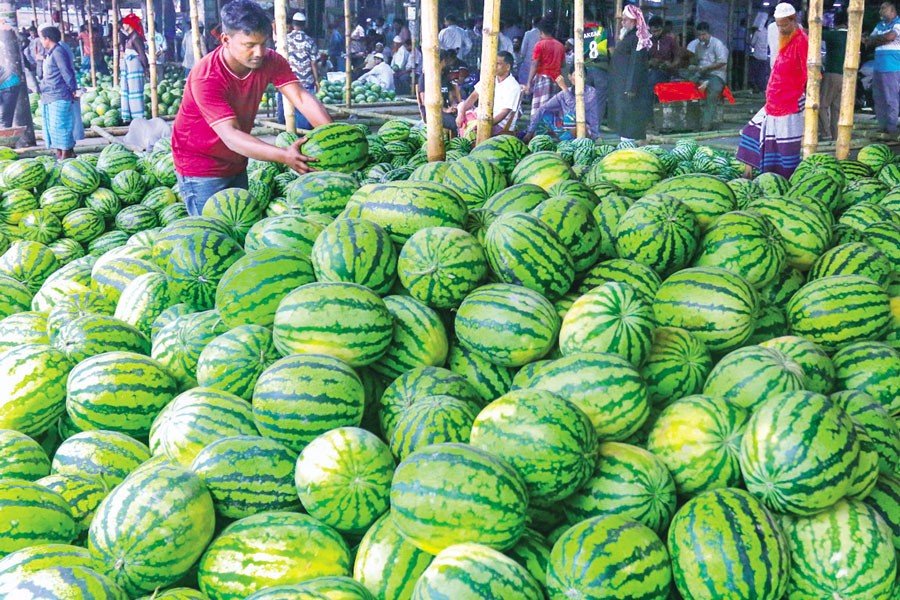
From river ghats to wholesale markets, the southern region is currently overflowing with fresh watermelons, signaling both success and new challenges in Bangladesh’s agricultural economy.
Record Production Exceeds Government Targets
According to the Department of Agricultural Extension (DAE), watermelon cultivation in Barishal has expanded significantly over the past few years.
In the 2025–26 fiscal year, watermelon farming reached 70,362 hectares, surpassing the government’s target of 62,626 hectares. This means the region achieved 112.24 percent of its cultivation goal, marking an impressive milestone.
To put this growth into perspective:
- 2021–22: 46,451 hectares
- 2024–25: 54,551 hectares
- 2025–26: 70,362 hectares
This steady rise highlights increasing farmer interest and favorable agricultural conditions in the region.
Markets Flooded with Fresh Produce
The impact of this bumper harvest is clearly visible across Barishal’s markets. Major river ports like Sat Tala Ghat, Balur Ghat are bustling with activity as large trawlers arrive daily, loaded with watermelons from southern districts.
Farmers and traders from Bhola, Barguna, and Patuakhali transport their produce via waterways before distributing it across the country using trucks.
This efficient river-based logistics system plays a crucial role in moving massive quantities of produce quickly and cost-effectively.
Farmers Happy with Yield, But Not Prices
Despite the high production, many farmers are facing a familiar challenge with low market prices.
A farmer from Bhola, invested around Tk 700,000 to cultivate watermelons on three and a half acres of land. While he reported strong production, he expressed concern over declining prices.
Similarly, another farmer said he invested Tk 17–18 lakh in watermelon farming this season. Although yields were high, he noted that traders are offering lower prices than expected.
Another farmer remained cautiously optimistic, stating that despite weather-related challenges such as post-Eid rainfall and hailstorms, he still expects to make a profit due to good production levels.
Current Market Prices
At present, watermelon prices vary significantly depending on size and quality:
- Wholesale: Tk 5,000–10,000 per hundred
- Premium quality: Up to Tk 20,000 per hundred
- Retail: Tk 150–500 per piece
While these prices may seem reasonable to consumers, farmers argue that they are lower compared to previous seasons, reducing their profit margins.
Role of Middlemen in Price Fluctuations
Market stakeholders believe that intermediaries play a major role in the price imbalance.
Farmers often sell their produce at lower rates to traders, who then distribute the products across the country at higher prices. This supply chain structure limits farmers’ direct access to markets and reduces their bargaining power.
Traders from regions like Mymensingh are actively purchasing watermelons and supplying them to districts including:
- Sylhet
- Brahmanbaria
- Kishoreganj
- Netrakona
- Tangail
While this nationwide distribution ensures availability, it also adds layers to the supply chain, affecting pricing.
Southern Char Areas Lead Production
The southern char regions, particularly in Bhola and Patuakhali, have emerged as key hubs for watermelon cultivation in Bangladesh, thanks to a unique combination of natural and economic advantages.
One of the primary reasons is the fertile sandy soil found in these riverine areas. This type of soil provides excellent drainage, which is essential for watermelon farming, as the crop is highly sensitive to waterlogging. The natural composition of the land helps roots grow stronger and supports higher yields.
The region also benefits from favorable climatic conditions, including long hours of sunlight, warm temperatures, and moderate humidity during the growing season. These conditions contribute to better fruit development, improved sweetness.
Another major advantage is the availability of vast cultivable land. Char lands are often less densely populated, allowing farmers to cultivate on a larger scale at relatively lower costs.
With support from the Department of Agricultural Extension, farmers are increasingly adopting improved seeds and modern cultivation techniques. As a result, officials estimate that these regions now produce around 2 million metric tons of watermelons annually, with strong potential for further growth in the coming years.
Government Efforts to Support Farmers
Authorities are aware of the pricing challenges and are taking steps to improve the situation.
Dr. Mohammad Nazrul Islam Sikder, Additional Director of the Department of Agricultural Extension in Barishal, stated that efforts are underway to:
- Improve transportation systems
- Strengthen market linkages
- Reduce dependency on intermediaries
These measures aim to ensure that farmers receive fair prices for their produce.
Additionally, the Department of Agricultural Marketing has expressed optimism, noting that strong production reflects both favorable conditions and increasing farmer engagement.
A Growing Agricultural Success Story
The watermelon boom in Barishal is part of a larger trend in Bangladesh’s agricultural sector.
Farmers are increasingly shifting toward high-value crops like watermelon due to:
- Strong market demand
- Relatively short cultivation cycles
- High yield potential
This shift is helping diversify agricultural production and boost rural incomes.
Challenges Ahead
Despite the success, several challenges remain:
Price Volatility
Oversupply can lead to sudden price drops, affecting farmers’ earnings.
Climate Risks
Unpredictable weather events, such as hailstorms and heavy rainfall, can damage crops.
Supply Chain Inefficiencies
Lack of direct market access continues to limit farmers’ profits.
The Way Forward
To sustain this growth, experts suggest:
- Expanding cold storage facilities
- Developing direct farmer-to-market platforms
- Improving transportation infrastructure
- Encouraging export opportunities
Such measures can help stabilize prices and ensure long-term profitability for farmers.
In a Nutshell
The bumper watermelon harvest in Barishal is a remarkable achievement for Bangladesh’s agriculture sector. Surpassing government targets reflects the hard work of farmers and the region’s growing importance in food production.
However, the issue of declining prices highlights the need for better market management and policy support. Without addressing these challenges, farmers may struggle to fully benefit.
As Bangladesh continues to strengthen its agricultural economy, ensuring fair pricing and efficient distribution will be key to sustaining this success story.