

Why More Bangladeshi Families Are Choosing Smaller Weddings

Why More Bangladeshi Families Are Choosing Smaller Weddings
A Cultural Shift Shaped by Cost, Values, and Modern Lifestyle
Weddings in Bangladesh have long been known for their grandeur. Lavish guest lists, multi day celebrations, and elaborate feasts were once seen as a symbol of family honor and social status. Today, that tradition is quietly changing. Across cities and towns, more Bangladeshi families are choosing smaller weddings that focus on meaning rather than scale.
This shift is not simply about saving money. It reflects deeper changes in social attitudes, financial realities, and modern values. From rising living costs to changing ideas about privacy and sustainability, the modern Bangladeshi wedding is being redefined.
Rising Costs Are Forcing Families to Rethink Weddings
One of the strongest reasons behind smaller weddings is economic pressure. Inflation, housing expenses, education costs, and healthcare spending have made families more careful with money.
A large wedding in Bangladesh can easily cost several lakh taka. Venue rental, catering, decoration, photography, and clothing add up quickly. For many middle class families, these costs can lead to loans or long term financial stress.
Today, parents and couples increasingly question whether a single day of celebration should create years of financial burden. Smaller weddings allow families to invest in more practical goals such as education, housing, or business ventures.
Young Couples Prefer Meaning Over Show
Another major factor is the changing mindset of young people. Many couples now see marriage as a personal journey rather than a public performance.
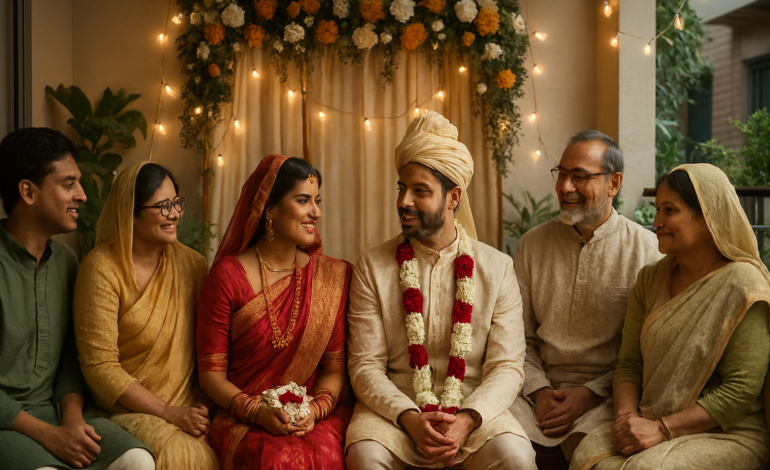
Younger generations prefer intimate ceremonies where they can spend quality time with close family and friends. Instead of inviting hundreds of distant relatives or acquaintances, couples choose to celebrate with those who truly matter to them.
This reflects a broader global trend where weddings are becoming more personalized and less driven by social pressure. Bangladesh is now part of that cultural evolution.
The Influence of Urban Life and Smaller Families
Urbanization has also played a key role in reshaping wedding traditions. In cities like Dhaka, Chattogram, and Sylhet, families live in smaller apartments and lead faster paced lives.
Large gatherings are harder to manage in urban settings. Parking, traffic, venue availability, and guest coordination can become major challenges. As a result, many families find that smaller weddings are more practical and less stressful.
At the same time, family sizes are shrinking. With fewer siblings, cousins, and extended relatives, the natural scale of weddings is becoming smaller.
Social Change and the Decline of Status Competition
In the past, weddings were often seen as a way to display social standing. Families felt pressure to match or exceed the celebrations of others in their community.
Today, that competitive mindset is slowly fading. Social awareness is growing, and many people now view excessive spending as unnecessary or even irresponsible.
There is increasing respect for families who choose simplicity and financial wisdom over extravagance. This shift reflects a more mature social outlook where values matter more than appearances.
Sustainability Is Becoming a Consideration
Environmental awareness is influencing wedding planning as well. Large weddings generate significant waste in the form of food leftovers, disposable tableware, and decorations.
Many young couples are now conscious of their environmental footprint. Smaller weddings naturally reduce waste and energy use. Some families even choose eco friendly venues, digital invitations, and reusable decorations.
This trend connects Bangladesh to a global movement toward sustainable celebrations and responsible consumption.
The Role of Social Media in Redefining Wedding Trends
Interestingly, social media has played a dual role in this transformation. While it once fueled the desire for grand weddings, it now also promotes minimalist and elegant alternatives.
Couples see examples of simple, beautifully curated ceremonies online and realize that intimacy can be just as impressive as extravagance. Micro weddings, rooftop ceremonies, and home based events are gaining popularity.
Rather than showcasing wealth, modern couples often showcase creativity, authenticity, and emotional moments.
Religious and Cultural Flexibility
Islamic and cultural teachings in Bangladesh emphasize simplicity in marriage. Many religious scholars encourage families to avoid unnecessary expenses and focus on the spiritual meaning of nikah.
This message is gaining renewed attention. Families increasingly recognize that a marriage does not become more meaningful because of expensive decor or large guest lists. What matters most is mutual respect, commitment, and family support.
This return to cultural and religious simplicity aligns well with modern financial realities.
How Smaller Weddings Strengthen Family Bonds
Smaller weddings often create a more relaxed and emotionally rich environment. When guest lists are limited, families can spend more time interacting rather than managing logistics.
Couples often report that intimate weddings feel more memorable because they are less rushed and more personal. Parents also find the experience less exhausting and more joyful.
Instead of focusing on hosting duties, families can truly participate in the celebration.
A Global Trend Reflected in Bangladesh
Bangladesh is not alone in this shift. Around the world, couples are moving away from extravagant weddings toward meaningful ceremonies.
In countries across Asia, Europe, and North America, the idea of the micro wedding has become mainstream. This global trend reflects changing values that prioritize emotional connection, financial responsibility, and personal well being.
Bangladesh’s growing preference for smaller weddings places it firmly within this worldwide cultural transformation.
The Economic Ripple Effect
Smaller weddings also change the wedding industry itself. Instead of relying on large scale catering and grand venues, businesses are adapting with boutique services, customizable packages, and intimate event planning.
Photographers, decorators, and caterers now offer tailored solutions for small gatherings. This creates new opportunities for innovation and quality focused services in the event industry.
What This Means for the Future of Weddings in Bangladesh
The growing preference for smaller weddings suggests a long term cultural shift rather than a temporary trend. As economic realities, social values, and lifestyle patterns continue to evolve, weddings will likely become even more personalized.
Future celebrations may focus more on storytelling, family traditions, and shared experiences rather than scale and spectacle.
This does not mean that grand weddings will disappear. They will continue to exist for those who choose them. But they will no longer be the default expectation.
Conclusion
The rise of smaller weddings in Bangladesh reflects a deeper transformation in society. It is shaped by economic awareness, changing values, urban lifestyles, and a global shift toward meaningful living.
Families are learning that the true success of a wedding lies not in how many people attend, but in how deeply the moment is felt. By choosing simplicity, today’s couples are redefining tradition in a way that honors both culture and common sense.
In doing so, they are proving that sometimes, less truly is more.