



Voting in Bangladesh: Beyond a Civic Duty, a Test of Democracy

Voting in Bangladesh: Beyond a Civic Duty, a Test of Democracy
Voting in Bangladesh is more than a constitutional right as it is a reflection of political stability, institutional credibility, and public confidence in democratic processes. Elections are the cornerstone of representative governance, allowing citizens to influence policy, leadership, and the country’s direction.
As Bangladesh prepares for upcoming elections, which is the first since the topple of Awami League, citizens especially first-time voters are the front runner and they have practical questions: Who can vote? How does voter registration work? What happens at polling stations? Understanding both the mechanics and the meaning of voting is essential for ensuring a smooth process and a stronger democracy.
Who Can Vote in Bangladesh?
The legal framework in Bangladesh stipulates that any citizen aged 18 years or older on the day of the election is eligible to vote. Eligibility requires two additional criteria: registration on the national voter list and possession of a valid National Identity (NID) card. This ensures that only qualified citizens participate and that each vote is tied to a verified individual.
The Election Commission of Bangladesh (EC) manages voter registration and maintains the electoral roll. Registration is typically conducted through biometric enrolment, with citizens providing photographs, fingerprints, and personal information. Accuracy is critical, as polling stations are assigned based on the registered address. Even a minor mismatch in name spelling or address could prevent a citizen from voting.
How Voter Registration Works
Voter registration in Bangladesh has become increasingly digital, linked to the national NID system. Citizens can check their registration status online, search by name or NID number, and update personal information if needed. Verification is essential to avoid complications on election day.
For young voters, registration is a crucial first step. Turning 18 and failing to register may result in missing the opportunity to vote in their first election—a key milestone in civic participation. Local election offices and voter assistance centers provide guidance for registration and verification.
Finding Your Polling Station
Every voter is assigned a specific polling station based on their registered address. Polling locations are typically public institutions such as schools, community centers, or government offices. Authorities announce these locations in advance, and information is also available on the Election Commission’s official website.
In urban centers like Dhaka, voters are often assigned stations within close proximity to reduce travel difficulties. In rural areas, polling stations are established to be accessible to all eligible citizens, ensuring maximum participation. Confirming your polling station in advance helps avoid confusion and long queues on election day.
They can also find the polling station by using the Smart Election Management BD App, Hotline Number 105, Via SMS to 105.
What Happens on Election Day?
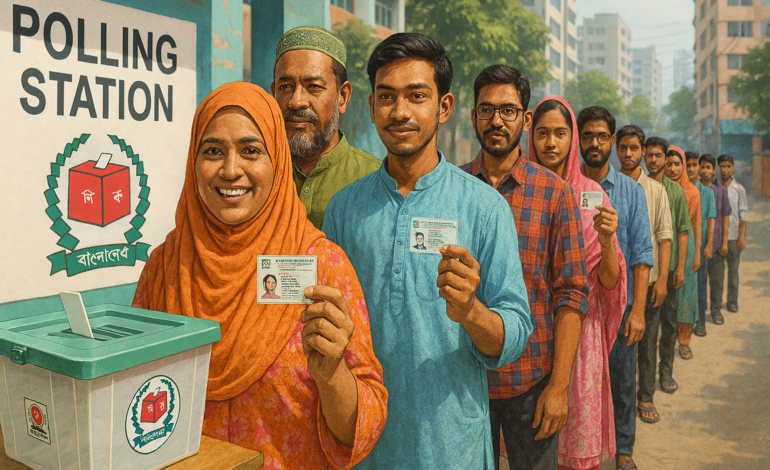
On election day, the process follows a standardized sequence to ensure fairness and transparency:
1. Verification of identity: Voters present their NID card for confirmation. Some polling stations also use biometric verification.
2. Ballot issuance: After verification, a ballot paper is provided.
3. Private voting: Voters enter a confidential booth to mark their selection.
4. Submitting the vote: The completed ballot is placed in a sealed box under supervision.
Election officials, law enforcement, and accredited observers maintain order and ensure compliance with regulations. Transparent counting procedures are observed to build public confidence.
Required Documents
To participate in voting, citizens must bring:
- Original National Identity (NID) card
- Any voter slip issued locally, if applicable
Without valid identification, voters may be denied access to the polling station. Therefore, preparing documents in advance is crucial.
Rights and Responsibilities of Voters
Every Bangladeshi voter enjoys the right to cast a ballot freely, in secrecy, and without coercion. Assistance is available for elderly and disabled voters. Observers and election officials ensure that these rights are protected.
Voters are also expected to:
- Follow polling centre rules
- Avoid campaigning or political activity near the station
- Respect election officials and fellow voters
- Avoid photographing ballots
Responsible participation not only protects the integrity of elections but also strengthens trust in democratic institutions.
Elections as a Measure of Democratic Health
Elections in Bangladesh carry significance beyond choosing leaders. They influence foreign perception, diplomatic engagement, and investor confidence. High voter turnout demonstrates public engagement and trust in governance. Peaceful, transparent elections signal institutional strength and political maturity.
Conversely, low participation, boycotts, or contested results can erode public confidence and attract scrutiny from global observers. In recent years, Bangladesh has faced international attention regarding the conduct of elections, highlighting the importance of transparency and fairness.
Youth Engagement and the Future of Democracy
Bangladesh’s demographic profile is heavily skewed toward youth, making their participation critical. Young voters often prioritize issues like education, employment, climate change, and digital access, which directly shape their future.
Engaging youth in the electoral process ensures that policy decisions reflect their needs and perspectives. Moreover, consistent participation cultivates a culture of civic responsibility and long-term democratic stability.
Educational institutions and youth organizations frequently conduct awareness campaigns to encourage first-time voters to register and participate actively.
The Role of the Election Commission
The Election Commission of Bangladesh, constitutionally empowered, is responsible for conducting free, fair, and credible elections. Its duties include:
- Managing voter rolls
- Organizing polling logistics
- Coordinating security arrangements
- Training election officials
- Monitoring compliance and handling disputes
- Declaring official results
Public trust in the Commission is central to the legitimacy of the electoral process. Transparent communication, accessibility, and efficiency in operations are vital for sustaining voter confidence.
Common Challenges for First-Time Voters
Many new voters encounter challenges such as:
Not checking polling station locations in advance
- Forgetting NID cards or voter slips
- Arriving late and facing long queues
- Being unfamiliar with marking ballots or submission procedures
Early preparation, including document verification and polling station awareness, helps ensure a smooth voting experience.
Democracy Begins With Participation
Voting in Bangladesh is not merely a procedural exercise; it embodies citizenship, strengthens institutions, and contributes to national progress. Every ballot reflects the collective will of the people, and each peaceful election reinforces political stability.
Participation empowers citizens to shape governance, hold leaders accountable, and influence policy priorities. As Bangladesh continues to mature democratically, voter engagement—particularly by first-timers and young citizens remains the foundation upon which civic responsibility and institutional credibility rest.
Because democracy does not sustain itself automatically. It requires active involvement, informed choices, and citizens who show up to vote.