




Victory Day of Bangladesh: December 16 and the Final Hours That Changed History
The Bangladesh Liberation War, a monumental struggle for freedom and sovereignty, culminated in its decisive end on December 16, 1971, marking the Victory Day. After months of resistance, political negotiations, and widespread international attention, the allied forces, composed of the Mukti Bahini and Indian military, initiated the final operations that led to the surrender of Pakistani troops and the birth of an independent Bangladesh.
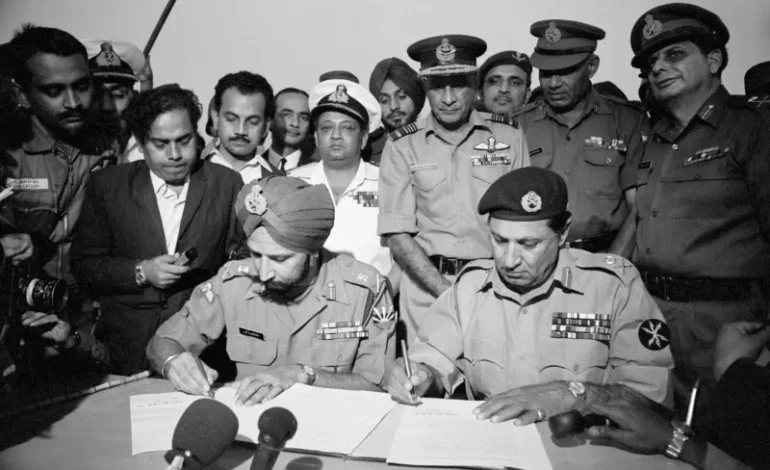
December 16 is one of the most significant dates in the history of Bangladesh, as it marks the formal surrender of Pakistani forces in Dhaka after nine months of war.
To fully understand the meaning of December 16, it is essential to examine the dramatic and decisive events of December 15, 1971, when the fate of the war was effectively sealed.
The Road to Victory in December 1971
By early December 1971, the Pakistan military in East Pakistan was facing collapse. The combined forces of the Mukti Bahini and the Indian military, often referred to as the allied forces, had surrounded key cities and cantonments. Supply lines were cut, morale among Pakistani troops was low, and international pressure was mounting.
Dhaka, the administrative and military center, became the final objective. As allied forces advanced rapidly from multiple fronts, the possibility of continued resistance diminished with each passing hour.
December 15, 1971: The Final Military Calculations
On December 15, Pakistan’s Eastern Command, led by General A A K Niazi, proposed a ceasefire. The allied command considered the proposal but made their position clear. Air attacks on Dhaka would be suspended from 5:00 am as a humanitarian gesture, but no truce would be accepted without unconditional surrender.
The allied forces issued a firm warning. If the Pakistani military failed to surrender by 9:00 am on December 16, air operations would resume. This ultimatum left little room for negotiation and signaled that the end was imminent.
Allied Forces Advance Toward Dhaka
On the same day, allied forces entered Savar without resistance. Pakistani troops retreated toward Dhaka and attempted to delay the advance by setting up defensive positions at the Mirpur Bridge, one of the last entry points into the capital.
During the night, allied forces moved forward from Savar toward Dhaka. They were joined by Kaderia Bahini, a specialized Mukti Bahini unit. A coordinated assault was launched at Mirpur Bridge. The initial phase involved commando style operations, while Pakistani troops fired from the opposite side of the bridge. Another allied unit advanced from the western bank, tightening the pressure.
Fighting at Mirpur Bridge continued fiercely throughout the day, symbolizing the final resistance before the fall of Dhaka.
Progress on Other Fronts Across the Country
While Dhaka was the main focus, major developments unfolded elsewhere. In Chittagong, Mukti Bahini fighters liberated additional areas south of Kumira. In the evening, they attacked Vatiari, the first major defensive zone protecting the port city. Skirmishes extended toward Fauzdarhat, weakening Pakistan’s hold on the region.
In Rangpur, allied forces surrounded the town and prepared to attack the cantonment. However, the assault became unnecessary as Pakistani troops surrendered before fighting began.
In Faridpur, the allied forces attacked the Kamarkhali Pakistan army base. As Pakistani troops attempted to retreat toward the town, they were pursued, surrounded, and eventually forced to surrender under the command of a Pakistani major general.
These simultaneous developments confirmed that the military structure of Pakistan in East Pakistan was collapsing across all fronts.
Civilian Tragedy and Acts of Courage
Even in the final days of the war, civilians paid a heavy price. Dr Alim Chowdhury, a respected eye specialist, risked his life by secretly helping freedom fighters. He was captured and killed by Al Badr collaborators. His murder symbolized the targeted violence against intellectuals and professionals that aimed to cripple the future of the nation.
At the same time, stories of heroism continued to emerge. Captain Mohiuddin Jahangir, who had joined the Liberation War after escaping from Pakistan, fought in Sector Seven. He was killed during an operation while crossing the Mahananda River in Chapainawabganj. After independence, he was posthumously awarded the title Birsrestha, Bangladesh’s highest gallantry honor.
Air Strikes and the Collapse of Authority in Dhaka
On December 15, Indian fighter jets were seen over Dhaka. Air strikes targeted the Governor House, where Governor Malik and his cabinet were holding meetings with military advisors. The attack forced the governor to flee to a trench for shelter, demonstrating that even the highest authority was no longer secure.
General Sam Manekshaw, the Indian army chief, delivered a final message to Pakistani commanders. He warned that any further resistance would be meaningless, as Dhaka was completely within artillery range. This statement underscored the inevitability of surrender.
December 16, 1971: The Day of Victory
By the morning of December 16, Pakistani troops across East Pakistan began surrendering their weapons. In Bogra, divisional and brigade headquarters fell by afternoon, leading to the surrender of around 1,700 Pakistani personnel and large quantities of arms and ammunition.
Later that day, General Niazi formally surrendered to the allied forces in Dhaka. With this act, the nine month Liberation War officially came to an end. Bangladesh emerged as a sovereign and independent nation.
Meaning and Legacy of Victory Day
Victory Day is celebrated every year on December 16 to honor the sacrifices of millions who contributed to independence. It is a day of national pride, remembrance, and reflection. The red and green flag is raised across the country, and tributes are paid to freedom fighters and martyrs.
Globally, the Bangladesh Liberation War is recognized as a powerful example of a people’s struggle for self determination. The events of December 15 and 16 highlight the importance of coordinated resistance, international solidarity, and moral clarity in the face of oppression.
Conclusion
Victory Day is celebrated not just as a historical milestone but as a reminder of the unbreakable spirit of the Bangladeshi people, whose determination transformed a nation’s dream into reality.
Victory Day is not only about the moment of surrender. It is also about the tense hours of December 15, when decisive military advances, strategic warnings, and immense sacrifices shaped the final outcome. Together, these two days stand as a defining chapter in world history.
Bangladesh’s victory in 1971 remains a testament to courage, unity, and the enduring human desire for freedom.