


The Hidden Cost of Living Alone in Dhaka as a Young Professional

The Hidden Cost of Living Alone in Dhaka as a Young Professional
For many young professionals, moving to Dhaka represents opportunities, better jobs, faster careers, and the promise of independence. Living alone is often seen as a milestone, a symbol of adulthood and self-reliance.
But behind that independence lies a different reality.
Living alone in Dhaka is not just about paying rent, it’s about navigating a complex web of financial pressure, emotional isolation, and lifestyle compromises. What looks like freedom on the surface often comes with hidden costs that many only realize after moving in.
The Financial Reality: More Than Just Rent
The most obvious cost of living alone is rent but in Dhaka, it quickly becomes the dominant financial burden.
Even a modest single-room setup in a decent area can cost a significant portion of a young professional’s salary. Reports suggest that monthly expenses for a single person can range from BDT 15,000 to 30,000, depending on lifestyle.
At the same time, average starting salaries for fresh graduates often fall below this range, creating an immediate financial gap.
Globally adjusted data also shows a mismatch: the average cost of living in Dhaka exceeds typical earnings, making it difficult to sustain independent living long-term.
Rent alone can consume:
- 40–60% of income
- More in areas like Banani, Dhanmondi, or Gulshan
- Less in peripheral areas but at the cost of convenience
As one young professional described it:
“A decent single room can easily cost BDT 10,000 or more.”
That’s just the starting point.
The Hidden Expenses That Add Up
Rent is only the visible part of the cost. The real financial strain comes from everything else.
Utilities and bills:
Electricity, internet, gas, and water may seem affordable individually, but combined, they create a steady monthly drain.
Food costs:
Cooking at home can be economical, but many young professionals rely on outside food due to long work hours, raising expenses significantly.
Transportation:
Daily commuting in Dhaka—whether by bus, rickshaw, or ride-sharing adds up, especially for those living far from workplaces.
Lifestyle spending:
Occasional dining out, gym memberships, or social outings—while not essential—are often necessary for mental balance.
A Reddit user summarized the reality bluntly:
“Living alone can consume nearly two-thirds of your income.”
This is where the real pressure begins not from one big expense, but from many small ones.
Real-Life Scenario: The Salary vs Survival Gap
Consider this common scenario:
A fresh graduate lands a job in Dhaka with a salary of BDT 25,000.
- Rent: 10,000
- Utilities: 2,000–4000
- Food: 5,000–10,000
- Transport: 3,000–5,000
By the end of the month, there is little to no savings.
One young worker shared their experience:
“I live in a shared room… because rent near my office is too high.”
This highlights a key truth: many who want to live alone eventually compromise—either by sharing spaces or moving farther away.
The Trade-Off: Location vs Lifestyle
Where you live in Dhaka significantly shapes your experience.
- Premium areas (Banani, Gulshan): Closer to offices, better lifestyle but high rent
- Mid-range areas (Mohammadpur, Badda): Affordable but crowded
- Peripheral areas (Savar, Tongi): Cheap but long commutes
Living alone often forces a difficult choice:
- Pay more for convenience
- Or save money and sacrifice time
Long commutes are not inconvenient and exhausting. In a city known for traffic congestion, daily travel can take hours, reducing time for rest, social life, or self-care.
The Emotional Cost: Isolation in a Crowded City
Dhaka is one of the most densely populated cities in the world yet living alone can feel isolating.
Without family or roommates, daily life becomes routine:
- Work
- Commute
- Eat
- Sleep
Social interaction often becomes limited to colleagues or occasional outings.
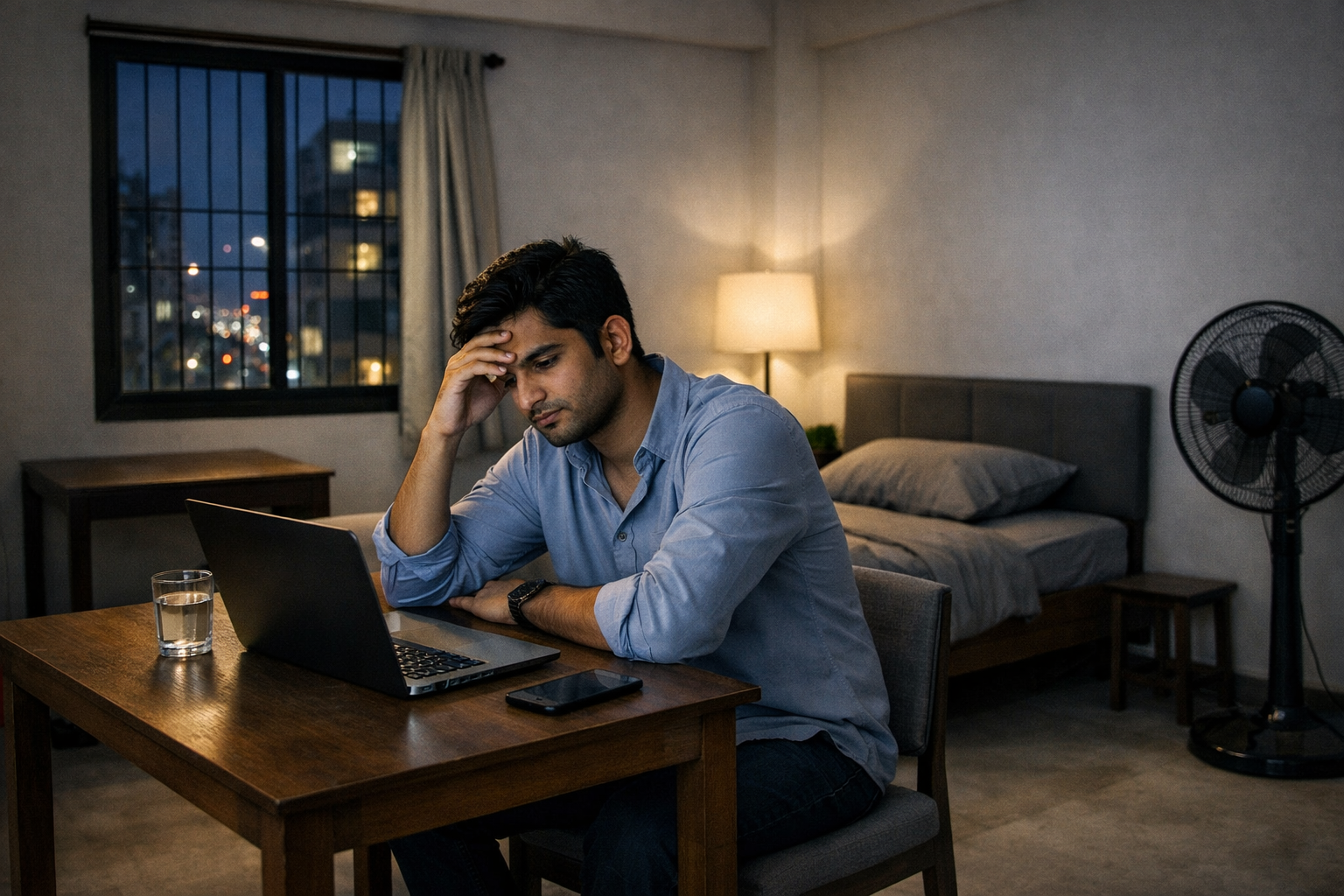
For many, evenings are the hardest. After long workdays, returning to an empty apartment can take a psychological toll.
Unlike shared living, there’s:
- No one to share responsibilities
- No one to talk to regularly
- No built-in support system
This emotional cost is rarely discussed but deeply felt.
The Health Impact: Convenience vs Well-being
Living alone often leads to lifestyle compromises.
Cooking regularly becomes difficult, especially for those working long hours. As a result, many rely on outside food, which may not always be healthy.
One young professional described it clearly:
“Most days I don’t even have dinner… I’m too tired.”
Add to this:
- Irregular sleep patterns
- Limited physical activity
- Stress from financial pressure
Over time, these factors affect both physical and mental health.
Why Many Choose Shared Living Instead
Given these challenges, many young professionals avoid living alone altogether.
Shared apartments or “seat rent” arrangements are common because they:
- Reduce rent significantly
- Split utility costs
- Provide social interaction
In fact, co-living trends are growing in Dhaka as a cost-saving solution.
Even those who can afford to live alone often choose not to simply because the financial and emotional cost is too high.
The Illusion of Independence
Living alone is often associated with success. Social media reinforces this idea clean apartments, aesthetic setups, “adulting” milestones.
But in Dhaka, this independence often comes with trade-offs:
- Financial instability
- Limited savings
- Reduced quality of life
As one observation puts it:
Dhaka “doesn’t care about your budget… it will eat it alive.”
The reality is far less glamorous than it appears.
The Long-Term Impact: Delayed Growth
Perhaps the biggest hidden cost is long-term.
When most of your income goes toward survival:
- Saving becomes difficult
- Investing becomes impossible
- Career risks become harder to take
This affects:
- Financial independence
- Personal development
- Future planning
Living alone may feel like progress but without financial stability, it can slow overall growth.
Independence, But at What Cost?
Living alone in Dhaka is not just a lifestyle choice but it’s an economic and emotional challenge.
While it offers freedom and privacy, it also demands:
- High financial commitment
- Strong mental resilience
- Continuous compromise
For many young professionals, the dream of independence comes with a reality check.
The real question is not whether you can live alone in Dhaka but whether you can sustain it without sacrificing your well-being, savings, and future.