




The Anthropology of Bangladeshi Courtyards (Uthan Culture)
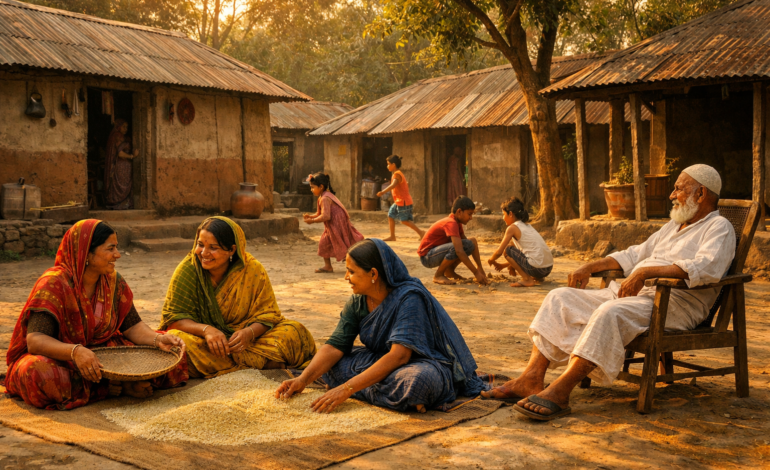

In rural and semi-rural Bangladesh, the courtyard, locally known as the uthan, has long been more than an open space inside the home. It functioned as a social center, a workplace, a play area, and a space of informal learning. For generations, the uthan shaped daily life, especially for women, children, and the elderly. As Bangladesh rapidly shifts toward apartment living and urban density, this cultural space is quietly disappearing. The loss of the uthan is not only architectural. It is social, emotional, and deeply cultural.
What the Uthan Traditionally Represented
The uthan was the heart of a household. Located between rooms or houses within a bari, it was an open space that allowed light, air, and movement. Women cooked, cleaned grains, dried rice, and washed utensils there. Children learned to walk, play, and socialize under the watchful eyes of elders. Older family members sat in the courtyard to tell stories, supervise daily life, or simply remain connected to household rhythms.
This space blurred the line between private and communal life. It allowed interaction without formal invitation. Neighbors could stop by, women could sit together while working, and children from nearby homes could play together without strict supervision. The uthan created a sense of belonging that extended beyond the walls of a single house.
Uthan and Women’s Social Networks
For women, especially those who stayed within the domestic sphere, the courtyard was a crucial social space. It allowed daily interaction with sisters in law, neighbors, and relatives. Conversations happened naturally while cutting vegetables, spreading rice to dry, or sewing. These interactions built emotional support systems that were informal but strong.
The uthan also functioned as a space of shared knowledge. Older women passed down skills related to cooking, childcare, health remedies, and social norms. Young brides learned household rhythms and community expectations through observation and participation. This learning was not structured but continuous and deeply embodied.
With the shift to apartment living, many of these interactions have been reduced or eliminated. Women now spend more time indoors, often isolated within individual flats. Shared spaces exist, but they are regulated, silent, or under surveillance. The loss of spontaneous gathering has weakened everyday social bonds.
Children’s Play and Learning in the Courtyard
The uthan was the first playground for many Bangladeshi children. Games like kanamachi, gollachut, ekka dokka, and danguli were learned and played there. Children of different ages played together, learning cooperation, conflict resolution, and social rules without adult instruction.
Older children looked after younger ones, creating early experiences of responsibility and care. Play was physical, imaginative, and deeply rooted in local culture. The courtyard also allowed children to observe adult work, rituals, and conversations, helping them absorb social roles naturally.
In apartment settings, children’s play is often limited to small indoor spaces or structured play areas. Safety concerns, lack of open ground, and busy schedules reduce free play. As a result, children’s social interaction becomes narrower and more age segregated, often mediated by screens rather than shared physical space.
Intergenerational Bonds and Everyday Interaction
One of the most important functions of the uthan was intergenerational connection. Grandparents, parents, and children shared the same space throughout the day. Elders remained visible and involved, even when they were no longer physically active. Their presence created continuity and emotional security.
Stories, moral lessons, family histories, and cultural values were passed down informally through daily conversation. Children learned respect, empathy, and patience simply by sharing space with older family members.
In apartment living, generations are often physically separated. Elders may stay in different flats or even different cities. Interaction becomes scheduled rather than organic. This reduces everyday emotional exchange and weakens the subtle transmission of cultural knowledge.
From Open Courtyards to Enclosed Living
Urbanization and rising land prices have transformed housing patterns across Bangladesh. Vertical living has replaced horizontal households. Privacy, security, and efficiency are prioritized over communal space. While these changes meet practical needs, they also reshape social life.
Apartment buildings rarely provide spaces that function like traditional courtyards. Rooftops and corridors exist, but they do not allow the same level of informal interaction. Noise restrictions, social distance, and busy lifestyles limit shared use. The result is a quieter but more fragmented social environment.
What Is Lost and What Can Be Reimagined
The disappearance of the uthan represents a loss of everyday togetherness. Women’s informal support networks weaken. Children lose unstructured social learning spaces. Elders become less integrated into daily life. These changes affect emotional wellbeing and community cohesion.
However, cultural spaces can be reimagined. Shared courtyards in housing complexes, community rooftops, women-friendly common areas, and child safe play zones can help revive some of the social functions of the uthan. The goal is not to romanticize the past but to understand what worked and why.
When Courtyards Held Communities
The uthan was never just empty space. It was a living cultural institution shaped by daily practice. As Bangladesh continues to urbanize, acknowledging the social role of courtyards helps us understand what is being lost in the process. Preserving cultural life does not require returning to old structures, but it does require recognizing the value of shared space in building human connection.
The story of the Bangladeshi courtyard is ultimately a story about how architecture shapes relationships. As homes change, so do the ways people connect, learn, and belong.