



Thakurgaon Celebrates Shak Pitari Festival With Culture, Cuisine and Community

Festival of Greens: Thakurgaon Celebrates Shak Pitari Festival With Culture, Cuisine and Community
In the tranquil northern district of Thakurgaon, Bangladesh locals marked the annual Shak Pitari Festival with colorful and deep cultural pride. Rooted in agrarian tradition, this vibrant celebration showcases leafy vegetables known locally as shak and the iconic pitari bundles traditionally made to store greens during the winter months.
Though primarily a regional event, the importance of the Shak Pitari Festival extends far beyond the festival grounds. It reflects Bangladesh’s longstanding relationship with nature, sustainable agriculture, and community cohesion elements that resonate with cultural festivals around the world that celebrate seasonal produce, local heritage, and culinary identity.
As interest in sustainable food systems and farm-to-table traditions grows globally, the Shak Pitari Festival stands out as both a cultural treasure and a timely example of how food heritage can nourish community identity and strengthen rural economies.
The Heart of the Festival: Greens and Local Heritage
At its core, the Shak Pitari Festival celebrates shak, the rich variety of leafy vegetables that grow during the winter season in Bangladesh. These greens are more than just food; they carry ancestral knowledge about seasonal cycles, nutrition, and local agricultural practices that have been passed down through generations.
In Thakurgaon, farmers traditionally bundle leafy vegetables into compact packages called pitari to preserve them for use during colder months when fresh vegetables are scarcer. These bundles include greens such as:
- Pui shak (Malabar spinach)
- Kolmi shak (water spinach)
- Methi shak (fenugreek leaves)
- Paalong shak (spinach)
- Singara shak (chard)
The festival honours both the bounty of the harvest and the skill involved in preparing and preserving greens, a process that connects people to seasonal rhythms and village life.
Thakurgaon Comes Alive: Festival Highlights and Events
The Shak Pitari Festival in Thakurgaon unfolded across multiple days, bringing together farmers, artisans, homemakers, chefs, students, and cultural performers.
Vibrant Marketplace of Greens
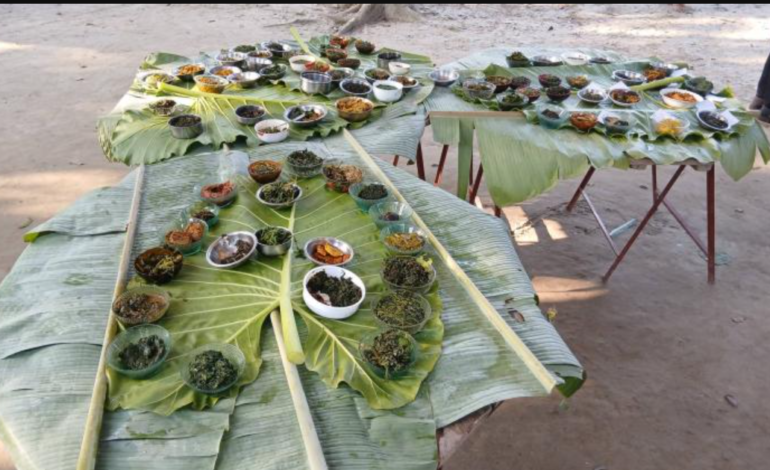
Tables lined with green bundles, vegetables, and traditional pitari offered a lively marketplace atmosphere. Local farmers displayed the fruits of their labour, sharing not only produce but also insights into cultivation methods and seasonal crop cycles.
Visitors could compare different varieties of greens and explore how pitari bundles were crafted — often with beautifully woven strands that resemble miniature works of agricultural art.
Culinary Demonstrations and Green Cuisine
Food stalls at the festival featured a wide array of dishes built around leafy vegetables. Cooking demonstrations showcased how traditional winter greens are used in local cuisine, preparing dishes that balance flavour, nutrition, and heritage.
Chefs and home cooks explained how winter greens are shallow fried, boiled with lentils, or blended into curries — offering festivalgoers a chance to taste classics such as:
- Shak er bhaji (stir-fried greens)
- Shak and lentil soup
- Shak with fish curry
- Green salad with mustard oil and spices
These culinary experiences highlighted how nutrition and taste come together in dishes deeply rooted in the agricultural cycle.
Competitions and Cultural Shows
To elevate community participation, the festival hosted various competitions such as:
- Best pitari presentation
- Green cooking contest
- Leafy vegetable quiz for students
Cultural performances, including folk songs, dances, and poetry, added colour and energy, reminding visitors that agricultural festivals also nurture artistic expression and communal memory.
Sustainable Food and Local Economies
The Shak Pitari Festival is not merely a local fair; it brings into focus crucial themes in sustainable food systems, regional economies, and heritage preservation.
Nutritional Significance of Leafy Vegetables
Leafy greens are nutritional powerhouses rich in vitamins, minerals, antioxidants, and fibre. In a global context where food security and nutritional balance are significant concerns, traditional greens play a vital role in maintaining healthy diets.
The festival helps educate younger generations about the importance of seasonal food and the nutritional value of plant-based diets, knowledge that is increasingly relevant in discussions about global health and sustainable agriculture.
Supporting Local Farmers and Rural Economies
By providing a platform for farmers to sell their produce directly, the festival strengthens local supply chains, reduces dependence on intermediaries, and supports rural livelihoods.
Farmers gain visibility and recognition for their crops, while consumers reconnect with the sources of their food, an exchange that contributes to healthier, more equitable food systems.
Preserving Indigenous Agricultural Knowledge
The making of pitari bundles is not merely functional; it is an art that carries decades of traditional wisdom. From selecting the freshest greens to weaving them into durable packages, the process embodies indigenous agricultural knowledge.
The festival helps preserve these practices by giving them a public stage, encouraging young people to learn techniques that might otherwise fade in the face of modern supply chains and mechanized food systems.
A Cultural Mirror: Local Festivals and Global Traditions
Around the world, many cultures celebrate the seasonality of food and harvest cycles. Whether it is autumn apple festivals in Western Europe, yam festivals in West Africa, or spring vegetable fairs in East Asia, such events share common themes:
- Celebrating the bounty of the land
- Strengthening community bonds
- Honouring traditional agricultural practices
- Sharing culinary heritage
In this context, the Shak Pitari Festival resonates on a global level as part of a broader human connection to seasonal agriculture and local foodways. It reminds us that food culture is not just about what we eat but also about when, why, and how we grow and share it.
Youth and Education: Passing the Torch
A notable feature of the festival was the involvement of students and youth groups. Schools and colleges participated actively in quiz competitions, cooking demonstrations, and cultural presentations related to green vegetables and traditional practices.
This intergenerational engagement is critical for preserving cultural identity in a rapidly modernizing world. By involving young people, the festival ensures that agricultural heritage is not just remembered but actively transmitted to future generations.
Environmental Awareness and Seasonal Rhythms
In a world grappling with climate change, biodiversity loss, and unsustainable food systems, the Shak Pitari Festival offers subtle but powerful lessons:
- Respecting seasonal cycles reduces reliance on resource-intensive supply chains.
- Growing local varieties supports biodiversity.
- Understanding the lifecycle of crops promotes responsible consumption.
- Community celebrations around food help reconnect people with natural rhythms.
These themes align with global movements advocating for regenerative agriculture, food sovereignty, and environmentally conscious consumption.
Tourism, Media, and Broader Cultural Interest
The colourful images and lively scenes from the Shak Pitari Festival have been featured in national media and social networks, drawing attention from domestic and international audiences alike. For cultural tourists and food enthusiasts seeking authentic experiences, the festival offers a unique window into rural life and seasonal celebrations in Bangladesh.
As interest grows, there is potential for the festival to attract travellers interested in sustainable food culture, community agriculture, and South Asian rural heritage.
Strengthening Tradition in a Modern World
The Shak Pitari Festival demonstrates how local traditions can adapt and thrive even as societies modernize. While Bangladesh like many countries faces rapid urbanization and shifting food systems, events like this help anchor communities in their cultural roots.
Going forward, opportunities exist to:
- Expand educational outreach connected to seasonal food and agriculture
- Develop festival-related tourism initiatives
- Create digital archives of indigenous food knowledge
- Build partnerships with schools and agricultural universities
Each of these paths can help ensure that the festival remains vibrant, relevant, and sustainable for decades to come.
A Festival of Food, Culture, and Community
The Shak Pitari Festival of Thakurgaon is more than a celebration of leafy greens. It is a living tapestry of cultural heritage, agricultural wisdom, and community solidarity. By celebrating local produce, honoring farming skills, and strengthening social bonds, the festival captures the essence of seasonal celebrations around the world.
At a time when food culture is gaining global prominence from farm to table, field to festival, the Shak Pitari Festival offers a compelling story of how communities can nourish both body and spirit through tradition, cooperation, and shared joy.
Thakurgaon’s celebration is a reminder that food is more than sustenance. It is memory, identity, connection, and continuity, a festival not just of greens, but of life itself.