


Bangladesh Railway: A legacy built on colonial ambition, yet foundational to modern connectivity

The story of Bangladesh Railway service dates back to the mid-19th century when the British colonial administration introduced rail transport to facilitate trade, governance, and resource extraction across Bengal. What began as a strategic infrastructure project soon evolved into a vital lifeline for millions, shaping economic corridors and urban development patterns that still influence the region today.
The first railway line in what is now Bangladesh was established in 1862 between Darshana and Jagati, primarily to connect the hinterland with the port of Kolkata. Over time, the network expanded rapidly, linking key commercial centres such as Chattogram, Sylhet, and Dhaka. The British invested in both metre-gauge and broad-gauge systems, creating a dual-gauge network that continues to pose operational challenges even today.
During this era, Bangladesh Railway service was designed with economic priorities in mind, focusing on the movement of jute, tea, and other raw materials to ports for export. Passenger services, although present, were secondary. Despite this, the railway quickly became an essential mode of transport for the local population due to its affordability and relative safety.
A period of neglect and resilience shaped the network’s modern identity
Following the partition of India in 1947, the railway network in East Pakistan, now Bangladesh, became geographically disconnected from major administrative and industrial hubs located in West Pakistan. This separation led to underinvestment and limited expansion of Bangladesh Railway service, as resources were disproportionately allocated elsewhere.
Despite these constraints, the railway continued to play a critical role in connecting remote regions. However, maintenance suffered, and ageing infrastructure began to emerge as a persistent issue. The Liberation War of 1971 further devastated the network, with bridges destroyed, tracks damaged, and rolling stock severely depleted.
After independence, Bangladesh inherited a fragile railway system. The government prioritised rebuilding, but limited financial resources and competing development needs slowed progress. Nevertheless, Bangladesh Railway service remained indispensable, particularly for long-distance travel and freight movement.
Expansion and Modernisation Efforts in 1980–2010: Progress with Limitations
Between the 1980s and early 2000s, Bangladesh made several attempts to modernise its railway system. New routes were added, and efforts were made to improve signalling systems and rolling stock. The introduction of intercity trains marked a significant milestone in enhancing passenger experience within Bangladesh Railway service.
Popular trains such as Subarno Express and Sonar Bangla Express became symbols of reliability and speed, especially on the Dhaka-Chattogram corridor. These services helped restore public confidence and positioned rail as a preferred mode of transport for long-distance journeys.
However, progress was uneven. Chronic underinvestment, bureaucratic delays, and lack of skilled manpower hindered comprehensive reform. The dual-gauge system remained unresolved, and many locomotives continued to operate beyond their intended lifespan.
2010–2025: Renewed Investment, Yet Growing Strain
In the last decade, Bangladesh Railway service has witnessed renewed attention from the government. Significant investments were made in infrastructure development, including the construction of new rail lines, bridges, and stations. The inauguration of routes connecting Dhaka with Cox’s Bazar marked a major milestone in expanding tourism and regional connectivity.
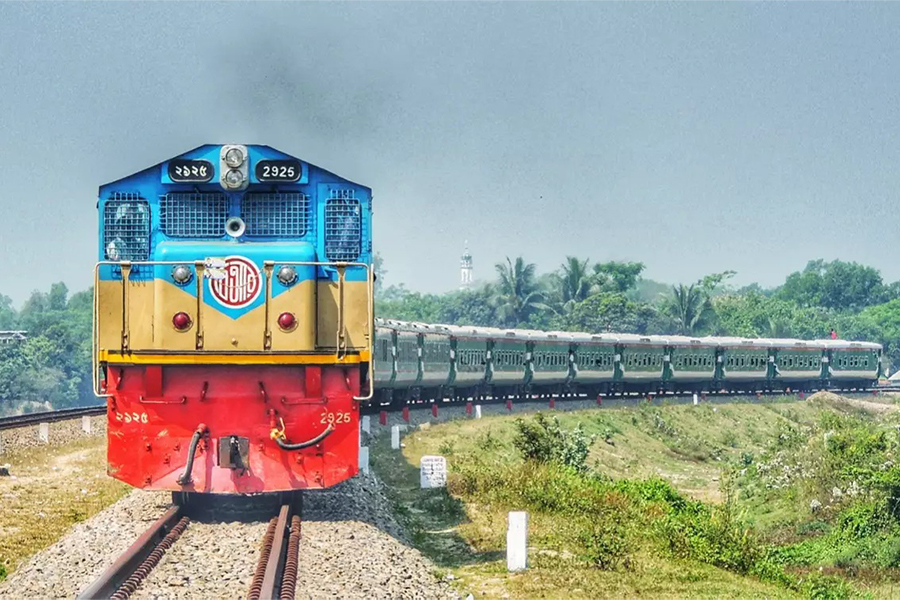
The procurement of modern locomotives, including Korean-made 3000-Series engines, signalled an effort to upgrade the ageing fleet. Digital ticketing systems and improved station facilities also contributed to a better passenger experience.
Despite these advancements, underlying structural issues persisted. The network struggled to keep pace with growing demand, particularly in freight transport. The Chattogram Port, the country’s primary maritime gateway, increasingly relied on Bangladesh Railway service to move containers inland. However, limited locomotive availability began to create bottlenecks.
Current Crisis 2025–2026: A System Under Severe Stress
The present condition of Bangladesh Railway service, particularly in the East Zone, highlights the consequences of prolonged neglect and insufficient capacity expansion. As of late August, only 74 out of 131 locomotives were operational, against a demand for 116. This means that just over half of the fleet is available, significantly limiting service delivery.
The shortage has led to widespread disruptions. In the 2024–2025 fiscal year alone, there were 244 incidents of locomotive failure after departure, while 50 trains experienced delays in departure or arrival. December recorded the highest number of breakdowns, indicating seasonal stress on an already strained system.
Passenger services have been particularly affected. Intercity trains, once known for punctuality, are now frequently delayed. Incidents such as the three-hour delay of the Mohanagar Express have caused cascading disruptions, including missed connections and passenger protests.
Freight operations, a major revenue source, have also suffered. Hundreds of containers have remained stranded at Chattogram Port due to a lack of locomotives. With only two to four engines available for freight against a requirement of 13, the efficiency of Bangladesh Railway service in logistics has been severely compromised.
Infrastructure and Operational Challenges: The Core Issues
One of the most pressing challenges facing Bangladesh Railway service is the ageing locomotive fleet. Many engines are up to 70 years old, far exceeding their operational lifespan. Frequent breakdowns are inevitable under such conditions, especially when maintenance schedules are compromised due to high demand.
The shortage of skilled manpower further exacerbates the situation. The retirement of experienced workshop staff has created a gap in technical expertise, slowing down repair and maintenance processes. Additionally, lengthy procurement procedures for spare parts delay essential repairs, keeping locomotives out of service for extended periods.
Operational practices have also contributed to the crisis. Locomotives are often redeployed immediately after completing a trip, bypassing necessary rest and maintenance checks. This overutilisation increases the risk of failure during operation, leading to delays and safety concerns.
Safety Concerns and Public Trust: A Growing Risk
Safety has emerged as a significant concern for Bangladesh Railway service. Recent incidents, such as the fire on the Chattala Express near Sitakunda, highlight vulnerabilities in maintenance and monitoring. Although no casualties were reported, the incident caused panic among passengers and disrupted train operations for hours.
Such incident combined with frequent breakdowns, have begun to erode public trust. Passengers increasingly question the reliability of rail travel, despite its advantages in cost and safety compared to road transport.
The lack of adequate safety infrastructure, including modern signalling systems and emergency response mechanisms, further compounds the problem. Without immediate improvements, the reputation of Bangladesh Railway service may continue to decline.
Economic Implications: Revenue Loss and Missed Opportunities
The inefficiencies in Bangladesh Railway service have significant economic implications. Freight transport, particularly container movement from Chattogram Port to inland destinations like Kamalapur ICD, is one of the most profitable segments of the railway.
Rail transport costs around Tk22,000 per container, roughly half the cost of road transport. Despite this advantage, the inability to provide sufficient locomotive support has resulted in thousands of containers being delayed. This not only affects port efficiency but also increases overall logistics costs for businesses.
The government is also losing potential revenue. Each locomotive can haul 55 to 60 TEU containers with minimal manpower, making it a highly efficient mode of transport. However, the current shortage limits this potential, reducing the contribution of Bangladesh Railway service to the national economy.
Government Initiatives and Reform Efforts: A Positive Outlook
Despite the challenges, there are signs of progress. Authorities have initiated the process of procuring new locomotives, which could significantly improve capacity. Efforts are also underway to repair existing engines more efficiently.
Proposals to ease procurement procedures for spare parts could reduce downtime for non-operational locomotives. Additionally, engaging retired skilled staff on a temporary basis may help bridge the expertise gap in workshops.
Training programmes for current staff are being expanded to enhance technical capabilities. If implemented effectively, these measures could stabilise Bangladesh Railway service in the short to medium term.
Future Prospects 2030 and Beyond: A Transformative Vision
Looking ahead, the future of Bangladesh Railway service depends on sustained investment and structural reform. The government’s vision to transform the railway into a modern, efficient, and environmentally friendly transport system aligns with global trends in sustainable mobility.
Key projects, such as the development of dedicated freight corridors and the expansion of dual-gauge lines, could address existing capacity constraints. Integration with regional rail networks under initiatives like the Trans-Asian Railway may further enhance connectivity and trade opportunities.
Technological upgrades, including advanced signalling systems and digital monitoring, can improve safety and operational efficiency. The adoption of modern locomotives with higher fuel efficiency and lower emissions will also contribute to environmental sustainability.
However, achieving these goals requires addressing long-standing issues such as bureaucratic inefficiencies, funding constraints, and workforce shortages. Without comprehensive reform, the progress of Bangladesh Railway service may remain uneven.
Conclusion: A System at a Crossroads
The journey of Bangladesh Railway service from its colonial origins to the present day reflects a complex interplay of ambition, neglect, and resilience. While the system has played a crucial role in shaping the country’s economic and social landscape, it now faces one of its most challenging periods.
The current locomotive crisis serves as a stark reminder of the need for timely investment and effective management. At the same time, ongoing reform efforts and future plans offer hope for revitalisation.
As Bangladesh continues to grow, the importance of an efficient and reliable railway system cannot be overstated. Strengthening Bangladesh Railway service is not just about improving transport, it is about enabling economic growth, reducing environmental impact, and enhancing the quality of life for millions.
If the right steps are taken, Bangladesh Railway service can once again become a symbol of progress and connectivity, bridging the past with a more sustainable and efficient future.