



Shwapno Hacked: What Could Possibly Happen to Your Data?

Shwapno Hacked: What Could Possibly Happen to Your Data?
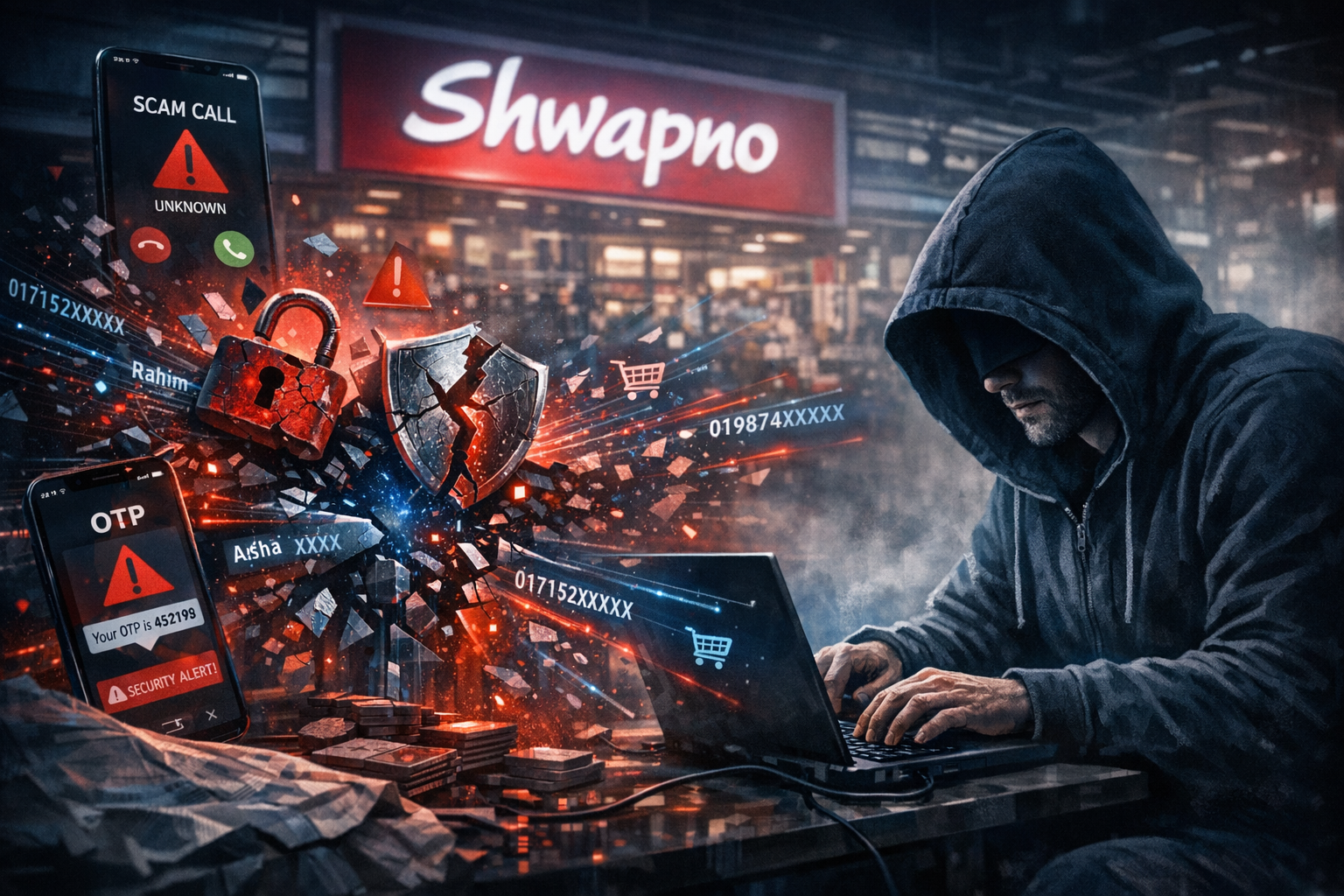
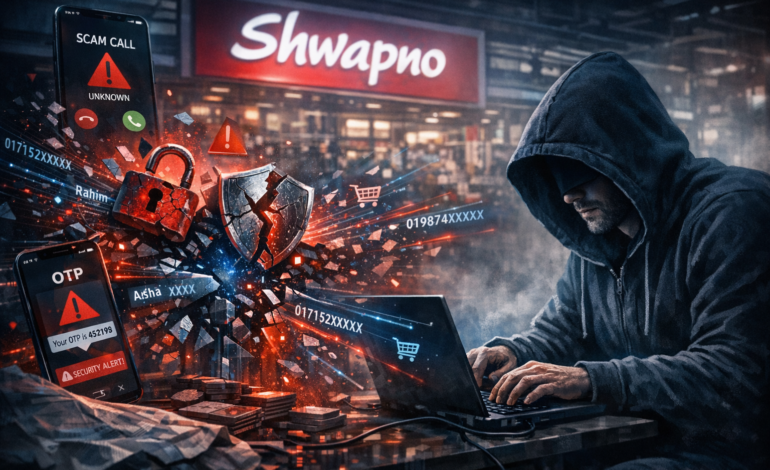
One of Bangladesh’s largest retail chains, Shwapno has recently fallen victim to a major cyberattack, sparking widespread concern about customer data security. The breach has reportedly exposed sensitive customer information, including names, phone numbers, and even purchase histories.
At a time when more Bangladeshis are relying on digital platforms for everyday shopping, this incident highlights a growing vulnerability in the country’s digital ecosystem. What makes this breach particularly alarming is not just the scale, but the potential misuse of the leaked data. For millions of customers, the question is no longer whether their data was exposed, but how it might be used against them.
How Did Shwapno Get Hacked?
The attack on Shwapno was not a sudden or simple breach. Reports suggest that hackers managed to infiltrate the company’s database in December 2025. This indicates a long-term, sophisticated intrusion, where attackers quietly gained access and remained undetected for an extended period.
During this time, the hackers reportedly gained control over critical parts of the system, including the customer database. Instead of immediately exploiting the data, they used it as leverage. The attackers demanded a ransom of approximately $1.5 million, threatening to release the stolen information if their demands were not met.
When Shwapno refused to comply, the hackers followed through on their threat and began leaking the data online. This sequence of events suggests a ransomware-style attack combined with data exfiltration, a tactic increasingly used by cybercriminal groups worldwide. The ability of attackers to remain inside the system for months also raises concerns about potential weaknesses in cybersecurity monitoring and response mechanisms.
What Data Was Exposed?
At first glance, the leaked information may appear limited, but in reality, it carries significant risks. The exposed data includes basic personal identification details such as customer names and phone numbers. While this may not seem highly sensitive compared to financial data, it becomes dangerous when combined with other elements.
In addition to personal details, the breach also reportedly includes purchase histories. This type of behavioral data reveals patterns about a customer’s lifestyle, preferences, and spending habits. When combined, these data points allow attackers to build detailed profiles of individuals, making their fraudulent activities far more targeted and convincing.
Even without passwords or banking information, this level of data exposure is enough to create serious vulnerabilities.
What Can Hackers Do With Your Data?
Targeted Phishing Attacks
Hackers can impersonate:
- Shwapno customer support
- Banks or mobile financial services
Since they already know your name and shopping behavior, they can craft highly believable messages like:
“Your recent order payment failed—verify now.”
These scams aim to steal:
- OTP codes
- Banking credentials
Cybersecurity experts warn that phone numbers linked to financial services make users particularly vulnerable.
Fraud and Financial Scams
In Bangladesh, many services rely heavily on phone numbers. If your number is exposed:
- Fraudsters may attempt SIM-based scams
- They may try to access mobile banking accounts
Even without direct access, they can manipulate users into giving sensitive information.
Data Sold on the Dark Web
Leaked data is often:
- Sold to other cybercriminals
- Used repeatedly over time
This means you may not face immediate issues, but risks can persist for months or even years.
Spam and Unwanted Marketing
Another immediate effect is:
- Increased spam calls
- Promotional SMS
- Fake offers
Hackers and third parties may use your data as “lead information” for aggressive marketing campaigns.
Identity Misuse
Although limited, attackers can:
- Create fake accounts using your phone number
- Use your identity for scams
This becomes more serious if additional data is leaked in future breaches.
Behavioral Exploitation
Purchase history reveals:
- What you buy
- Your lifestyle patterns
This allows scammers to:
- Personalize attacks
- Increase success rates
For example, if you frequently buy groceries online, you may receive fake delivery or discount messages.
How Serious Is This Breach?
Shwapno has stated that financial data was not compromised, which does reduce the immediate severity of the situation. However, cybersecurity experts warn that the combination of personal and behavioral data still represents a significant risk.
Phone numbers linked to financial services make users particularly vulnerable to targeted scams. When combined with personal identification and purchase behavior, the risk level increases further. This means that while the breach may not directly expose bank accounts, it creates opportunities for indirect attacks that can be just as damaging.
Overall, the breach can be classified as a moderate to high-risk data exposure, especially given the scale and the nature of the information involved.
What Should Users Do to Stay Safe?
For users, the most important step is to remain cautious and aware. One of the most critical rules is to never share OTPs or PINs with anyone, regardless of how legitimate the request may seem. No genuine company or service provider will ask for such sensitive information over phone calls or messages.
It is also essential to be careful when receiving calls or messages from unknown numbers. Even if the caller claims to represent a trusted organization, users should verify the information through official channels before taking any action. Clicking on suspicious links should be strictly avoided, as these may lead to phishing websites or malware.
Since phone numbers are a key part of the leaked data, users should pay extra attention to securing their mobile financial accounts. This includes using strong PINs and enabling any additional security features available.
Another important step is to change passwords, especially if the same password is used across multiple platforms. While Shwapno may not have stored passwords in this case, reused credentials can still pose a risk if attackers attempt to exploit them elsewhere.
Monitoring for unusual activity is also crucial. Users should stay alert for unexpected transactions, login alerts, or OTP requests. Any suspicious activity should be addressed immediately.
Finally, it is important to understand that the risks from a data breach are not short-term. Users should remain vigilant for months after the incident, as cybercriminals often use stolen data over extended periods.
A Bigger Problem: Cybersecurity in Bangladesh
The Shwapno breach reflects a broader issue in Bangladesh’s digital landscape. As more businesses move online, the importance of strong cybersecurity measures becomes increasingly critical. However, many organizations still lack the infrastructure and expertise needed to protect sensitive data effectively.
This incident raises important questions about corporate responsibility, regulatory oversight, and user awareness. Without significant improvements in these areas, similar breaches may continue to occur, putting millions of users at risk.
In a Nutshell
The hacking of Shwapno is more than just a data breach it is a clear warning about the growing risks in an increasingly digital world. While no financial information has been confirmed leaked, the exposure of personal and behavioral data creates serious vulnerabilities.
For users, awareness and caution are the strongest defenses. In today’s environment, protecting your personal data is not just the responsibility of companies, but also of individuals. Once data is exposed, the consequences can be long-lasting, making vigilance essential in the months ahead.