

Ramadan 2026 in Bangladesh: A Month of Faith, Discipline, and Digital Precision

Ramadan 2026 arrives as more than a sacred month. It stands as a powerful intersection of faith, tradition, and modern life in Bangladesh. From the first sighting of the crescent moon to the final moments of Iftar, millions prepare for a journey of fasting, prayer, reflection, and renewal.
Fasting from Sehri until Iftar is not simply about refraining from food and drink. It is about strengthening self control, deepening spiritual awareness, and reconnecting with community values that define Ramadan in Bangladesh.
The official beginning of Ramadan 2026 will be confirmed after moon sighting by the Islamic Foundation Bangladesh. As always, Muslims across the country are encouraged to follow the officially declared Sehri and Iftar timings to ensure accurate fasting.
Ramadan 2026 is expected to begin in late February, subject to crescent moon confirmation.
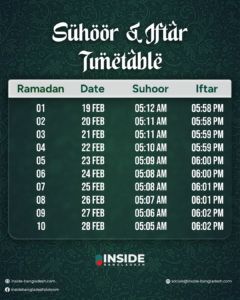
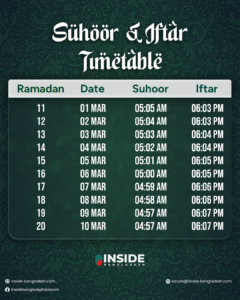
📅 Ramadan 2026 Sehri and Iftar Timetable in Dhaka
In the heart of Dhaka, Ramadan transforms daily rhythms. Streets grow quieter at noon and more vibrant at sunset. Mosques fill for Taraweeh prayers. Homes prepare carefully timed meals.
The complete 30 day Sehri and Iftar timetable will be updated after official confirmation.
Timings may vary slightly in cities such as Chattogram, Sylhet, and Rajshahi. Therefore, verifying local district schedules daily remains essential.
Accurate timekeeping has become even more important in modern Bangladesh, where work schedules, metro services, and school routines adjust around Ramadan.
🌅 Sehri: Fueling the Day with Purpose
Sehri sets the tone for the entire fasting day. A mindful and balanced pre dawn meal supports both physical endurance and mental clarity.
Nutrition experts recommend:
- Whole grains and oats for slow energy release
- Protein sources such as eggs, lentils, yogurt, and milk
- Fresh fruits like bananas and dates
- Sufficient water intake to prevent dehydration
Avoid heavy fried foods, excessive sugar, and caffeine. These can lead to fatigue and discomfort later in the day. Completing the meal a few minutes before the Sehri deadline ensures a safe and valid fast.
Ramadan 2026 encourages smarter eating habits that align with both health and faith.
🌇 Iftar: Breaking the Fast with Balance
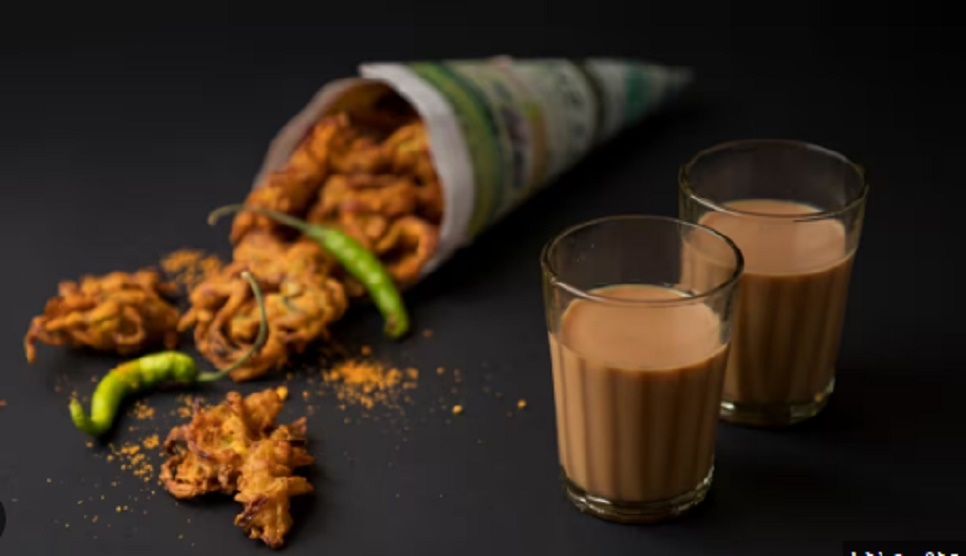
As Maghrib approaches, anticipation fills homes and mosques. Traditionally, the fast is broken with dates and water before offering prayer.
While festive foods are part of Bangladeshi culture, moderation remains key. Healthy Iftar options include:
- Light soups
- Fruit salads
- Grilled fish or chicken
- Steamed vegetables
- Moderate servings of rice or roti
Hydration between Iftar and Sehri is crucial. Drinking 8 to 10 glasses of water during non fasting hours helps maintain energy throughout Ramadan.
Ramadan 2026 highlights the importance of balancing tradition with well being.
🕌 Spiritual Renewal in a Modern Bangladesh
Beyond physical discipline, Ramadan is a month of deep spiritual transformation.
Muslims increase:
- Quran recitation
- Taraweeh prayers
- Zakat and Sadaqah
- Acts of kindness and community support
Mosques across the country, including the iconic Baitul Mukarram in Dhaka, witness thousands gathering nightly in devotion.
Ramadan 2026 also reflects a growing digital awareness. From online charity platforms to official announcements and daily timetable updates, faith and technology now move together.
Individuals with medical conditions are advised to consult a registered physician before fasting.
🌙 Ramadan 2026: A Month of Unity and Hope
Ramadan 2026 is not only a religious observance. It is a national rhythm of compassion, generosity, and shared devotion across Bangladesh.
By following officially declared Sehri and Iftar timings, maintaining balanced nutrition, and embracing spiritual growth, Muslims can experience the month in its fullest depth.
As Bangladesh prepares to welcome Ramadan 2026, one truth remains constant. The holy month continues to unite communities, strengthen faith, and renew hearts.
May this Ramadan bring peace, resilience, and blessings to all.
Here is your fully rewritten version in clear, polished English while preserving the meaning and spiritual tone:
Ramadan and the Revelation of the Holy Qur’an
The Holy Qur’an was revealed during the blessed month of Ramadan. It is the ultimate source of guidance for all of humanity. In today’s digital age, with the availability of online Qur’an academies, Muslims can learn and recite the Qur’an from the comfort of their homes.
Fasting in Ramadan is obligatory for every adult Muslim, except for those who are ill or traveling. Ramadan is a month filled with blessings, spiritual reflection, increased devotion, sincere worship, and personal growth.
The Noble Prophet Muhammad (peace be upon him and his progeny) said:
“It (Ramadan) is the month whose beginning is mercy, its middle is forgiveness, and its end is freedom from the Fire.”
(Sunan Ibn Majah)
The Three Stages (Ashra) of Ramadan
According to Islamic tradition, Allah has divided the month of Ramadan into three parts, each lasting ten days. The Arabic word “Ashra” means “ten.”
- The first ten days represent Allah’s Mercy (Rahmat).
- The second ten days represent Allah’s Forgiveness (Maghfirat).
- The final ten days represent Salvation from the Fire (Nijaat).
Although the entire month of Ramadan is blessed and filled with divine grace, each Ashra carries special significance. During this sacred month, believers are also granted Laylatul Qadr (the Night of Decree), which is better than a thousand months.
Muslims are encouraged to increase their Qur’an recitation, supplication (dua), and worship throughout Ramadan, as Allah loves those who sincerely turn to Him in prayer.
The three Ashras (Ten Days) are divided as follows:
- First Ashra: 1st to 10th Ramadan
- Second Ashra: 11th to 20th Ramadan
- Third Ashra: 21st to 30th Ramadan
First Ashra (Ten Days) of Ramadan- The Days of Mercy (Rahmat)
The first ten days of Ramadan are the days of mercy. During this period, Muslims should seek Allah’s mercy and compassion with sincerity and humility.
The recommended supplication for the first Ashra is:
رَّبِّ اغْفِرْ وَارْحَمْ وَأَنتَ خَيْرُ الرَّاحِمِينَ
“O my Lord, forgive me and have mercy upon me, for You are the Best of the merciful.”
Second Ashra (Ten Days) of Ramadan- The Days of Forgiveness (Maghfirat)
The second ten days of Ramadan focus on seeking forgiveness. This is a time for sincere repentance (Tauba) and turning back to Allah for all past sins.
The supplication for the second Ashra is:
أسْتَغْفِرُ اللهَ رَبي مِنْ كُلِ ذَنبٍ وَأتُوبُ إلَيهِ
“I seek forgiveness from Allah, my Lord, for all my sins, and I turn to Him in repentance.”
These days are especially significant for asking Allah’s forgiveness. A believer should repent sincerely and strive not to repeat past mistakes. Allah loves those who continuously seek His forgiveness and return to Him with a pure heart. It is also encouraged to forgive others during this time, as Allah loves those who practice forgiveness.
Third Ashra (Ten Days) of Ramadan- The Days of Salvation (Nijaat)
The final ten days of Ramadan are devoted to seeking protection from Hellfire. Muslims are encouraged to intensify their worship and pray for salvation.
The supplication for the third Ashra is:
اَللَّهُمَّ أَجِرْنِي مِنَ النَّارِ
“O Allah, save me from the Fire.”
The last ten nights are especially important because Laylatul Qadr falls within this period. Many Muslims also observe I’tikaf during these days, dedicating themselves to worship by staying in the mosque and focusing entirely on prayer, reflection, and seeking Allah’s pardon.
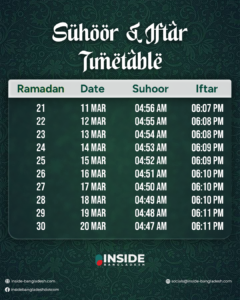
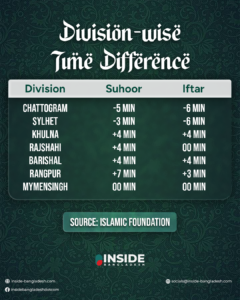
The division wise time difference for Suhoor and Iftar in Bangladesh varies slightly from Dhaka’s standard timetable, as confirmed by the Islamic Foundation. In Chattogram, Suhoor is 5 minutes earlier and Iftar is 6 minutes earlier. Sylhet observes Suhoor 3 minutes earlier and Iftar 6 minutes earlier. Khulna and Barishal are both 4 minutes later for Suhoor and Iftar, while Rajshahi is 4 minutes later for Suhoor and the same time for Iftar. Rangpur is 7 minutes later for Suhoor and 3 minutes later for Iftar. Mymensingh follows the exact Dhaka time with no difference for both Suhoor and Iftar. Muslims across the country should adjust their fasting times according to their respective division for accurate observance during Ramadan.
A believer should not waste these precious nights. Instead, they should increase their prayers, recitation of the Qur’an, remembrance of Allah, and sincere supplications.
Ramadan is a complete spiritual journey of mercy, forgiveness, and salvation. It is a month that purifies the soul, strengthens faith, and brings believers closer to Allah.