



Nobanno Uthshob: Bangladesh’s Harvest Heritage and Community Spirit

Nobanno Uthshob: Bangladesh’s Harvest Heritage and Community Spirit
Nobanno Uthshob, also known as the Nabanna Festival, is one of the most vibrant and culturally meaningful celebrations in Bangladesh. Rooted in centuries-old agricultural traditions, it marks the arrival of the newly harvested rice. This moment represents joy, gratitude, and unity for rural communities. Over the years, Nobanno has grown beyond villages and is now celebrated in cities, educational institutions, and even among Bangladeshi communities across the world. In a fast-moving global society, this festival stands as a powerful reminder of humanity’s essential relationship with nature, food, and community bonds.
What Is Nobanno Uthshob
The word Nobanno comes from the Bengali words Nobo meaning new and Anno meaning rice or food. The festival marks the arrival of the season’s first harvested crop. Traditionally observed in the Bengali month of Agrahayan, which falls in November, the festival signifies the beginning of the winter harvest season.
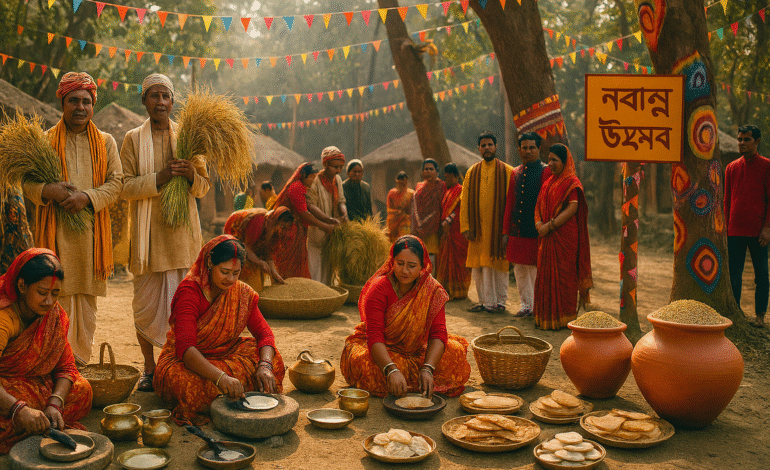
Farmers bring home newly cut paddy, families prepare special meals, and communities come together to celebrate through music, feasting, and cultural rituals. Although the festival began with rural farmers, it has evolved into a national cultural occasion celebrated widely across Bangladesh.
Historical Roots of Nobanno
Nobanno has deep historical roots dating back to ancient Bengal, a time when agriculture was at the center of life and survival. Harvest seasons were directly connected to prosperity and hope. Communities would give thanks for the successful harvest, share food with their neighbors, and celebrate with cultural traditions that encouraged unity. Even today, many rural households treat the first rice of the season as sacred. Families prepare special dishes using the newly harvested rice and share them with relatives and guests as an expression of gratitude and joy.
Traditional Foods of Nobanno Uthshob
Food is the heart of Nobanno Uthshob. The most iconic item of the festival is pitha, the traditional rice cake prepared in countless varieties across Bangladesh. Patisapta is a soft, thin crepe filled with coconut and date palm jaggery. Bhapa pitha is steamed with rice flour, coconut, and molasses. Chitoi pitha is a simple rice cake often paired with spicy bhorta or jaggery.
Nakshi pitha is artistically designed and used during celebrations or cultural fairs. Beyond pitha, families also prepare payesh, a creamy rice pudding made from fresh rice, milk, and jaggery. Seasonal vegetables and winter dishes such as rice khichuri cooked with pumpkin, lentils, and greens create a warm and comforting meal that reflects the abundance of the harvest.
Cultural Activities and Festivities
Nobanno Uthshob is filled with cultural performances, music, and village traditions. Folk songs such as baul, bhawaiya, and pala gaan fill the air as communities celebrate together. Urban neighborhoods host pitha festivals where families gather to buy and taste traditional rice cakes, helping preserve historical recipes. In many villages, people organize processions carrying new paddy stalks and clay pots filled with fresh rice.
Drum beats and the sound of traditional instruments like dhol, dotara, and ektara create a lively and joyful atmosphere. Folk games including kabaddi and rural sports still take place in some regions. Universities and cultural institutions in cities such as Dhaka and Rajshahi host Nobanno festivals featuring exhibitions, performances, food stalls, and traditional attire. These events help connect younger generations to cultural heritage.
Nobanno in Modern Bangladesh
As Bangladesh becomes more urbanized, Nobanno plays an important role in reconnecting people with their cultural identity. Many Bangladeshis living abroad celebrate Nobanno in major cities around the world such as London, Toronto, Sydney, New York, and Kuala Lumpur. These events usually include pitha fairs, cultural shows, and exhibitions that help young people in the diaspora understand and appreciate their cultural roots. Nobanno brings communities together whether they live in a rural village or a distant global city.
Why Nobanno Matters in Today’s World
Nobanno Uthshob carries meaningful lessons even in the modern world. The festival highlights the importance of sustainability and respect for nature by celebrating the earth’s contribution to human life. It strengthens social bonds at a time when digital communication often replaces real human interaction.
Nobanno also preserves cultural heritage by keeping traditional music, pitha making, crafts, and folk dances alive. The festival serves as a reminder of the importance of food security in a country that once struggled with famine. It also has the potential to attract international tourists who are curious about local culture, food, and festivities.
Global Relevance of Nobanno
Harvest festivals are celebrated in many cultures, making Nobanno part of a larger global tradition. The United States celebrates Thanksgiving while India celebrates Pongal. China observes the Mid-Autumn Festival and Korea celebrates Chuseok. Germany’s Oktoberfest is another harvest-related celebration.
Nobanno fits naturally into this global pattern. The festival’s emphasis on rice-based cuisine, vibrant village life, and deep cultural rituals makes it appealing for audiences worldwide. Bangladesh’s cultural organizations abroad use Nobanno as an opportunity to showcase the country’s rich heritage to international communities through food, art, and performance.
Conclusion
Nobanno Uthshob represents far more than a harvest celebration. It is a symbol of gratitude, community unity, and cultural identity. The festival connects modern society with its agricultural roots and reminds people of the importance of food, nature, and togetherness.
As Bangladesh expands its presence on the global stage, Nobanno becomes a cultural ambassador, carrying the warmth and richness of Bengali heritage across borders. Whether celebrated in a rural field or in a community center abroad, the spirit of Nobanno remains the same, offering a sense of belonging, joy, and cultural pride.