



Measles Outbreak in Bangladesh: Why Prevention Matters More Than Ever

Measles Outbreak in Bangladesh: Why Prevention Matters More Than Ever
Bangladesh is facing renewed concern over rising measles cases, a disease once considered largely under control. Health experts are warning that the recent uptick is not just a temporary issue but a sign of deeper gaps in vaccination coverage and public awareness.
Unlike many health crises that emerge suddenly, measles is a preventable disease. Yet outbreaks continue to occur when immunization rates drop or healthcare access becomes inconsistent. The current situation serves as a reminder that prevention, not treatment is the most effective strategy.
What Is Measles and Why Is It Dangerous?
Measles is a highly contagious viral infection that spreads through respiratory droplets when an infected person coughs or sneezes. It primarily affects children but can infect people of all ages.
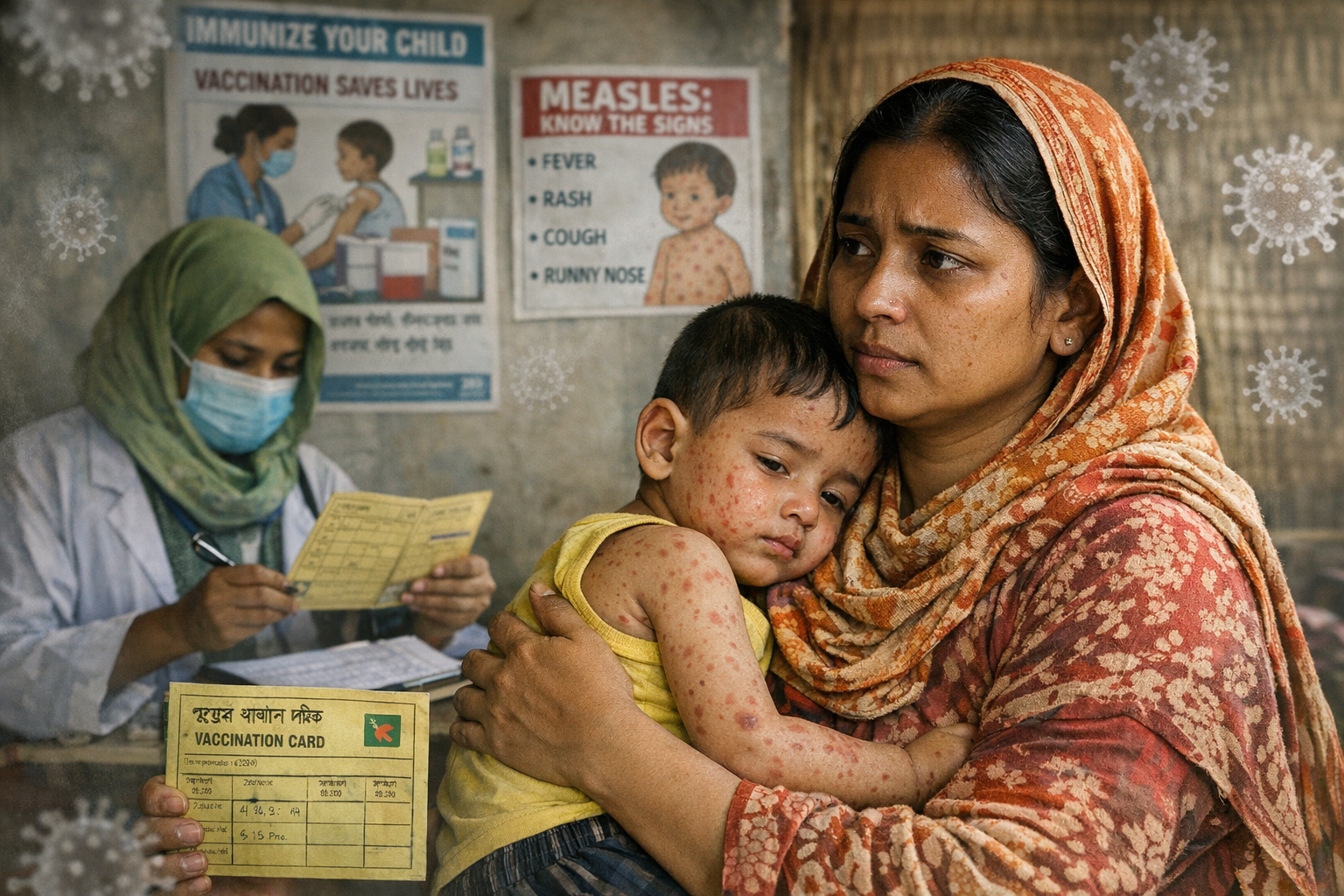
The symptoms typically begin with fever, cough, runny nose, and red eyes, followed by a characteristic rash that spreads across the body. While many people recover, measles can lead to serious complications such as pneumonia, diarrhea, and even brain inflammation.
The danger lies in its ability to spread rapidly. A single infected person can transmit the virus to multiple others, especially in densely populated areas—making countries like Bangladesh particularly vulnerable.
Why Are Measles Cases Rising Again?
Health experts point to several key factors behind the recent increase in measles cases.
One of the most significant reasons is a drop in routine immunization coverage. During and after the COVID-19 pandemic, many families missed scheduled vaccinations due to lockdowns, healthcare disruptions, or fear of visiting medical facilities. This created immunity gaps among children.
Another issue is incomplete vaccination. Measles vaccines require multiple doses for full protection. In some cases, children receive the first dose but miss the follow-up, leaving them partially vulnerable.
Additionally, population movement both within the country and across borders can contribute to the spread of the virus. When infected individuals travel, they can introduce measles into communities with low vaccination coverage.
The Role of Vaccination: The Strongest Defense
Vaccination remains the most effective way to prevent measles. The measles vaccine, often given as part of the MMR (measles, mumps, rubella) vaccine, has been proven to provide long-lasting protection.
In Bangladesh, the Expanded Programme on Immunization (EPI) has played a crucial role in reducing measles cases over the years. However, maintaining high vaccination coverage is essential to prevent outbreaks.
When a large percentage of the population is vaccinated, it creates herd immunity, which protects even those who cannot be vaccinated, such as infants or individuals with certain medical conditions.
The recent outbreak highlights what happens when this protective barrier weakens.
Who Is Most at Risk?
While measles can affect anyone, certain groups are more vulnerable.
Children under five years of age are at the highest risk, particularly those who have not received complete vaccination. Their immune systems are still developing, making them more susceptible to complications.
Malnourished children are also at greater risk. In Bangladesh, where malnutrition remains a concern in some areas, this factor can increase the severity of measles infections.
Pregnant women and individuals with weakened immune systems are also more likely to experience complications if infected.
How Measles Spreads So Quickly
One of the reasons measles is so dangerous is its high transmission rate. The virus can remain active in the air or on surfaces for several hours, making it easy to spread in crowded environments such as schools, markets, and public transport.
Unlike some diseases that require close contact, measles can spread simply by being in the same room as an infected person. This makes early detection and isolation critical in controlling outbreaks.
In urban centers like Dhaka, where population density is extremely high, the risk of rapid spread is even greater.
Recognizing Symptoms Early
Early detection can help reduce the spread of measles. The initial symptoms often resemble common illnesses, which can make diagnosis difficult.
However, the progression of the disease typically follows a pattern:
- High fever
- Cough and runny nose
- Red, watery eyes
- Appearance of a red rash starting from the face
If these symptoms appear, especially in unvaccinated individuals, seeking medical attention immediately is crucial.
What Can Families Do to Stay Safe?
Prevention starts at the household level. Ensuring that children receive all recommended vaccine doses is the most important step.
Parents should keep track of vaccination schedules and consult healthcare providers if any doses are missed. Catch-up vaccinations are often available and can help close immunity gaps.
Maintaining good hygiene practices, such as covering coughs and washing hands regularly, can also reduce the risk of transmission.
If a family member shows symptoms of measles, they should be isolated as much as possible to prevent spreading the virus to others.
Government and Public Health Response
Health authorities in Bangladesh are actively monitoring the situation and working to increase vaccination coverage. Efforts include awareness campaigns, outreach programs, and targeted immunization drives in high-risk areas.
Public health experts emphasize the importance of community participation. Without widespread cooperation, controlling an outbreak becomes significantly more difficult.
The current situation serves as a reminder that disease prevention requires both government action and individual responsibility.
A Wake-Up Call for Public Awareness
The measles outbreak is a wake-up call. It highlights the importance of sustained vaccination efforts and the risks of complacency.
In a world where new diseases often dominate headlines, it is easy to overlook older threats like measles. However, as this outbreak shows, these diseases can quickly return if preventive measures are not maintained.
The resurgence of Measles in Bangladesh underscores a critical lesson: prevention is always better than cure.
With effective vaccines readily available, measles should not pose a major threat. Yet gaps in immunization and awareness have allowed the disease to resurface.
By prioritizing vaccination, staying informed, and taking proactive steps, families and communities can protect themselves and help prevent future outbreaks.
In the fight against measles, awareness and action are the strongest tools and now is the time to use them.