


How Effective Is the Government’s New Action Toward Energy Saving in Bangladesh?

How Effective Is the Government’s New Action Toward Energy Saving in Bangladesh?
Facing a deepening energy crisis triggered by global instability, Bangladesh has introduced a series of measures to reduce electricity and fuel consumption. These include shortening office hours, enforcing early market closures, and introducing a hybrid education system combining online and offline classes.
Under the new policy, offices will run from 9:00 AM to 4:00 PM, while markets must close by 6:00 PM. At the same time, the government has introduced a blended education model, where students attend three days of online classes and three days of in-person classes each week.
Together, these measures represent one of the most comprehensive attempts in recent years to manage energy demand across multiple sectors.
The Strategy Behind the Measures
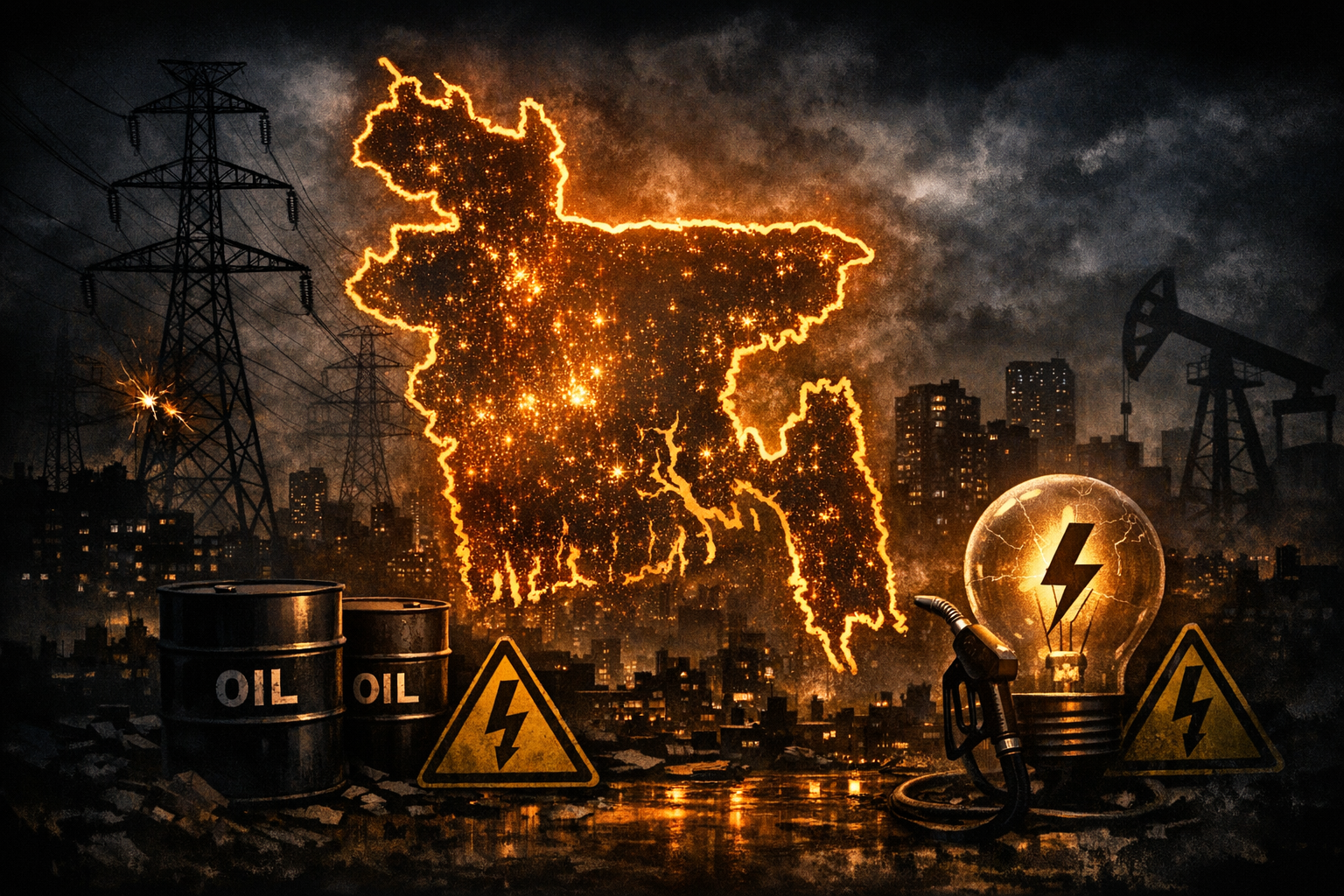
At its core, the government’s approach is based on reducing demand rather than increasing supply. Bangladesh relies heavily on imported fuel, making it particularly vulnerable to global disruptions as its been created after the ongoing war between the USA and Israel against Iran. As Iran restricted the passage through the Strait of Hormuz, the prices increased rapidly, the impact felt immediately in the form of power shortages and rising costs.
Instead of attempting to rapidly increase energy production, a process that takes time and investment, the government has chosen to limit. By shortening office hours, reducing commercial activity in the evening, and cutting down on daily commuting through online classes, policymakers hope to ease pressure on the national grid.
This type of demand-side management is not new. Many countries have adopted similar measures during energy crises. However, the success of such policies often depends less on the rules themselves and more on how people adapt to them.
Shorter Office Hours: Symbolic or Substantial?
The decision to reduce office hours by one hour may seem modest, but it carries both symbolic and practical implications. On paper, closing offices earlier should reduce electricity consumption by limiting the use of lighting, air conditioning, and office equipment. Across thousands of government offices, even small reductions can add up.
Yet the reality is more complex. Energy consumption does not simply disappear when offices close earlier, it often shifts elsewhere. Employees returning home earlier may use more electricity in their own households, offsetting some of the intended savings. In addition, compressed working hours could place greater pressure on workers to complete the same amount of tasks in less time, potentially affecting productivity.
In this sense, the measure works best as a signal of urgency rather than a standalone solution. It shows that the government is willing to act, but its direct impact on overall energy consumption may be limited.
Early Market Closures: Targeting the Peak
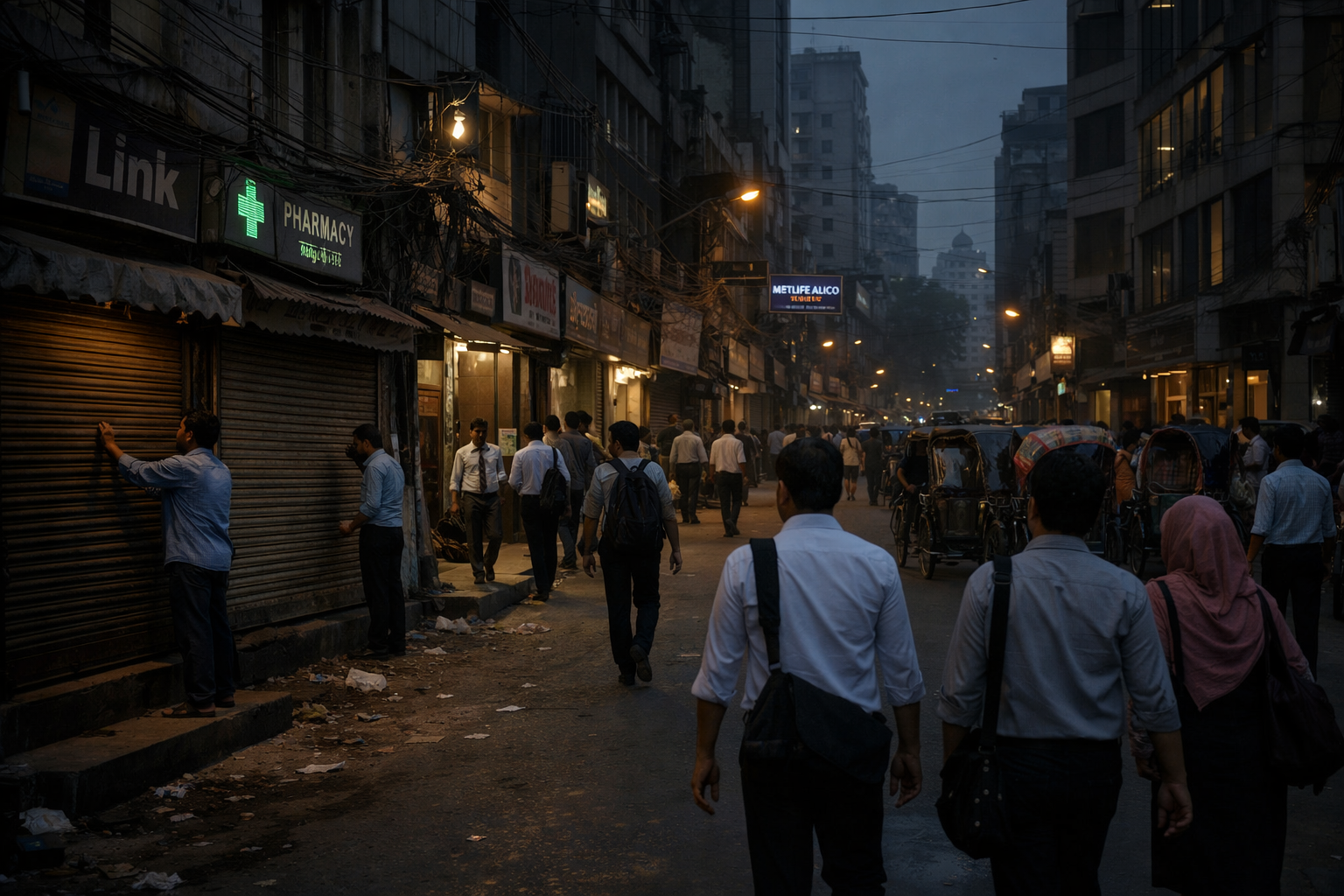
If the office hour change is symbolic, the early closure of markets is far more direct. Evening hours in Bangladesh are typically when electricity demand peaks. Shopping centres, restaurants, and street markets are fully active, with heavy use of lighting and cooling systems.
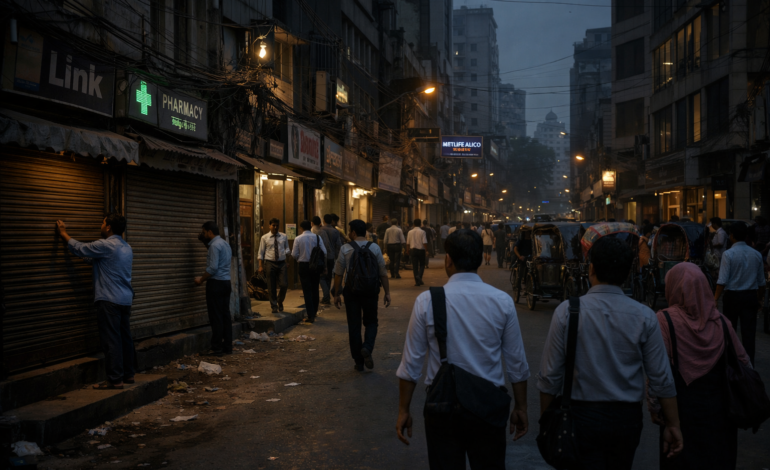
By requiring markets to shut down by 6:00 PM, the government is targeting this peak consumption window. The potential savings here are significant. Reduced lighting alone can lower electricity demand considerably, while limiting commercial activity cuts down on energy-intensive operations.
However, this measure comes at a cost. Evening is also the busiest time for business, particularly in urban areas like Dhaka. Many shop owners rely on after-work customers, and restricting these hours could directly impact their income. Over time, this may lead to resistance from businesses, especially if the policy continues for an extended period.
The challenge, therefore, lies in balancing energy savings with economic activity, a balance that is difficult to maintain in a densely populated, fast-moving city.
Hybrid Education: A Strategic Shift
Perhaps the most forward-thinking element of the government’s plan is the introduction of a hybrid education system. By splitting the week into three days of online classes and three days of in-person learning, the policy attempts to reduce one of the largest contributors to daily energy consumption: transportation.
In cities where millions of students travel to and from schools and universities, even a partial reduction in commuting can lead to meaningful fuel savings. Fewer vehicles on the road also mean less congestion, which further improves fuel efficiency.
At the same time, reducing the number of days that schools operate physically lowers electricity usage within those institutions. Classrooms, administrative offices, and facilities consume energy throughout the day, and cutting this in half could have a noticeable impact.
Yet, as with any policy involving online education, there are challenges. Not all students have equal access to reliable internet or digital devices, raising concerns about inequality. There are also questions about the effectiveness of online learning, particularly in maintaining student engagement and ensuring quality education.
Still, compared to other measures, the hybrid model offers a more sustainable and scalable approach. It does not simply restrict activity, it reimagines how that activity takes place.
A Combined Approach with Mixed Outcomes
What makes the government’s strategy notable is its breadth. Rather than focusing on a single sector, it attempts to reduce energy consumption across offices, businesses, education, and transportation simultaneously. This increases the likelihood of achieving measurable results, at least in the short term.
Taken together, these measures are likely to reduce peak demand and prevent severe power shortages. They also encourage a cultural shift toward energy awareness, reminding citizens that conservation is a shared responsibility.
However, the long-term effectiveness of the policy remains uncertain. Many of the measures are inherently temporary. They do not address the underlying issues that make Bangladesh vulnerable to energy crises, such as dependence on imported fuel and limited renewable energy capacity.
The Bigger Picture
The current situation highlights a broader truth about energy policy: short-term solutions can provide relief, but they cannot replace structural reform. For Bangladesh, this means investing in alternative energy sources, improving infrastructure, and reducing reliance on external markets.
Until those changes are made, measures like shorter office hours and hybrid education will continue to play an important role. They may not solve the problem entirely, but they help manage it during critical moments.
In a Nutshell
The government’s response to the energy crisis is both practical and necessary. By combining reduced office hours, early market closures, and a hybrid education system, it has created a multi-layered approach to lowering energy consumption.
In the short term, these measures are likely to be effective. They reduce demand, stabilize the grid, and buy time for more comprehensive solutions. In the long term, however, their impact will depend on whether they are supported by deeper reforms.
For now, Bangladesh finds itself in a period of adjustment, learning not just how to use energy more efficiently, but how to live within its limits.