


Heroes of 71: The Brave Souls who Fought for Bangladesh’s Freedom
The Liberation War of Bangladesh in 1971 was not won by armies alone. It was secured by the courage, sacrifice, and unwavering resolve of countless individuals who chose resistance over submission. Known collectively as the Heroes of 71, these men and women stood against oppression and altered the course of history. Their stories remain central to Bangladesh’s national identity and continue to resonate globally as symbols of courage and moral conviction.
The Bir Shreshtho: The Highest Symbols of Bravery
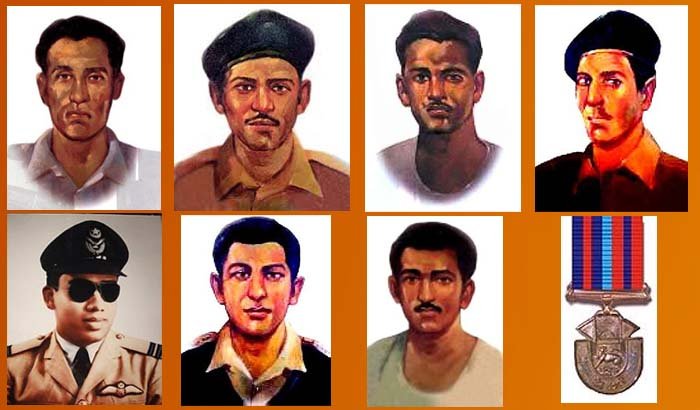
Seven freedom fighters were posthumously awarded Bir Shreshtho, the highest gallantry award of Bangladesh. Their sacrifices represent the very peak of heroism during the war.
Captain Mohiuddin Jahangir
A commissioned officer who escaped from Pakistan and joined the Liberation War, Jahangir led operations in the Chapainawabganj region. He was killed while crossing the Mahananda River under enemy fire. His leadership and sacrifice exemplified professional military courage in the face of overwhelming danger.
Munshi Abdur Rouf
Serving in the naval commandos, Rouf defended key river routes in the Chittagong Hill Tracts. He continued firing at advancing Pakistani forces even after being fatally wounded, allowing fellow fighters to retreat safely.
Sepoy Mohammad Hamidur Rahman
Hamidur Rahman played a decisive role in the battle of Dhalai. His actions disrupted enemy positions and paved the way for a crucial victory. He was killed in action, but his bravery became legendary.
Mostafa Kamal
Kamal showed exceptional courage by holding enemy positions under heavy fire to protect fellow freedom fighters during a tactical withdrawal. His selfless act saved many lives. Kamal relentlessly kept firing with his Light Machine Gun. He managed to kill 8 Pakistani soldiers, but at one stage, he got shot.
Noor Mohammad Sheikh
Bir Srestho Nur Mohammad Sheikh was a Lance Nayek in the East Pakistan Rifles during the Liberation War. As a section commander, Noor Mohammad repeatedly engaged enemy troops despite being injured. He refused to retreat, fighting until his last breath to protect strategic positions.
Matiur Rahman
An officer in the Pakistan Air Force who attempted to defect with a fighter aircraft to support the Liberation War. Though his mission failed, his intent and sacrifice symbolised the inner rebellion within Pakistan’s own forces.
Mohammad Ruhul Amin
A naval engineer officer who fought bravely during a combined operation with Indian forces. He was enrolled at “Polash”, a warship of Bangladesh Navy and at the same time worked as the Squadron leader for both “Padma” and “Palash”. On 10 December, his boat was mistakenly came under fire from the Indian Air Force. Ruhul Amin was forced to dive into the water. When he reached the river shore, he got caught by the Razakars and was brutally killed after refusing to surrender.
Ziaur Rahman
Major Ziaur Rahman emerged as one of the most influential military figures of the Liberation War. His historic radio broadcast from Kalurghat declaring Bangladesh’s independence on behalf of Bangabandhu Sheikh Mujibur Rahman galvanized resistance across the country and provided a clear rallying call at a moment of national uncertainty.
During the war, Ziaur Rahman commanded Sector 1 and later led Z Force, one of the three regular brigades of the Mukti Bahini, conducting decisive operations against Pakistani forces in the eastern theatre.
Other Gallantry Award Recipients and Unsung Heroes
Beyond the Bir Shreshtho, hundreds of fighters were honoured with Bir Uttom, Bir Bikrom, and Bir Protik awards. These heroes led guerrilla operations, intelligence missions, and frontline assaults across the country.
Many heroes, however, never received formal recognition. Village fighters who sabotaged supply lines, students who carried messages under curfew, and farmers who hid weapons in their fields all played critical roles. Their bravery formed the backbone of the resistance.
Women Heroes of the Liberation War
Women were among the most overlooked yet vital heroes of 1971. They served as nurses, messengers, shelter providers, and intelligence operatives. Many risked torture and death to support the freedom fighters.
Some women directly participated in combat training, while others ensured logistical support that kept resistance units operational. Their courage challenged social norms and expanded the meaning of heroism during wartime.
Intellectual Martyrs: Heroes of Thought and Truth
In the final days of the war, Pakistani forces and their collaborators targeted Bangladesh’s intellectuals in an attempt to cripple the future nation. Doctors, professors, writers, and journalists were abducted and killed.
Figures such as Dr Alim Chowdhury, an eye specialist who secretly treated wounded freedom fighters, were murdered for refusing to betray the cause. These intellectual martyrs are heroes not of the battlefield alone but of conscience and truth.
Heroes Beyond the Battlefield
Cultural activists also played a critical role. Songs, poems, and radio broadcasts inspired resistance and unity. Artists and performers used culture as a weapon, strengthening morale when fear and uncertainty threatened to overwhelm the population.
Political organisers and diplomats worked tirelessly to gain international support, ensuring that the world recognised the legitimacy of Bangladesh’s struggle.
Legacy of the Heroes of 71
Victory Day on December 16 marks the surrender of Pakistani forces and the birth of Bangladesh. But the day is ultimately a tribute to the heroes who made that victory possible.
The Heroes of 71 are not confined to history books. They are remembered in national memorials, school curricula, and public consciousness. Their legacy continues to shape Bangladesh’s values of independence, resilience, and justice.
Conclusion
The Heroes of 71 were not driven by the promise of recognition or reward. They fought for language, dignity, and the right to exist as a free people. Their courage transformed a dream into a nation.
Remembering them is not merely an act of respect. It is a responsibility. As Bangladesh moves forward on the global stage, the sacrifices of these heroes remain a moral compass, reminding the world that freedom is earned through courage, unity, and sacrifice.