


Govt Cuts Office Hours, Imposes Lighting Restrictions to Tackle Energy Crisis

Govt Cuts Office Hours, Imposes Lighting Restrictions to Tackle Energy Crisis Amid Middle East Conflict
Government Moves to Conserve Energy
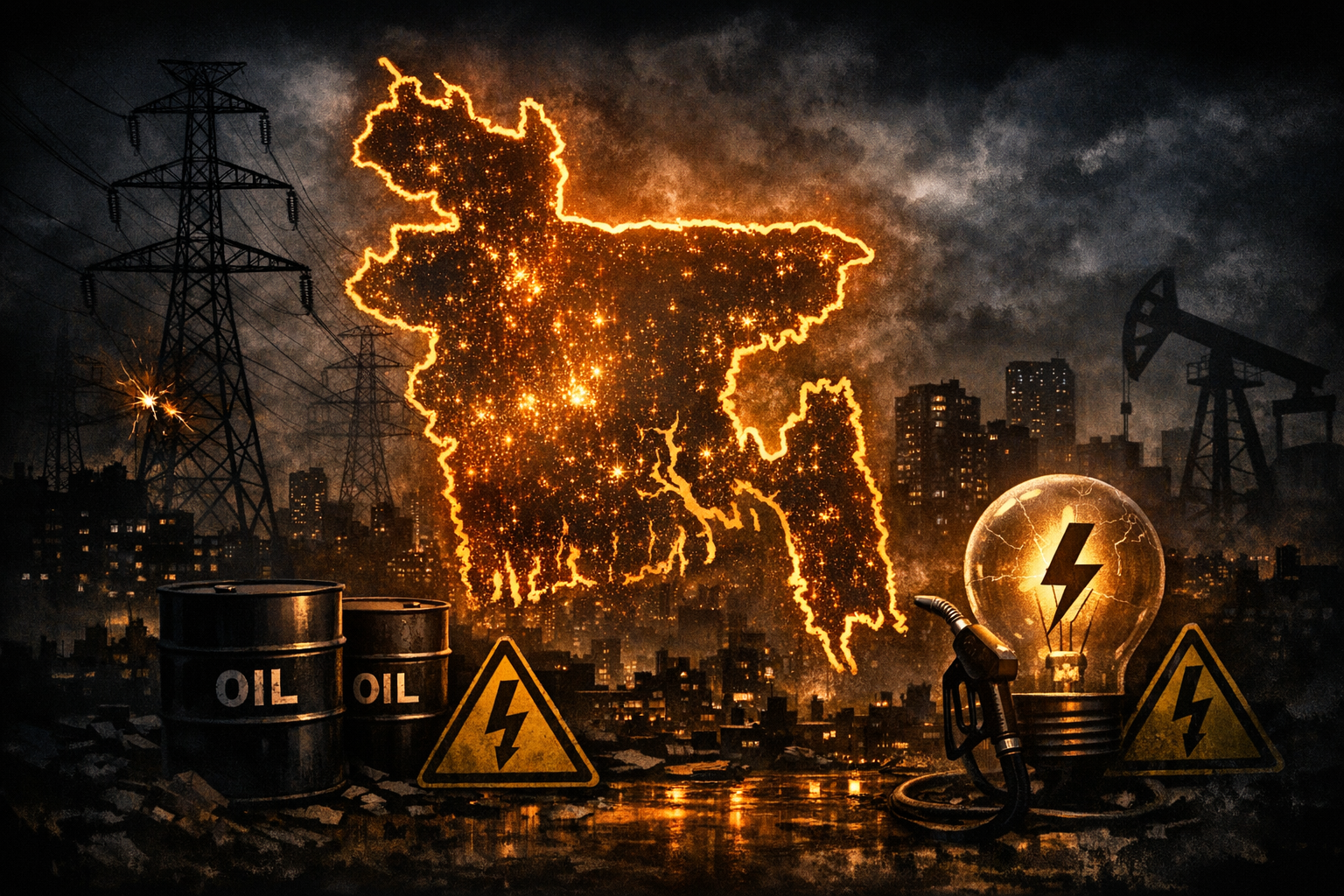
Bangladesh has introduced a series of emergency measures, including shortened office hours and restrictions on lighting, as part of a broader strategy to address the country’s worsening energy crisis.
Under the new directive, government offices will operate from 9:00 AM to 4:00 PM, replacing the previous schedule. Alongside this, authorities have imposed limits on electricity use in both public and private sectors, including restrictions on decorative lighting at events and reduced government spending.
The decision reflects growing pressure on the country’s energy system as global fuel markets remain volatile.
Energy Crisis Driven by Global Conflict
The current energy strain in Bangladesh is closely tied to the ongoing conflict in the Middle East, which has disrupted global oil and gas supply chains.
Bangladesh imports a significant portion of its fuel, making it highly vulnerable to international price shocks and supply disruptions. As tensions escalate, energy-importing countries across Asia are experiencing shortages, rising costs, and supply uncertainty.
Recent reports indicate that the conflict has led to fuel shortages, price hikes, and rationing measures in multiple countries, including Bangladesh.
In response, the government has opted for demand-side management, aiming to reduce consumption rather than rely solely on costly imports.
Shorter Work Hours to Reduce Electricity Use
One of the most immediate steps taken is the reduction of official working hours.
By cutting one hour from the workday, authorities aim to:
- Lower electricity consumption in government buildings
- Reduce air conditioning and lighting usage
- Ease pressure on the national power grid
This approach aligns with similar strategies adopted in other countries facing energy shortages, where shortened workweeks or reduced office hours have been used to conserve fuel and electricity.
While the measure may seem minor, its cumulative impact across thousands of government offices could significantly reduce daily power demand.
Nationwide Restrictions on Lighting and Businesses
In addition to office hour adjustments, the government has introduced strict controls on electricity use across commercial and social sectors.
Key measures include:
- Limiting lighting at private events such as weddings and social gatherings
- Requiring shops, markets, and shopping centres to close by 6 PM
- Reducing non-essential public spending
These steps are designed to curb unnecessary energy use, particularly during peak evening hours when electricity demand is highest.
Earlier directives had already instructed businesses to switch off decorative lighting and limit air conditioning use, indicating a broader push toward energy conservation.
Shift Toward Sustainable Transport
As part of the same policy framework, the government has also announced plans to introduce electric buses for school transportation.
The goal is to:
- Reduce reliance on fuel-powered private vehicles
- Lower overall fuel consumption
- Promote long-term energy efficiency
According to officials, fewer private vehicles transporting students could significantly cut fuel demand during peak hours.
This move signals a shift toward sustainable transport solutions, even as the country navigates short-term energy challenges.
Wider Impact on Daily Life
The new measures are expected to reshape daily routines across Bangladesh.
For government employees:
- Shorter workdays may improve work-life balance
- However, it could also lead to increased pressure to complete tasks within reduced hours
For businesses:
- Early closure of markets may impact sales, especially in urban areas
- Retailers and small traders could face income losses
For the public:
- Reduced lighting at events may alter social and cultural practices
- Daily schedules may shift earlier to accommodate limited operating hours
These changes highlight how the energy crisis is affecting not just infrastructure, but also economic activity and social life.
Part of a Broader Austerity Strategy
The latest decisions are not isolated measures but part of a larger austerity and energy-saving strategy.
In recent weeks, the government has:
- Encouraged reduced use of air conditioning
- Promoted public transport over private vehicles
- Implemented fuel rationing in certain sectors
Officials have also explored options such as online classes and adjusted school schedules to further reduce energy consumption.
Together, these steps reflect a comprehensive attempt to manage limited resources during a period of global uncertainty.
Challenges and Concerns
While the measures are necessary, they also present several challenges.
1. Economic Impact
Shorter business hours and reduced activity could slow economic growth, particularly for small businesses.
2. Implementation Issues
Ensuring compliance across the country especially in informal sectors, may prove difficult.
3. Public Adaptation
Adjusting to new routines and restrictions may take time, particularly in urban areas with busy schedules.
4. Long-Term Sustainability
Experts warn that temporary measures must be complemented by long-term energy reforms, including investment in renewable energy and local production.
A Sign of Global Interdependence
Bangladesh’s current situation underscores a broader reality: global conflicts can have immediate local consequences.
The disruption of energy supplies in the Middle East has triggered ripple effects across continents, affecting economies far removed from the conflict itself.
For Bangladesh, which relies heavily on imported fuel, this interdependence means that external shocks quickly translate into domestic challenges.
Looking Ahead
The government’s decision to shorten office hours and impose lighting restrictions marks a decisive response to an escalating energy crisis.
By focusing on conservation and efficiency, authorities aim to stabilize the situation in the short term. However, the success of these measures will depend on effective implementation and public cooperation.
At the same time, the crisis highlights the urgent need for long-term energy security, including diversification of energy sources and investment in sustainable solutions.
As Bangladesh navigates this challenging period, the balance between economic activity, social life, and energy conservation will remain a critical issue in the months ahead.