



From Radio to Podcast: The New Voice of Bangladeshi Media
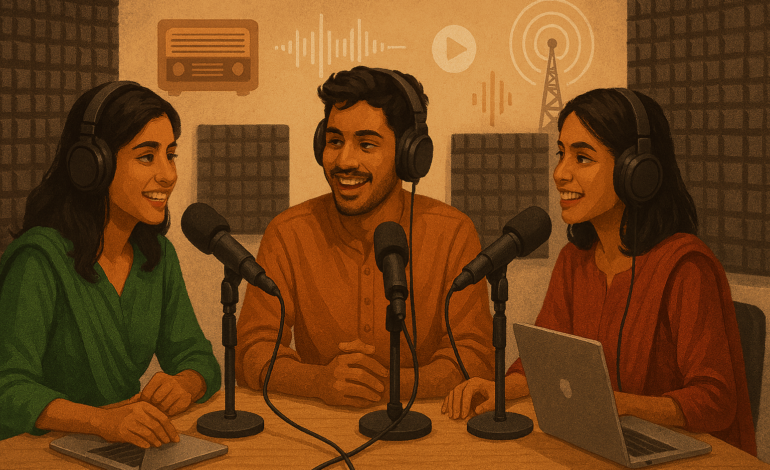

From Radio to Podcast: The New Voice of Bangladeshi Media
Bangladesh’s media landscape is undergoing a quiet but powerful transformation. For decades, radio served as a trusted broadcast medium, informing, entertaining, and connecting people across cities, villages, and far-flung communities. Today, a new contender is podcasts.
Podcasts, a digital audio episodes available on demand are rapidly reshaping how Bangladeshis consume stories, talk shows, news, and cultural content. With niche audiences, diverse voices, and flexible formats, podcasts represent a shift from scheduled broadcasts to personalized listening experiences. In an increasingly mobile and connected society, Bangladeshi podcasters are building communities and carving out forms of expression that resonate with young and urban listeners.
Why Podcasts Are Taking Off in Bangladesh
1. On-Demand Listening
Unlike radio, which airs at specific times, podcasts can be streamed or downloaded whenever convenient. For busy commuters, students, and working professionals, this flexibility is key.
Mobile internet penetration in Bangladesh has grown rapidly in recent years, with affordable data plans and widespread smartphone use encouraging audio content consumption on the go. Audiences can pause, rewind, and replay episodes, which a level of control radio cannot offer.
2. Niche and Diverse Content
One of the most significant appeals of podcasts is the freedom to explore highly specific themes. While mainstream media often focuses on broad topics, podcast producers are creating shows on subjects like:
- Youth perspectives on education and careers
- True crime narratives
- Bangladeshi history and folklore
- Mental health and self-development
- Entrepreneurship and tech trends
- Political Promotion and debate
- Sports Discussions
This diversity allows audiences to find content that aligns with individual interests, rather than being limited to general programming.
3. Low Production Barriers
Unlike radio broadcasts, which often require expensive studio time, licensing, and broadcast infrastructure, podcasts can be produced with minimal equipment. A good microphone, editing software, and a quiet space are often enough. This accessibility has encouraged students, creatives, freelancers, and media enthusiasts to launch original shows independently.
The Early Stars of Bangladeshi Podcasting
Several local podcasters have gained recognition for their innovative shows, building loyal followings and pushing the boundaries of audio storytelling.
Bengal Beats
A music and culture podcast exploring Bangladesh’s rich musical heritage and modern scene — from traditional folk to indie electro.
2 Cents Podcast
High-profile interviews with Bangladeshi entrepreneurs, success stories, and practical advice on building companies.
EveningBrew Podcast
The podcast focuses on candid conversations, often featuring political figures, influencers, and public personalities in an informal setting.
While podcast analytics in Bangladesh are not centrally tracked like traditional broadcast ratings, download counts, social engagement, and listener reviews indicate strong interest in these niche shows, particularly among audiences aged 18–34.
Rise of Podcast Use in Politics
Podcasting is also beginning to reshape political communication in Bangladesh. Politicians, activists, journalists, and policy commentators are increasingly using podcasts to explain positions, discuss reforms, and engage younger voters in longer, more nuanced conversations than traditional soundbites allow.
Unlike television debates or press briefings, podcasts provide space for in-depth dialogue on governance, economic challenges, youth aspirations, and democratic values. Independent hosts now regularly invite political analysts and civil society voices to unpack national issues, while some emerging political figures use podcast appearances to build personal credibility and connect directly with digital-first audiences.
For many young listeners, podcasts have become an alternative civic classroom, helping them understand politics beyond headlines and encouraging more informed participation in public life.
Podcasts vs Radio: Complementary, Not Competitive
While podcasts are gaining ground, radio remains a vital medium in Bangladesh especially in rural areas and among older listeners. FM stations, government broadcasts, and community radio continue to serve populations with limited internet access or where mobile data remains expensive.
Rather than replacing radio, podcasts are expanding the audio landscape:
- Radio provides broad, real-time information and community announcements
- Podcasts offer deep, topic-focused storytelling and dialogue
In some cases, radio stations are embracing podcasts as a digital extension of their brands repackaging talk segments, interviews, and cultural programs into downloadable episodes.
Why Younger Audiences Are Hooked
Young listeners especially Generation Z and Millennials are among the most avid podcast consumers. Several factors explain their enthusiasm:
Personal Relevance
Podcasts often tackle issues that young listeners feel are undercovered in mainstream media: mental health, career uncertainty, identity, and social change.
Language Flexibility
Shows in both Bangla and English cater to bilingual audiences. Some even blend languages depending on theme and guest.
Community Feeling
Podcast hosts often invite listener feedback, conduct Q&A episodes, and build interactive communities through social media creating a sense of belonging.
Educational Value
Podcasts serve as informal learning platforms on topics like personal finance, science communication, and civic engagement complementing formal education.
Challenges Facing Podcasters in Bangladesh
Despite rapid growth, podcasting in Bangladesh faces obstacles:
Limited Monetization
Unlike radio advertising, which is established and measurable, podcast monetization remains nascent. Podcasters must build audiences before monetizing through sponsorships, crowdfunding, or partnerships.
Discoverability
Unless supported by strong marketing or platform placement, podcasts can be hard to discover. Unlike radio frequencies listed on static guides, podcasts depend on search algorithms and app rankings.
Data Costs
While mobile broadband is widespread, data costs can still pose challenges for frequent streaming, especially for long episodes.
Content Regulation
Though podcasts are less regulated than broadcast media, creators must be aware of national laws concerning hate speech, defamation, and content restrictions. Responsible content creation is vital to avoid legal issues.
Platforms Fueling Growth
Several digital platforms have supported the expansion of podcasts in Bangladesh:
- Spotify: Offers global reach and analytics features for creators
- Apple Podcasts: Popular with international audiences and diaspora communities
- YouTube: Many podcasters upload full episodes or clips for visual audiences
- Anchor / SoundCloud / Podbean: Easy tools for independent distribution
Social media especially Facebook, Instagram, and TikTok plays a critical role in promotion, enabling podcasters to share bite-sized audio highlights and engage listeners.
Podcasts and the Bangladeshi Diaspora
Podcasts are not only popular within Bangladesh; they also resonate strongly with the Bangladeshi diaspora in the Middle East, Europe, North America, and Australasia. For expatriates, podcasts offer a connection to home, blending nostalgia with up-to-date discussions on culture, society, and national events.
Shows based in Bangladesh that are globally accessible provide diasporic audiences with real-time perspectives on life, trends, and conversations happening back home often in a way that conventional media cannot match.
Podcasts and Social Impact
Some Bangladeshi podcasts have gone beyond entertainment toward social impact:
Health Awareness
Podcasts featuring medical professionals discussing preventive care, nutrition, and mental wellbeing.
Education
Shows designed to assist students with study strategies, exam preparation, and career pathways.
Civic Engagement
Episodes focusing on governance, public policy, and social reform — encouraging citizens to engage with community issues.
These examples illustrate how podcasts can be leveraged not only for entertainment but also for knowledge dissemination and social empowerment.
Podcasters on What’s Next
Many local creators believe podcasting is still in its early stages in Bangladesh:
“Podcasting lets us talk about things that matter deeply to us — and reach listeners on their own terms,” says one Dhaka-based host.
Creators emphasize that consistency in quality, storytelling, and audience engagement will be key to long-term success. Many are experimenting with formats such as:
- Serialized documentaries
- Fictional audio dramas
- Live listener calls
- Cross-border collaborations with international podcasters
These innovations suggest that the medium will continue to diversify and mature.
The Future of Audio Media in Bangladesh
As broadband access becomes more affordable and internet infrastructure expands, the potential audience for podcasts will only grow. Younger generations comfortable with digital formats and on-demand content will likely drive continued adoption.
Podcasting may also influence traditional media, prompting radio stations to integrate digital strategies and rethink how audio content is produced and distributed.
In a media ecosystem that is rapidly digitizing, podcasts represent a new voice of Bangladeshi media, one defined by personalization, creativity, and direct connection between creators and listeners.
A Medium for the Times
From community radio broadcasts to globally accessible podcasts, Bangladesh’s audio storytelling tradition is evolving. The rise of podcasts reflects changing listening habits, empowered creators, and audiences hungry for content that feels personal, relevant, and engaging.
Whether exploring identity, culture, education, or social issues, podcasts are giving voice to diverse perspectives building communities that listen, share, and connect across borders.
In a digital era, where content is abundant but attention is scarce, Bangladeshi podcasts are carving out space by challenging convention, amplifying voices, and transforming passive audiences into active participants in the nation’s ongoing media revolution.