



Can Bangladesh Build a Tourism Brand Beyond Cox’s Bazar?

Can Bangladesh Build a Tourism Brand Beyond Cox’s Bazar? SWOT Analysis and Strategic Recommendations
Bangladesh is home to one of the world’s longest uninterrupted sea beaches at Cox’s Bazar, which has long been the centerpiece of its tourism identity. Yet as global tourism trends shift and travelers seek more diverse experiences, questions are emerging: Can Bangladesh expand its tourism brand beyond Cox’s Bazar?
What strengths, weaknesses, opportunities, and threats define this potential? And most importantly how can Bangladesh build a sustainable, globally recognised tourism brand that goes far beyond a single destination?
This article explores these questions through a structured SWOT analysis, followed by concrete recommendations to help Bangladesh unlock the full potential of its tourism landscape.
Tourism and Bangladesh’s Economic Strategy
Tourism is an increasingly important economic sector in many countries, contributing to GDP, job creation, infrastructure development, and international perception. For Bangladesh, tourism offers potential not only for foreign exchange earnings but also for bolstering rural economies, preserving cultural heritage, and showcasing unique landscapes and experiences.
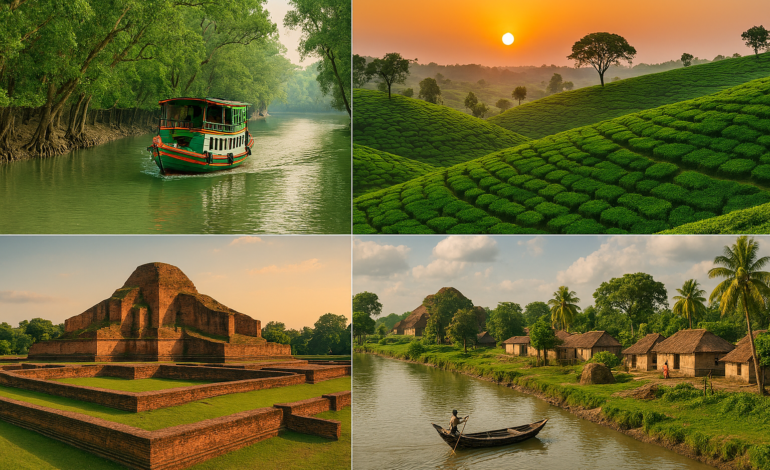
However, for years Bangladesh’s tourism marketing has been heavily focused on Cox’s Bazar, often overshadowing other compelling attractions such as:
- Sundarbans Mangrove Forest (UNESCO World Heritage Site)
- Srimangal’s Tea Gardens and Rainforests
- Paharpur’s Ancient Buddhist Ruins (UNESCO World Heritage Site)
- Rangamati and Hill Districts of Chattogram
- Historical Sites in Dhaka and Rajshahi
- Wetlands, Rivers, and Rural Cultural Trails
To build a tourism brand that resonates globally rather than being Cox’s Bazar-centric, it is essential to evaluate internal capacities and external opportunities systematically.
SWOT Analysis: Tourism in Bangladesh Beyond Cox’s Bazar
S – Strengths
1. Natural and Cultural Diversity
Bangladesh’s landscape is surprisingly varied:
- Sundarbans — the largest mangrove forest in the world and home to Royal Bengal Tigers
- Tea Country of Srimangal — scenic hills, forests, and biodiversity
- Hill Tracts — tribal cultures, lakes, and viewpoints
- Historical and Archaeological Sites — Paharpur, Mahasthangarh, old mosques and temples
- Riverine Beauty — thousands of rivers and waterways such as the Padma, Meghna, and Jamuna
These offer opportunities for eco-tourism, heritage tourism, adventure travel, and rural cultural experiences.
2. Young and Resilient Population
Bangladesh has a youthful population with increasing language skills, digital connectivity, and hospitality potential crucial for developing and serving diverse tourist markets.
3. Cost Competitiveness
Compared to many destinations in South Asia, Bangladesh offers relatively low travel costs, which can be attractive to budget travelers and long-stay visitors.
4. Strategic Location
Positioned near major markets such as India, Nepal, Bhutan, and Southeast Asia, Bangladesh can leverage regional tourism circuits and multi-destination travel plans.
W – Weaknesses
1. Infrastructure Deficits
Many potential tourist destinations suffer from limited access:
- Inadequate road connectivity
- Underdeveloped airport networks
- Limited high-quality accommodation
- Poor digital and physical wayfinding
These gaps reduce the appeal for international tourists accustomed to high standards of convenience.
2. Safety, Cleanliness, and Service Standards
Bangladesh’s image as a tourist destination is often hampered by:
- Perceptions (or realities) of safety challenges
- Unsanitary public spaces
- Inconsistent hospitality service quality
These factors can deter first-time or family travelers.
3. Branding and Marketing Limitations
Marketing efforts have historically emphasised Cox’s Bazar, with limited global awareness of other destinations. Few integrated branding campaigns showcase Bangladesh as a multi-destination experience.
4. Regulatory and Institutional Complexity
Tourism development requires coordination across government agencies, local authorities, and private sector players. Current bureaucratic barriers sometimes slow investment and business formation.
O – Opportunities
1. Rising Global Interest in Authentic Travel
International tourists increasingly seek immersive experiences cultural, culinary, and ecological. Bangladesh has much to offer in terms of indigenous community experiences, river cruises, heritage routes, and eco-adventure trips.
2. Regional Partnerships and Multi-Destination Circuits
With regional tourism growth in South Asia, Bangladesh can partner with:
- India (West Bengal, Northeast)
- Bhutan and Nepal (Himalayan circuits)
- Myanmar and Southeast Asia
Joint marketing and regional passes could drive multi-destination trips.
3. Digital Platforms and Influencer Marketing
Social media, travel platforms, and influencer partnerships provide cost-effective ways to showcase authentic experiences from lesser-known destinations.
4. Niche Tourism Growth Segments
Specialised sectors like:
- Eco-tourism and wildlife expeditions
- Heritage and archaeological tourism
- Adventure tourism (hiking, boating, hill trekking)
- Culinary tourism
- Spiritual and religious circuits
These are rapidly growing globally and fit many Bangladeshi destinations.
T – Threats
1. Climate Vulnerability
Bangladesh is one of the most climate-vulnerable countries. Rising sea levels, cyclones, and flooding pose risks to tourism infrastructure, particularly coastal and mangrove regions.
2. Security Perceptions
Global travel advisories, regional tensions, or isolated incidents can impact tourist confidence disproportionately for emerging destinations.
3. Regional Competition
Countries in the region such as Nepal, Sri Lanka, Thailand, and Vietnam already command strong tourism brands, making it harder for Bangladesh to capture attention without distinct positioning.
4. Environmental Degradation
Tourism growth without sustainable planning risks harming fragile ecosystems like the Sundarbans, hill forests, and wetlands, which could reduce long-term tourism potential.
Strategic Recommendations
With this SWOT framework in mind, Bangladesh can adopt a multi-tiered strategy to develop a broad and compelling tourism brand.
1. Build Integrated Destination Clusters
Instead of promoting isolated sites, Bangladesh should package complementary experiences:
- Heritage Circuit: Dhaka Old City → Paharpur → Mahasthangarh → Rajshahi
- Eco and Wilderness Circuit: Sundarbans → Bhola Islands → Kuakata Coastal Belt
- Tea and Trails Circuit: Srimangal → Lawachara Rainforest → Tribal Hill Regions
- River Tourism Route: Padma/Jamuna/Meghna waterway cruises with cultural stops
These clusters appeal to diverse traveler interests while dispersing economic benefits.
2. Invest in Targeted Infrastructure
Governments and private investors should prioritise:
- Upgrading access roads to key attractions
- Expanding regional airports (e.g., Sylhet, Jessore, Barishal)
- High-standard hospitality zones with international quality
- Public restrooms, waste management, and digital wayfinding
These foundational improvements are essential for traveller satisfaction and repeat visits.
3. Forge Public–Private Partnerships
Tourism development benefits from synergy between:
- Tourism boards
- Local governments
- Private hospitality groups
- Community enterprises
Incentives for sustainable investment, including tax breaks or fast-track approvals can boost confidence and attract capital.
4. Strengthen Safety, Training, and Standards
To build global confidence:
- Launch widespread tourism safety protocols
- Provide professional hospitality and tour guide training
- Establish a national tourism quality certification
These measures improve visitor experience and elevate reputation.
5. Brand Beyond a Beach: Positioning Bangladesh Globally
Marketing should shift from “Cox’s Bazar Beach Destination” to “Bangladesh — Where Culture, Nature & Heritage Converge.”
Videos, blogs, and influencer campaigns can help amplify these narratives worldwide.
6. Promote Sustainable Tourism and Community Ownership
To protect fragile ecosystems and local culture:
- Involve communities in planning and revenue sharing
- Limit tourism pressure on delicate habitats
- Promote eco-friendly lodges and low-impact travel packages
Sustainability enhances long-term viability and increasingly matters to global travellers.
7. Leverage Digital Tools and Data Analytics
Use digital tools to:
- Track visitor preferences
- Personalise travel recommendations
- Offer dynamic online booking systems
- Engage global audiences via social media and content platforms
Data-driven marketing helps refine offerings and track ROI.
What Success Could Look Like by 2035
If Bangladesh executes strategically, by 2035 its tourism sector may look like:
- Multi-destination itineraries that rival regional circuits
- Internationally recognised heritage sites with curated visitor experiences
- Eco-tourism leadership in mangroves, wetlands, and forest trails
- Cultural tourism hubs showcasing music, crafts, cuisine, and festivals
- Enhanced regional tourism partnerships with India, Nepal, Bhutan, and Southeast Asia
This diversified tourism identity would reduce dependence on a single destination and attract a broader spectrum of tourists from adventure seekers to cultural travellers and eco-enthusiasts.
A Broader Tourism Narrative for Bangladesh
Bangladesh has long been celebrated for Cox’s Bazar, but its untapped potential extends far beyond the beach. With strategic planning, quality infrastructure, diversified offerings, sustainability measures, and bold branding, Bangladesh can build a compelling tourism brand that speaks to culture, heritage, nature, and human connection.
The key lies in harnessing what makes Bangladesh unique while aligning with global travel trends and in doing so, transforming the country from a beach destination into a multi-faceted tourism nation ready for the next generation of global explorers.