




BNP Sweeps to Power in Historic Shift in Bangladesh’s 2026 Election
The Bangladesh Nationalist Party (BNP), led by Tarique Rahman, secured a commanding majority in the Bangladesh’s 2026 General Election, ending years of dominance by the rival Awami League and reshaping the country’s future direction. The election, held on 12 February 2026, was widely seen as the first truly competitive and competitive vote in years, occurring in the aftermath of significant political upheaval and a nationwide push for reform.
A Landmark Election After Political Upheaval
The 2026 polls came at a unique moment for Bangladesh’s democracy. In 2024, a wave of student-led protests widely referred to as the July Revolution culminated in the ousting of long-serving Prime Minister Sheikh Hasina, whose Awami League had governed for over a decade amid rising concerns about political freedoms and governance. An interim government, led by Nobel laureate Muhammad Yunus, was tasked with organising credible and competitive elections.
This election was the first since that transition and represented, for many Bangladeshis, a chance to influence their country’s political direction more freely than in previous cycles. Voter engagement was notably high: preliminary figures indicate turnout surpassed 60%, well above the roughly 42% seen in 2024, reflecting renewed public interest and confidence in the democratic process.
BNP Victory: A Majority Mandate for Change
The most striking outcome of the vote was the overwhelming success of the Bangladesh Nationalist Party (BNP). According to officials, the BNP and its allies secured well over the 209 seats in the 299-seat parliament.
Tarique Rahman Set to Become Prime Minister
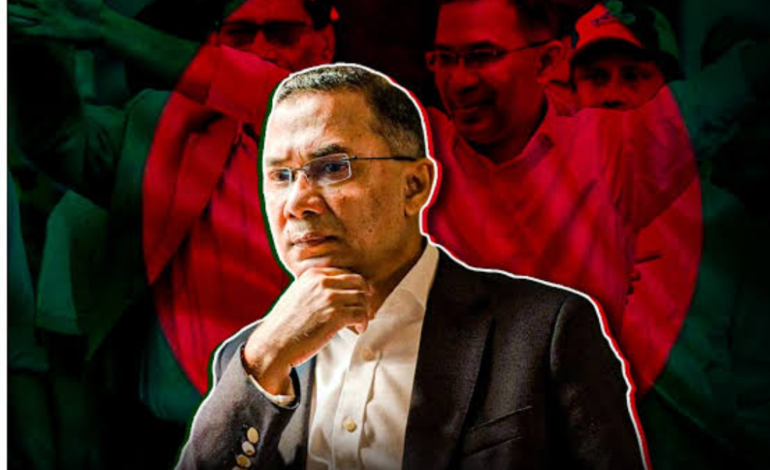
BNP chairperson Tarique Rahman, who returned from nearly two decades in exile and assumed leadership of his party—won his constituencies decisively, including Bogura-6 and Dhaka-17, and is widely expected to become Bangladesh’s next prime minister.
In Bogura-6, Rahman captured more than 216,000 votes, significantly outpacing his closest rival. Results from early counting showed him winning by a huge margin votes, a commanding endorsement from voters in his home area.
Major Parties and Parliamentary Composition
The election results revealed a reshaped political landscape:
- BNP: Won a large majority of seats.
- Bangladesh Jamaat-e-Islami: Emerged as the principal opposition with dozens of seats.
- National Citizen Party (NCP): A newer political force led by youth activists also made parliamentary gains.
The long-dominant Awami League, which had governed non-stop for over 15 years before 2024, was not a major force in this election and had been barred from contesting due to legal and political developments; its absence was a defining feature of the polls.
The distribution of seats suggested a parliament dominated by the BNP, with the Jamaat-e-Islami alliance positioned as the main opposition, and smaller parties such as the NCP holding a few seats. Across more than 2,000 candidates, including independents the competitive field reflected Bangladesh’s diverse political fabric.
A Referendum on Constitutional Reform
In addition to electing members of parliament, Bangladesh held a referendum on proposed constitutional reforms known as the July Charter. Although final figures were still being compiled, early reports indicated that a significant majority of voters supported the reforms.
The constitutional changes under consideration included:
- Establishing term limits for the prime minister,
- Enhancing judicial independence,
- Increasing women’s representation in parliament, and
- Creating mechanisms for neutral interim governments during election periods.
Support for these reforms suggested that many voters were not only choosing new leadership but also backing structural changes aimed at strengthening democratic governance in Bangladesh.
Significance for Bangladesh’s Democracy
Observers and political analysts have framed the 2026 election as a milestone in Bangladesh’s democratic evolution. After years of political tension and concerns about electoral fairness, the relative competitiveness and turnout signalled progress toward more inclusive political participation.
The strong performance of the BNP, led by Rahman, was widely interpreted as a mandate for political and economic change, a call from voters for a new direction after long-standing leadership under the Awami League. Many factors contributed to this shift, including public fatigue with political stagnation, demands for greater accountability, and the mobilisation of youth voters who played a central role in the 2024 protests.
International Reactions and Regional Implications
Global leaders quickly acknowledged the election outcome, with messages of congratulations flowing from across the region and beyond. Leaders from India, Pakistan, and the United States extended felicitations to the BNP leadership, emphasizing the importance of political stability and constructive engagement in South Asia.
These responses underscored Bangladesh’s significance both regionally and globally. As one of South Asia’s most populous nations, with around 175 million residents the country’s political choices can have wide-ranging economic and geopolitical implications, from trade relations to security cooperation.
Experts noted that a clear parliamentary majority could enable Bangladesh to pursue policy reforms more decisively, strengthening governance and potentially boosting investor confidence in areas such as infrastructure and trade.
Challenges and Critics
Despite broad recognition of the electoral outcome, not all voices welcomed the results uncritically. Leaders from the Awami League, though sidelined, labelled the election “illegal” and raised concerns about the inclusiveness of the contest, pointing to the party’s exclusion from the ballot and alleging irregularities in the process.
These criticisms highlighted ongoing political divisions and the work that remains to solidify democratic norms in Bangladesh. For many advocates of electoral reform and democracy, the election was a positive step but not the final word on inclusivity and institutional strength.
What Comes Next for Bangladesh
With a BNP-led government on the horizon, attention now turns to how the new leadership will translate its majority into policy action. Key priorities for the incoming government include:
- Economic reform and job creation — addressing unemployment and boosting growth.
- Anti-corruption measures — strengthening rule of law.
- Constitutional implementation — enacting reforms approved in the referendum.
- Diplomatic engagement — navigating relationships with neighbouring countries and global partners.
Tarique Rahman, returning from exile to take the helm of government, faces the challenge of uniting a politically divided nation and delivering on campaign promises that resonated with millions of voters.
A New Chapter in Bangladesh Politics
The 2026 general election in Bangladesh stands as a defining moment in the country’s democratic history. With the Bangladesh Nationalist Party securing a robust parliamentary majority under Tarique Rahman’s leadership, voters have ushered in a new era one focused on reform, political renewal, and constitutional transformation.
While critics cautioned about lingering divisions, the high turnout and competitive nature of the polls marked a significant departure from recent electoral cycles. The referendum’s supportive outcome added to the sense that many Bangladeshis were ready for structural change.
As the country transitions from elections to governance, the world will be watching how Bangladesh’s new leadership navigates domestic priorities and international partnerships, shaping not only its own future but potentially influencing the broader South Asian political landscape.