



Beyond GPA-5: How Bangladeshi Students Are Redefining Academic Success

Beyond GPA-5: How Bangladeshi Students Are Redefining Academic Success
For decades, academic success in Bangladesh has been measured by a single benchmark: GPA-5. From SSC to HSC, top grades have long been treated as the ultimate gateway to prestigious universities, scholarships, and social recognition.
But a quiet shift is underway.
Across schools, colleges, and universities, a growing number of Bangladeshi students are redefining what success looks like. While grades still matter, today’s learners are increasingly building portfolios, joining competitions, learning practical skills, and creating projects that reflect real-world abilities and preparing themselves not just for exams, but for global careers.
Why GPA Alone Is No Longer Enough
Bangladesh produces thousands of GPA-5 holders every year. Yet many graduates struggle to stand out in competitive university admissions or job markets where employers increasingly value:
- Practical skills
- Problem-solving ability
- Communication
- Creativity
- Digital literacy
Universities abroad, especially in North America and Europe, now evaluate applicants holistically. They look beyond transcripts to assess extracurricular activities, research projects, coding portfolios, Olympiad medals, volunteering, and leadership roles.
Local employers are following a similar trend.
According to career advisors, companies in Bangladesh’s growing tech, startup, and development sectors are prioritising candidates who can demonstrate applied skills rather than just academic results.
The Rise of Student Portfolios
One of the most visible changes is the growing use of student portfolios—digital or physical collections of projects, achievements, and experiences.
High school and university students are now showcasing:
- Coding projects on GitHub
- Design work on Behance or personal websites
- Writing samples on Medium
- Science experiments and research posters
- Community initiatives and volunteering records
These portfolios help students prove what they can do, not just what grades they earned.
In Dhaka and Chattogram, several private schools and coaching centres now encourage students to start portfolios as early as Class 8, especially those aiming for overseas education.
Competitions Are Becoming Career Launchpads
Academic competitions are also playing a growing role in shaping student futures.
Bangladeshi students are actively participating in:
- Bangladesh Mathematical Olympiad
- National Science Fairs
- Robotics competitions
- Debate championships
- Hackathons
- Business case challenges
Success in these platforms often opens doors to international exposure, scholarships, and mentorship opportunities.
Over the past decade, Bangladesh has steadily improved its performance in global Olympiads, producing medalists who later secure admission to top universities such as MIT, Oxford, Cambridge, and leading Asian institutions.
For many students, competitions provide something classrooms often cannot: real-world problem solving under pressure.
Skill-Based Learning Takes Centre Stage
Perhaps the most important shift is the growing emphasis on skills.
Students are increasingly learning:
- Programming and data analysis
- Graphic design and video editing
- Public speaking and presentation
- Research methodology
- Digital marketing
- Entrepreneurship
Online platforms, coding bootcamps, and local academies are filling gaps left by traditional curricula.
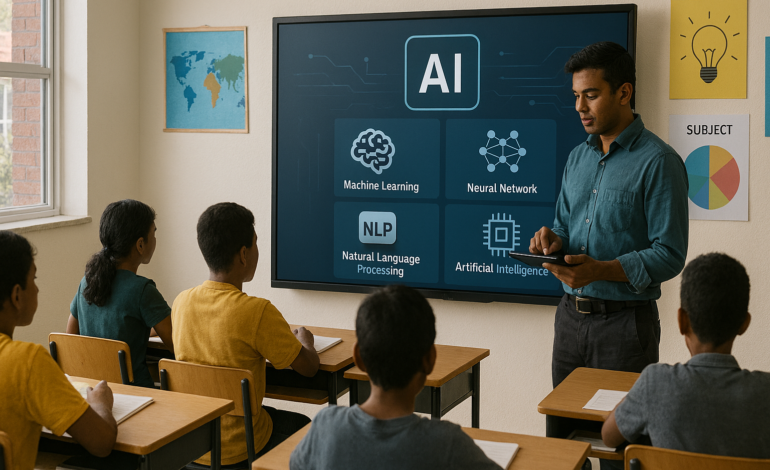
Even within universities, student clubs now host workshops on AI, cybersecurity, UX design, and startup development—areas rarely covered in standard textbooks.
Parents who once focused exclusively on grades are beginning to support skill-building, recognising that employability depends on adaptability.
Changing Mindsets Among Parents
Historically, Bangladeshi parents prioritised marks above all else, often steering children toward medicine or engineering regardless of personal interest.
That mindset is evolving.
Urban middle-class families are increasingly open to alternative paths such as:
- Computer science
- Creative fields
- Business and entrepreneurship
- Social impact careers
Parents now attend career seminars, consult counsellors, and encourage children to explore extracurricular activities alongside academics.
While GPA remains important, many families understand that success today requires a broader toolkit.
Universities Are Adapting Too
Some Bangladeshi universities are slowly moving toward outcome-based education models that emphasise:
- Project-based learning
- Internship requirements
- Industry collaboration
- Capstone projects
Private universities in particular are integrating practical assessments into grading systems, pushing students to develop workplace-ready skills.
Student-led initiatives such as startup incubators and research groups are also becoming more common, creating spaces for experimentation and innovation.
Social Media and Peer Learning
Platforms like YouTube, LinkedIn, and Facebook groups have created informal learning ecosystems where students share resources, opportunities, and success stories.
A student from Rajshahi can now learn coding from Dhaka-based mentors or receive advice from Bangladeshi graduates studying abroad.
This peer-driven culture is accelerating awareness that academic success is multidimensional.
Challenges Still Remain
Despite progress, access remains uneven.
Students in rural areas often lack:
- Reliable internet
- Career guidance
- Exposure to competitions
- Skill-training facilities
Public education still leans heavily toward exam-based evaluation, and many teachers lack resources for modern instruction.
Education experts stress that systemic reform is needed to ensure all students—not just those in major cities benefit from this evolving definition of success.
Redefining Success for a New Generation
Today’s Bangladeshi students are learning that GPA-5, while valuable, is only one piece of a larger puzzle.
They are building portfolios, joining competitions, learning skills, and creating impact crafting identities beyond report cards.
In a rapidly changing global economy, this shift matters.
Academic success is no longer just about memorising textbooks. It’s about curiosity, creativity, resilience, and the ability to turn knowledge into action.
For Bangladesh’s next generation, the future belongs not only to top scorers but to problem solvers, innovators, and lifelong learners.