




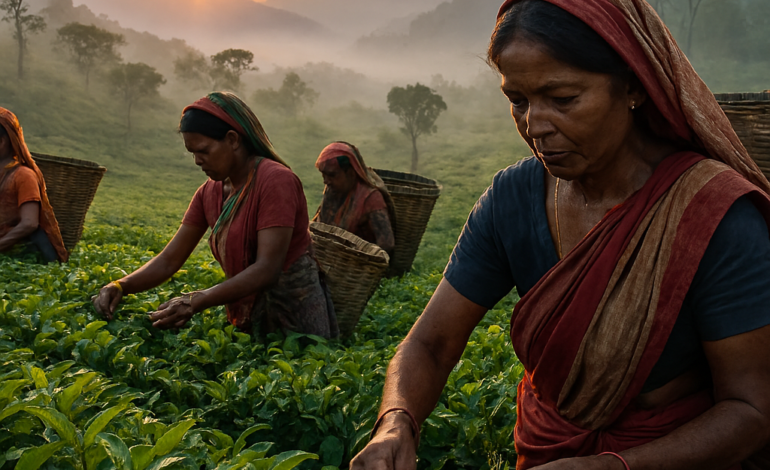

Bangladesh Tea Workers Trapped in Generational Poverty Despite Industry Growth
Bangladesh’s tea industry has long been a cornerstone of the country’s agricultural sector and export earnings. Stretching across the lush hills of Sylhet and Chittagong, tea estates have historically shaped regional economies and provided employment to millions. Yet a recent social media post left a stark contradiction: despite the industry’s contributions, many tea workers remain trapped in generational poverty, facing low wages, harsh quotas, and a lack of basic rights such as land ownership.
This exposed paradox has renewed global focus on ethical supply chains and labor rights in commodity sectors where production and profit often outpace improvements in working conditions. As global consumers demand greater transparency from brands, Bangladesh’s tea workers’ struggle highlights broader concerns about labor exploitation, rural poverty, and the responsibilities of both domestic employers and international buyers.
A Workforce of Millions With Little Progress
Bangladesh produces an estimated 80 million kilograms of tea annually, supplying both domestic consumption and international markets. The industry employs hundreds of thousands of workers, with a significant portion engaged in manual tea plucking, processing, and estate maintenance. Tea plantations are not only workplaces but entire communities where workers and their families live, often across generations.
Despite this scale, the BHRRC report points to systemic issues that keep many families in chronic hardship:
- Low wages that fall below living wage standards
- High production quotas that drive long workdays with limited compensation
- Lack of land rights or secure housing for workers and their families
- Insufficient access to healthcare, education, and social security protections
The combined effect is a cycle where children of tea workers grow up with limited opportunities to break out of poverty, even as the industry continues to grow and export value increases.
Low Wages and Harsh Quotas
One of the most pressing issues highlighted in the report is the persistently low wage structure for tea workers. In many estates, workers are paid piece rates tied to the amount of tea plucked, rather than a guaranteed living wage. This system incentivizes speed and productivity but fails to guarantee adequate pay.
For many women workers, who make up a large share of tea pluckers, meeting daily quotas requires grueling physical effort under varying weather conditions. Falling short of quotas can lead to reduced take-home pay, creating financial insecurity and additional pressure on families.
Even when estates increase production or profits rise due to higher global tea prices, improvements in worker remuneration have lagged. The result is a workforce that produces significant value for employers without seeing corresponding gains in income or quality of life.
Lack of Land Rights and Economic Vulnerability
In many tea estate communities, workers and their families live on land owned by the estate companies. While this model provides housing in the short term, it also means that workers rarely acquire formal ownership of the land they occupy. Without land titles, they cannot build wealth through property ownership, use land for agriculture, or secure collateral for loans.
This lack of land rights has cascading effects on economic stability. Families cannot expand into smallholder cultivation or diversify income sources. Children’s education and long-term economic opportunities are constrained, reinforcing a cycle of dependence and vulnerability.
In countries around the world, secure land rights are recognized as a foundation for rural development and poverty reduction. The absence of such rights for Bangladesh’s tea workers underscores structural inequality within one of the country’s oldest agrarian industries.
Barriers to Social Services and Workers’ Rights
Tea estate workers frequently face limited access to social services. While estates may provide basic facilities such as worker housing and primary schooling, these services often fall short of national standards for healthcare, education, sanitation, and social protection.
The BHRRC report also highlights concerns about the enforcement of labor rights. Workers who seek to organize, raise grievances, or demand better wages may encounter resistance from management. Trade union representation, where it exists, has often struggled to gain traction, particularly in remote estate regions.
The broader context is a regulatory environment where labor protections exist on paper but are unevenly enforced in practice. As a result, many workers cannot fully exercise their rights to collective bargaining, grievance redress, or improved workplace safety.
Global Supply Chain Responsibility
Bangladesh’s tea is exported to numerous markets, including Europe, North America, and the Middle East, where consumers increasingly expect sustainable, ethical supply chains. Retailers and brands sourcing tea from Bangladesh are under growing pressure to ensure that the products they sell do not contribute to human rights abuses or extreme poverty.
The BHRRC’s report underscores the need for multinational companies and global buyers to engage more actively with labor conditions in tea estates. Supply chain due diligence is no longer a matter of compliance alone; it has become a business imperative linked to brand reputation, consumer trust, and long-term viability.
Global labor standards, including those set by the International Labour Organization (ILO), call for living wages, non-discrimination, and freedom of association. Meeting these standards is both a moral obligation and a practical necessity for companies seeking to align with environmental, social, and governance (ESG) criteria.
Steps Toward Improvement
Addressing the structural challenges in the tea sector requires coordinated action by employers, government agencies, civil society, and international partners. Some potential pathways for improvement include:
1. Raising Wage Standards
Establishing minimum wage benchmarks that reflect living costs, rather than productivity quotas alone, could reduce extreme hardship and improve workers’ quality of life.
2. Strengthening Land Rights
Legal frameworks that allow workers to acquire land ownership can strengthen economic stability and allow families to diversify livelihoods.
3. Enhancing Access to Education and Healthcare
Improving support for schools, health clinics, and social services in estate regions would help break the cycle of intergenerational poverty.
4. Supporting Worker Organization
Encouraging and protecting trade union activity ensures that workers can collectively negotiate for fair wages and safer working conditions.
5. Supply Chain Accountability
Global buyers and retailers should conduct robust supply chain audits and partner with estates to implement improvement plans that uplift wages and rights.
Each of these approaches requires political will, investment, and sustained partnership among stakeholders committed to human rights and sustainable economic development.
Lessons From Other Tea Producing Nations
Comparative examples from other tea producing countries offer valuable insights. Nations such as Sri Lanka and Kenya have grappled with similar challenges in their tea sectors, with mixed results:
- Some estates in Sri Lanka have experimented with profit sharing and worker cooperatives to improve income distribution.
- Kenya has emphasized smallholder tea production, allowing farmers greater autonomy and market access.
- In India, movements to unionize and secure better wages in Darjeeling and Assam have yielded localized improvements.
While no single model offers a perfect blueprint, these comparative experiences demonstrate that structural reforms and worker empowerment supported by government policy and market incentives can produce tangible benefits.
The Human Stories Behind the Numbers
Behind the statistics and structural analysis are real people and families whose daily lives reflect the persistent challenges of estate living. Workers describe long hours of manual labor with limited financial rewards. Parents speak of aspirations for their children’s education, tempered by economic constraints. Elderly workers recount years of service without corresponding improvements in housing, healthcare, or economic security.
These deeply personal narratives underscore that poverty in the tea sector is not merely a macroeconomic issue; it affects basic human dignity and access to opportunity.
Toward a More Equitable Future
Bangladesh’s tea industry remains a vital part of the national economy and global commodity trade. Yet as the BHRRC report highlights, this economic success coexists with persistent inequality, generational poverty, and labor conditions that fall short of fundamental human rights standards.
Addressing these challenges is not only an ethical imperative but also a strategic necessity. Empowering tea workers with fair wages, secure rights, and access to essential services can strengthen the industry’s sustainability, enhance global market reputation, and improve the livelihoods of hundreds of thousands of people.
For consumers, brands, and policymakers alike, the story of Bangladesh’s tea workers is a powerful reminder that ethical consumption begins with deep attention to the lives of those who produce the goods we value.