




Bangladesh Renames RAB to SIF: What the New Special Intervention Force Means for Law Enforcement
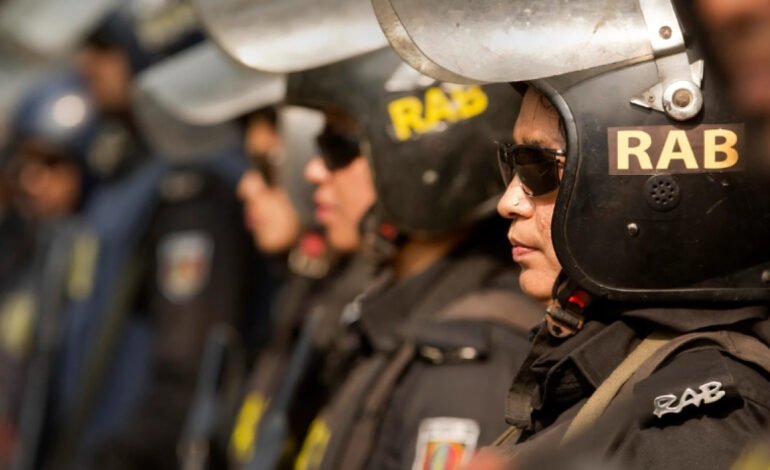
The government has formally approved a change in the name of the Rapid Action Battalion (RAB), one of the country’s most prominent law enforcement units. The agency will now be known as the Special Intervention Force (SIF), signaling a government effort to revamp its image and operational identity after years of domestic and international scrutiny.
The decision was announced by Home Advisor Jahangir Alam Chowdhury following a meeting of the Core Committee on Law and Order at the Ministry of Home Affairs. The name change, he said, reflects broader institutional reforms, and will be followed by changes in uniforms and all official references to the unit.
Origins and Role of RAB
The Rapid Action Battalion was formed on March 26, 2004 during the tenure of a BNP-led coalition government, in response to rising militancy and concerns about law and order in many parts of the country. Officials from the police, army, navy, air force, Border Guard Bangladesh (BGB), coast guard, Ansar and Village Defence Party (VDP) were brought together to create a specialised force capable of rapid response to serious crime and terror threats.
Over the years, RAB gained a reputation for carrying out high-profile operations against organised crime, militancy, and serious violence. It also became one of the most well-known units in Bangladesh’s security architecture, often at the forefront of counterterrorism and anti-drug operations.
Why the Name Change Now?
The decision to rename RAB to the Special Intervention Force comes after more than two decades since the force’s establishment. According to the Home Advisor, the change has received official approval and will be enacted through a government order. Along with the new name, personnel are expected to adopt updated uniforms and insignia.
While specific reasons for selecting the new name were not detailed in the initial announcement, observers see the change as part of a broader governmental attempt to address criticism and reshape public perceptions of elite security units, as well as to modernise institutional identities following recent political and administrative transitions.
International Scrutiny and Rights Concerns
Over the years, RAB drew intense criticism from international human rights organisations and certain diplomatic missions, which alleged that it had been involved in numerous extrajudicial killings, unlawful detentions, and abuses in the name of “crossfire” or “shootouts.” Human Rights Watch and other groups repeatedly called for serious reform and accountability at RAB, with some calling for its dissolution.
In December 2021, the U.S. government imposed sanctions on RAB and several current and former officials under the Global Magnitsky Act, citing serious human rights concerns. These sanctions contributed to a reduction in reported “crossfire” incidents, although they remained controversial among different public and policy circles.
Moreover, in an official human rights report on violations during Bangladesh’s July 2024 Uprising, the UN Office of the High Commissioner for Human Rights (OHCHR) recommended the abolition of RAB, alongside limiting another security force, the Border Guard Bangladesh (BGB), to its core border protection responsibilities. The report also called for clearer limits on the military intelligence agency (DGFI).
Rather than disbanding the force as some international observers suggested, the interim government led by Chief Adviser Muhammad Yunus appears to be repositioning it with a new name, while retaining its mission and personnel.
What the Special Intervention Force (SIF) Will Do
Although the announcement focused on the renaming, existing public information suggests that the new Special Intervention Force will take over RAB’s duties in maintaining public order and responding to serious crime across Bangladesh. These typically include:
- Rapid response to organised crime and terror threats
- Anti-narcotics and anti-trafficking operations
- High-risk arrests and specialised raids
- Collaboration with police, military, and other law enforcement units
Officials indicated that the new uniforms will reflect a fresh institutional identity, which many see as an attempt to break from past controversies and emphasise professionalism, accountability and community engagement.
Domestic Reception and Expectations
Reactions to the name change are mixed in Bangladesh. Some observers, including security analysts and lawmakers, view the step as a symbolic reform that could help reshape public narratives around elite units, particularly in the context of political change and ongoing governance reforms.
Others say that a name change alone is not enough without accompanying structural reforms, such as enhanced training, oversight mechanisms, civilian accountability processes, and clearer definitions of operations. Critics argue that without these systemic changes, altering the name risks superficiality rather than substantive transformation.
Across civil society groups, there is also discussion about the need for greater transparency and accountability in the force’s operations, and for community trust to be restored through building bridges with the public rather than continuing divisive narratives.
Historical Context and Institutional Evolution
RAB’s creation in 2004 responded to very real concerns at the time related to militancy, armed conflicts, and rising crime. For two decades, it functioned as Bangladesh’s premier multi-agency force for complex field operations. It was often deployed alongside conventional police units and other specialised branches within the security services.
Through periodic changes in political leadership and shifts in law enforcement policies, RAB remained a constant presence in Bangladesh’s security landscape, particularly in urban centres such as Dhaka and Chattogram.
Now, with the transition to the Special Intervention Force, the government signals a new chapter, one that some officials describe as aligning elite security operations with modern nomenclature and perhaps modern operational doctrine.
International and Policy Implications
From an international perspective, the renaming will be watched closely by human rights organisations, diplomatic observers, and regional partners. Whether the change will be accompanied by policy shifts, new oversight mechanisms, or updated operational guidelines remains to be seen.
Some advocacy groups have welcomed efforts toward modernisation but continue to emphasise that protecting human rights and ensuring transparency should be core priorities of any elite force, regardless of name.
In policy circles, the dialogue now includes questions such as:
- Will the new force have revised rules of engagement?
- What role will civilian oversight play?
- How will training and operational evaluation be reformed?
Answers to these questions may determine whether the name change to SIF becomes a symbolic shift or a genuine milestone in institutional reform.
What Comes Next
The formal government order renaming RAB to SIF is expected soon, followed by updates to uniforms, official mandates, and legal references. The authority under which the force operates will remain rooted in national law enforcement frameworks, with collaboration across police, military, and specialised units.
For the people of Bangladesh, this moment represents both continuity in maintaining security and anticipation of how the new Special Intervention Force will perform in tomorrow’s complex security environment.
The emphasis from government leaders on peaceful celebrations and cooperation with citizens underscores a broader commitment to public safety as part of national governance priorities.
Bangladesh’s decision to rename the Rapid Action Battalion to the Special Intervention Force marks a significant institutional shift for one of its most prominent security units. While the title change is just one step, it comes amid longstanding debates over human rights, accountability, and the role of elite forces in public life. As the SIF assumes RAB’s duties, questions remain about how the force will evolve in practice. Whether this new chapter heralds deeper reforms will likely unfold in the months and years ahead as Bangladesh continues to balance security, civil liberties, and public trust.