


Bangladesh Poverty Crisis Deepens as War Threatens 1.2 Million People

Bangladesh Poverty Crisis Deepens as War Threatens 1.2 Million People
Bangladesh’s economic recovery is facing a serious threat as global conflict begins to ripple through domestic markets. According to the latest report by the World Bank, the ongoing Middle East war could push an additional 12 lakh (1.2 million) people into poverty, reversing years of progress in poverty reduction.
This alarming projection highlights how global geopolitical tensions even those far from Bangladesh can have profound consequences on the country’s economy, employment, and living standards.
A Fragile Recovery Under Threat
Bangladesh had been on a path toward economic recovery after years of global disruptions. Before the war, projections suggested that nearly 1.7 million people would move out of poverty. However, that number has now sharply dropped to just around 500,000, according to the World Bank.
This shift means millions of people who were expected to improve their living conditions will instead remain trapped in economic hardship.
The World Bank warns that the recovery outlook for 2026 is now at risk, with rising external pressures threatening to derail progress.
Poverty on the Rise: A Concerning Trend
Bangladesh has already been experiencing a steady increase in poverty rates over recent years. Data shows that:
- Poverty rose from 18.7% in 2022
- Increased to 21.4% in 2025
- Expected to worsen further due to global shocks
At the international poverty line of $3 per day, about 1.4 million people fell into poverty in 2025 alone.
The current conflict could accelerate this trend, pushing even more households below the poverty line.
Why the War Is Impacting Bangladesh
Although Bangladesh is not directly involved in the conflict, its economy is highly vulnerable to global disruptions. Several key factors explain why the impact is so severe:
1. Heavy Dependence on Imports
Bangladesh relies heavily on imported fuel and essential goods. Rising global energy prices due to the war are increasing import costs, which directly affect domestic inflation.
2. Inflation and Cost of Living
Inflation is currently around 8.5%, significantly reducing purchasing power for ordinary citizens.
As prices of fuel, transport, and food rise, low-income households are hit the hardest.
3. Weak Job Market
The World Bank estimates that around 600,000 jobs could be lost, further limiting income opportunities.
With fewer jobs and stagnant wages, more people are likely to fall into poverty.
4. Pressure on Remittances and Exports
Bangladesh depends heavily on remittances from workers in the Middle East. Disruptions in the region could reduce income flows, while weaker global demand may affect exports.
Slowing Economic Growth
The World Bank has revised Bangladesh’s GDP growth forecast for FY2025-26 down to 3.9%, compared to an earlier estimate of 4.6%.
This slowdown reflects:
- Reduced investment
- Lower consumption
- Global economic uncertainty
A weaker economy means fewer opportunities for job creation and income growth, further deepening poverty.
How War Fuels Poverty: The Economic Chain Reaction
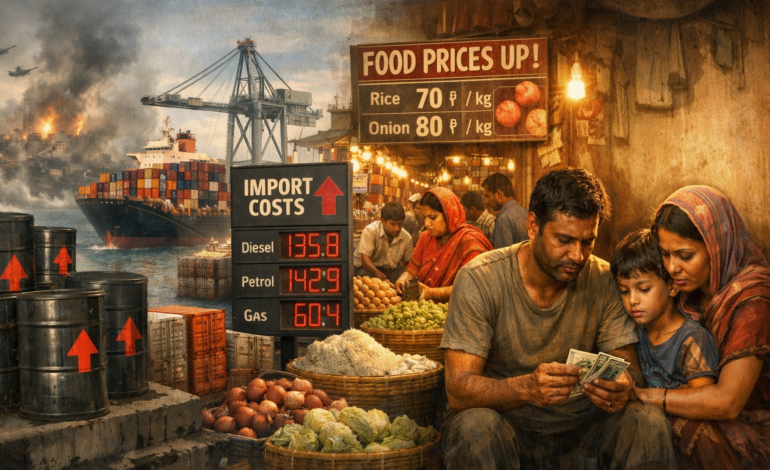
The impact of war on Bangladesh unfolds through a cascading economic chain reaction that begins far beyond its borders but quickly reaches everyday households. When global conflicts intensify, they often disrupt oil supply routes and create uncertainty in international markets, driving up fuel prices.
For a country like Bangladesh, which relies heavily on imported energy, this immediately raises import costs. As fuel becomes more expensive, transportation and production costs surge across multiple sectors.
Businesses pass on these higher costs to consumers, causing inflation to rise domestically. Essential goods such as food, electricity, and daily necessities become more expensive, putting significant pressure on household budgets.
For low- and middle-income families, whose earnings often remain stagnant, this leads to a sharp decline in purchasing power. What once covered basic needs is no longer sufficient, forcing families to cut back on nutrition, healthcare, and education.
At the same time, businesses facing higher operational costs and reduced consumer demand begin to slow down hiring or even lay off workers to survive. This weakens the job market, reduces income opportunities, and increases financial insecurity.
As incomes shrink and expenses rise, more people are pushed below the poverty line, creating a cycle that is difficult to break. This chain reaction disproportionately affects low-income and vulnerable populations, who have little savings or social protection to absorb such shocks.
Historically, similar global conflicts have triggered comparable economic disruptions, leading to rising food prices, increased transport costs, and a steady decline in real incomes patterns that are now beginning to emerge once again in Bangladesh.
Inequality and Vulnerability
The crisis is not affecting everyone equally. The poorest segments of society are facing the greatest risks.
According to the World Bank:
- Inequality is expected to increase
- The Gini index may rise further
- Vulnerable groups have limited capacity to absorb shocks
Millions of Bangladeshis already live close to the poverty line, meaning even small economic disruptions can push them into poverty.
Bangladesh’s Economic Strengths at Risk
Over the past two decades, Bangladesh has been considered a success story in poverty reduction, lifting millions out of poverty through economic growth and industrial expansion.
However, recent trends suggest that these gains are now under pressure.
Key challenges include:
- High inflation
- Weak financial sector
- Limited policy flexibility
- Sluggish job creation
The war is amplifying these existing vulnerabilities, making recovery more difficult.
What Needs to Be Done
Experts suggest that Bangladesh must take urgent steps to mitigate the impact of global shocks:
1. Strengthening Economic Stability
Policies to control inflation and stabilize the currency are critical.
2. Supporting Vulnerable Populations
Expanding social safety nets can help protect low-income households.
3. Boosting Job Creation
Investment in industries and SMEs can generate employment opportunities.
4. Diversifying Energy Sources
Reducing dependence on imported fuel can minimize future risks.
A Wider Crisis
Bangladesh is not alone in facing these challenges. Across South Asia, economies are slowing due to the conflict, with rising energy costs and inflation affecting multiple countries.
However, developing countries like Bangladesh are more vulnerable due to limited financial resources and higher dependence on imports.
Looking Ahead
The World Bank’s warning that 12 lakh people may fall into poverty is a stark reminder of how interconnected the global economy has become.
For Bangladesh, the ongoing war is not just a distant geopolitical issue, it is a direct economic threat affecting growth, jobs, and livelihoods.
While the country has shown resilience in the past, the current crisis demands swift and strategic action. Without effective policy responses, Bangladesh risks losing years of progress in poverty reduction and economic development.