




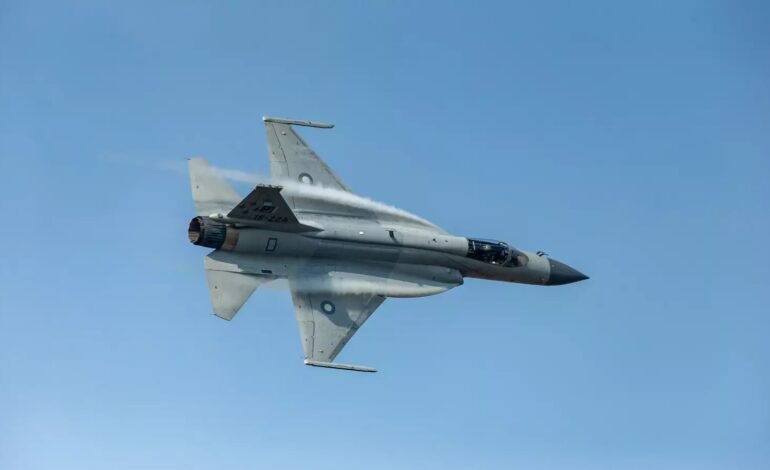

Bangladesh–Pakistan Discuss JF-17 Fighter Jet Deal: A Strategic Shift in South Asian Defence Relations
Bangladesh and Pakistan have entered high-level talks over a potential defence agreement that could see Dhaka acquire JF-17 Thunder fighter jets from Islamabad in a major step toward deeper military cooperation. The discussions, held between the Bangladesh Air Force and the Pakistan Air Force (PAF) leadership in Islamabad, signal not only a potential arms procurement but also an emerging realignment in defence ties between the two South Asian nations.
The talks come amid broader efforts by Pakistan to expand its defence exports and by Bangladesh to modernise its air combat capabilities. While no final deal has been signed, the engagement reflects evolving strategic considerations in a region where military, diplomatic, and economic priorities are increasingly interconnected.
High-Level Military Engagement in Islamabad
On January 6, 2026, Air Chief Marshal Hasan Mahmood Khan, Chief of Air Staff of the Bangladesh Air Force (BAF), met with Air Chief Marshal Zaheer Ahmed Babar Sidhu, head of the Pakistan Air Force (PAF), at the PAF headquarters in Islamabad. The meeting underscored the importance both countries place on strengthening defence relations.
According to a statement issued by the Inter-Services Public Relations (ISPR), Pakistan’s military media wing, detailed discussions were held on the potential procurement of JF-17 Thunder fighter jets, along with broader cooperation opportunities such as pilot training, maintenance support, and capacity building.
This engagement included ceremonial honours and substantive exchanges on operational integration, reflecting a mix of diplomatic courtesy and strategic planning. Islamabad also assured fast-tracked delivery of Super Mushshak trainer aircraft and outlined a comprehensive training and support ecosystem for Bangladesh’s aircrew and technical personnel.
What Is the JF-17 Thunder?
The JF-17 Thunder is a multi-role combat aircraft jointly developed by the Pakistan Aeronautical Complex (PAC) and China’s Chengdu Aircraft Corporation (CAC). Designed as a cost-effective frontline fighter, the JF-17 has been marketed internationally for its balance of performance, durability, and affordability when compared to more expensive Western platforms.
The single-engine fighter is capable of air-to-air and air-to-ground missions, with variants featuring modern avionics, radar systems, and weapons integration suitable for diverse combat roles. Pakistan has deployed these jets in operational environments, including recent engagements with India, which Islamabad cites as proof of their reliability.
Bangladesh’s Defence Modernisation Needs
Bangladesh has long sought to modernise its air combat fleet under its Forces Goal 2030 strategy, a comprehensive defence development plan launched in 2009 and updated periodically to reflect evolving needs. The Air Force’s current fighter inventory predominantly consists of older aircraft, including Chinese F-7s and Russian MiG-29s, which face growing limitations in avionics, weaponry, and overall capability.
To address these gaps, Dhaka has pursued several aircraft procurement avenues in recent years. In late 2025, the Air Force signed a Letter of Intent (LOI) for the purchase of Eurofighter Typhoon jets from Italy’s Leonardo, representing a strategic move toward advanced fourth-generation aircraft. Prior to that, Bangladesh had explored deals for Chinese J-10CE fighters.
In this context, the JF-17 offer presents an additional, cost-conscious option, one that could complement other procurement efforts and provide flexibility in fleet composition while expanding defence cooperation with Pakistan and China.
Potential Scope and Benefits of a JF-17 Deal
While the talks are still in early stages, the potential agreement could involve the acquisition of 20 to 32 JF-17 jets, according to aviation observers familiar with the discussions. This scale aligns with the BAF’s long-term requirement to retire older aircraft and maintain continuous air defence coverage.
Beyond aircraft procurement, the discussions include several key elements:
Pilot Training and Capacity Building: Pakistan has offered basic to advanced pilot instruction within its air training programmes, potentially enhancing Bangladeshi operational skills.
Maintenance and Technical Support: Long-term sustainment mechanisms would help ensure availability and reliability of the jets.
Radar and Air Defence Integration: Talks touched on integrating modern air-surveillance systems to strengthen Bangladesh’s airspace monitoring.
Trainer Aircraft Supply: Fast-tracked delivery of Super Mushshak trainers would support pilot development.
These combined elements could accelerate Bangladesh’s air force modernisation while building institutional interoperability between the two air forces.
Historical Background: How Relations Have Evolved
Bangladesh and Pakistan share a complex history shaped by the 1971 Liberation War, which resulted in Bangladesh’s independence. Diplomatic and defence relations have seen periods of strain and rapprochement since then.
In recent years, ties began to improve after the political landscape in Dhaka shifted following the mass protests in 2024 that led to the departure of former Prime Minister Sheikh Hasina and subsequent leadership under Nobel laureate Muhammad Yunus. Renewed engagement has included the resumption of direct flights between Islamabad and Dhaka after more than a decade, strengthening people-to-people and economic links.
These developments have paved the way for greater defence cooperation, but they also require careful navigation given the historical context and regional sensitivities.
Strategic Implications for South Asia
The potential JF-17 deal between Bangladesh and Pakistan carries strategic implications beyond bilateral cooperation.
1. Regional Defence Dynamics with India
India has closely watched the emerging talks, with some analysts noting that enhanced military ties between Dhaka and Islamabad could alter the security calculus in the region. Given India’s historical and strategic concerns about Pakistan’s defence relationships, any significant arms procurement by Bangladesh from Pakistan is likely to be scrutinised in New Delhi.
2. Diversification of Defence Partnerships
Bangladesh’s interest in a range of aircraft from Typhoons to J-10CEs and potentially JF-17s, reflects a deliberate strategy to diversify defence partnerships. This approach reduces reliance on any single supplier and potentially increases bargaining leverage in long-term procurement negotiations.
3. Expansion of Pakistan’s Defence Exports
For Pakistan, expanding exports of the JF-17 is part of a broader effort to strengthen domestic defence manufacturing and reduce dependence on foreign financial assistance. The jet has seen interest from multiple countries, including Azerbaijan and Libya’s National Army.
Next Steps: What to Watch
As of early January 2026, the Bangladesh–Pakistan JF-17 talks remain exploratory. No formal purchase agreement has been sealed, and both sides are likely to continue technical and diplomatic discussions over the coming months.
Key developments to monitor include:
Confirmation of the number and configuration of JF-17 aircraft Bangladesh might procure.
Formalisation of support agreements covering training, maintenance, and logistics.
Impact on Bangladesh’s other air force procurement programmes, including Typhoons and J-10CEs.
Responses from regional capitals, especially India, which could influence diplomatic and defence policies.
The direction these talks take will not only shape the future of Bangladesh’s air defence capabilities but also influence the broader balance of military cooperation in South Asia.
Conclusion
The ongoing discussions between Bangladesh and Pakistan over a potential JF-17 fighter jet deal mark a significant moment in defence diplomacy. While rooted in practical needs including fleet modernisation and enhanced training support, the talks also reflect deeper shifts in regional strategic relationships and the evolving security priorities of both nations.
As leaders pursue strengthened bilateral ties, the outcome of these negotiations could have lasting implications for regional defence postures, air power dynamics, and South Asia’s geopolitical landscape.