




Bangladesh Liberation War Part-Two: From Brutal Crackdown to a Nationwide Movement
The Bangladesh Liberation War remains one of the most defining struggles for freedom in modern South Asian history. While Part One explored the political roots of the conflict, including the language movement, rising Bengali nationalism and the flawed election process of 1970, Part Two focuses on how the situation escalated into a full scale war. This chapter highlights the violent crackdown of March 1971, the formation of a national resistance movement, and the global response that gradually shaped the direction of the conflict.
Operation Searchlight and the Breakdown of Negotiations
By early March 1971, talks between Pakistani President Yahya Khan and Sheikh Mujibur Rahman had failed to resolve the crisis. Although the Awami League had won a majority in the 1970 election, negotiations were repeatedly delayed. Many international observers expected a political compromise, but the Pakistani military leadership secretly planned a military operation to suppress the autonomy movement.
On the night of 25 March 1971, the Pakistani army launched a coordinated assault across Dhaka. Known as Operation Searchlight, the attack targeted political leaders, students, intellectuals, and unarmed civilians. The goal was to silence the rising demand for independence by removing key voices of resistance.
This night marked a turning point in the political crisis. The crackdown showed that a peaceful solution was no longer possible. Global media, though restricted, began reporting accounts from survivors, diplomats, and journalists who escaped Dhaka. The international community started becoming aware of the scale of repression inside East Pakistan.
Declaration of Independence
Moments before Sheikh Mujibur Rahman was arrested, Major Gen Ziaur Rahman issued a message calling for independence. This announcement was relayed through various channels, including radio transmissions from Dhaka and later through Bengali leaders who escaped arrest. Although Mujib was taken to West Pakistan and held in custody, his message became the guiding spirit of the liberation movement.
Meanwhile, key political figures who managed to escape the crackdown regrouped near the Indian border. On 10 April 1971, the provisional government of Bangladesh was formed in Meherpur. This government in exile declared Mujib as the President and Tajuddin Ahmad as the Prime Minister. The new political leadership gave the resistance movement a clear structure and legitimacy, which would later be recognized internationally.
Formation of the Mukti Bahini and the Rise of Guerrilla Warfare
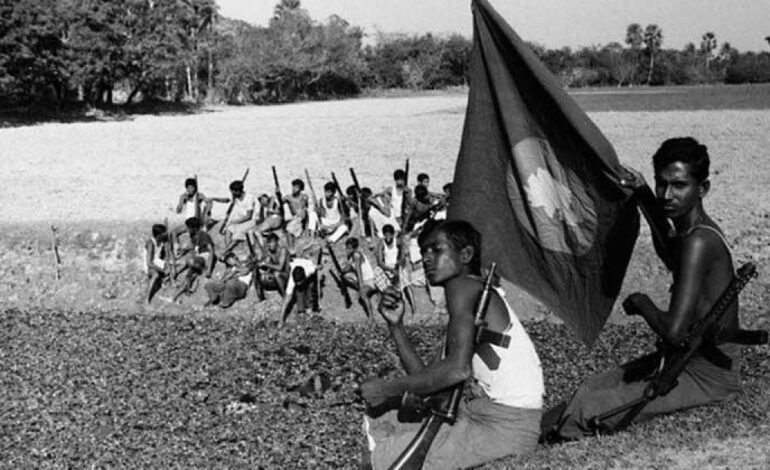
In the early weeks of the conflict, thousands of civilians crossed into India seeking safety. Many among them joined the Mukti Bahini, the Bengali liberation force. The Mukti Bahini was not a single unit but a collective name for various resistance groups, including defected soldiers, students and local volunteers.
The resistance developed into two main categories:
Conventional Forces
Defected Bengali soldiers and officers formed organized brigades. They received training, equipment, and logistical support from India. Their operations involved border defense, capturing territory, and engaging the Pakistani army directly.
Guerrilla Units
Young volunteers and freedom fighters carried out hit and run attacks, sabotage operations and targeted missions inside occupied cities and towns. These highly mobile groups were crucial in weakening supply lines and creating psychological pressure on the occupying forces.
The combination of conventional and guerrilla tactics allowed the Mukti Bahini to grow stronger as the months progressed. International journalists described the fighters as highly motivated despite limited resources, a contrast to the occupying army which struggled to control a large, hostile population.
Humanitarian Crisis and Global Attention
By mid 1971, one of the largest human displacements of the twentieth century was unfolding. Millions of Bengalis fled to India, escaping violence and economic breakdown. Refugee camps spread across Indian states bordering East Pakistan, placing enormous pressure on local resources.
Global media outlets such as the BBC, The New York Times, Time Magazine and major European broadcasters began reporting extensively on the refugee crisis. Images and testimonies created widespread sympathy for the Bengali cause and raised questions about the political and humanitarian failing inside Pakistan.
Several international figures, including US senators, European lawmakers and Indian leaders, described the situation as a profound humanitarian emergency. International humanitarian agencies began mobilizing relief efforts, although access to the interior of East Pakistan remained limited.
The crisis also forced major powers to review their geopolitical positions. While some governments maintained strategic ties with Pakistan, public opinion across many countries shifted strongly in favour of Bangladesh.
Role of India and Regional Geopolitics
Throughout 1971, India played an increasingly central role. The arrival of millions of refugees placed India under serious economic and social pressure. At the same time, the Indian government recognized that the conflict could destabilize the region unless a political solution emerged.
India provided sanctuary to the provisional government of Bangladesh, allowed training camps for the Mukti Bahini, and highlighted the crisis at international forums including the United Nations. Prime Minister Indira Gandhi toured several countries to raise global awareness and seek diplomatic support for the Bengali cause.
Meanwhile, the Cold War influenced how global powers responded. The United States maintained close relations with Pakistan, partly due to strategic cooperation involving China. The Soviet Union, on the other hand, remained supportive of India. In August 1971, India and the Soviet Union signed a Treaty of Peace, a significant diplomatic shift that reshaped the balance of power in South Asia.
This global context shaped the later stages of the liberation war, setting the stage for an eventual military confrontation.
Strengthening of the Resistance and the Turning of the Tide
By late 1971, the Mukti Bahini became more organized, confident, and better supported. Their operations intensified, and they successfully captured key border areas. Sabotage missions inside major cities weakened the occupying forces and disrupted administrative control.
International pressure also increased. Foreign journalists continued reporting from refugee camps and affected areas, and global public opinion grew sharply critical of the situation in East Pakistan.
Inside Bangladesh, ordinary citizens continued resisting in various ways, including providing shelter, information, and logistical support to the freedom fighters. The sense of national identity and unity strengthened, fueling a spirit of determination that would ultimately change the course of the conflict.
Conclusion
Part Two of the story of the Bangladesh Liberation War explains how a political crisis transformed into a full national struggle for independence. With the brutal crackdown of March 1971, the formation of the provisional government, the rise of the Mukti Bahini, and increasing global attention, Bangladesh entered a decisive phase of its liberation journey.
In Part Three, the final chapter will explore the international military intervention, the decisive battles, the fall of Dhaka, and the birth of an independent Bangladesh on 16 December 1971.