


“Shopno Jabe Bari Amar”: A Song That Echoes the Journey to Home During Eid

“Shopno Jabe Bari Amar”: A Song That Echoes the Journey Home During Eid
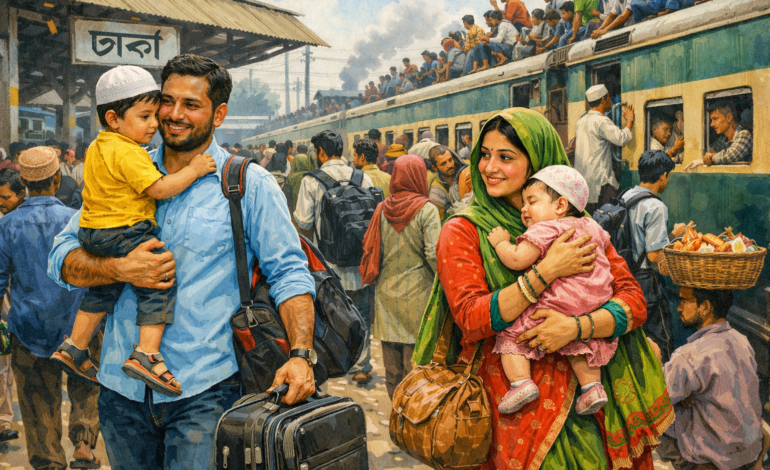
As Eid approaches, Dhaka begins to change. The city that usually moves with relentless speed and its streets choked with traffic, its offices buzzing with activity gradually starts to slow down. Bus terminals overflow with passengers, train stations echo with announcements, and highways leading out of the capital turn into rivers of vehicles.
Every year, millions leave Dhaka ahead of Eid. Students, young professionals, workers, and small business employees all begin the same journey to return home.
For them, Eid is not only a religious festival. It is a reunion long awaited. And somewhere in the background on buses, in shops, or through a phone speaker, the familiar melody of a song often plays, quietly capturing the emotion of the moment.
“Mon bole chol phire abar…” For many travelers, the line from the beloved Eid song Shopno Jabe Bari Amar by Milon Mahmud feels like it is written for them. Because their hearts are saying the same thing. Go back home.
Dhaka: A City of Opportunities and Loneliness
Dhaka attracts people from across Bangladesh with promises of education, employment, and opportunity. Every year, thousands of students move to the capital to attend universities. Young graduates arrive hoping to build careers. Workers migrate in search of better livelihoods.
The city offers dreams but it also demands sacrifices. Many live far away from their families, often in cramped dormitories, shared apartments, or small rented rooms. Life in the capital can feel isolating.
Days are consumed by classes, office work, deadlines, and commuting through endless traffic. Nights are often spent alone, scrolling through phones or speaking briefly with family members hundreds of kilometers away.
The absence of family becomes especially noticeable during festivals. While Dhaka’s streets remain busy, many residents quietly carry a sense of homesickness. That is why Eid feels different. It brings hope. It brings the promise of going home.
The Countdown to Eid Travel
Weeks before Eid, conversations across Dhaka begin to change. In offices, university campuses, and restaurants, people ask the same question: “When are you going home?”
Students eagerly wait for their semester breaks. Office workers calculate their leave days carefully. Families call repeatedly, asking when their loved ones will arrive. But traveling home is rarely easy.
Securing tickets becomes a challenge as demand skyrockets. Train ticket counters witness long lines stretching for hours. Bus terminals become crowded with travelers hoping to find seats. Online booking websites slow down under heavy traffic.
Yet even after hours of waiting or refreshing apps, people remain determined. Because the ticket in their hands represents something precious. A reunion, return and a dream fulfilled.
Students Carrying Months of Homesickness
Among those leaving Dhaka, university students are perhaps the most emotional travelers. Many come from distant districts like Rajshahi, Rangpur, Barishal, Sylhet, Khulna, living in dormitories or rented accommodations throughout the academic year.
For months, they live independently, learning to manage studies, finances, and life away from family. But the distance often brings loneliness. The sound of family dinners, laughter of siblings, and warmth of parents become memories replayed through phone calls.
When Eid approaches, the excitement becomes overwhelming.
Students begin packing days in advance. Some buy small gifts for their parents. Others simply bring their presence, knowing that returning home is itself the greatest gift. Inside buses or trains leaving the capital, many quietly listen to music through earphones.
Sometimes, the familiar tune appears again. “Shopno jabe bari amar…” The words feel deeply personal because their dream, too, is going home.
Young Professionals Racing Against Time
For young job holders, the journey home comes with different pressures. Many offices remain open until the final days before Eid. Deadlines must be met, reports completed, and responsibilities finished before leave is granted.
As a result, young professionals often rush from offices directly to bus terminals or railway stations.
Some manage to book tickets weeks in advance. Others rely on last-minute options—standing in crowded buses or trains for hours.
Despite the exhaustion, their determination never fades because for many of them, Eid may be the only time in the year when they can spend several days with family.
Parents wait eagerly for their children to return. Childhood friends plan gatherings. Neighborhood streets prepare for celebrations. For the workers returning home, the journey becomes a release from the intense pace of city life.
It is a moment to breathe again.
Workers Carrying Gifts and Gratitude
Many immigrants and workers who spend most of the year abroad, supporting their families are also part of this. Many live modestly in shared accommodations, working long hours in shops, factories, or service jobs.
Throughout the year, they save money carefully. Eid becomes the moment when those savings transform into gifts.
Clothes for parents, toys for younger siblings, sweets for neighbors, small items packed carefully into bags. But these gifts carry emotional weight far greater than their cost.
The Great Exodus from Dhaka
In the final days before Eid, the city experiences what many call the great exodus. Highways leaving Dhaka become crowded with buses filled to capacity. Railway platforms overflow with passengers and luggage. Launch terminals buzz with activity as travelers head toward southern districts.
Traffic jams stretch for kilometers. Journeys that usually take four hours sometimes take ten. But passengers rarely complain. Inside buses and trains, strangers share snacks, stories, and laughter. The excitement of going home creates an unusual sense of unity among travelers.
Dhaka Falls Quiet
As millions depart, Dhaka slowly becomes quieter. Roads that are normally packed with vehicles become easier to navigate. Offices close for the holidays. Markets shut down earlier than usual.
The transformation is striking. The megacity that never sleeps suddenly feels calm. But the emptiness also tells a story as it reflects how many people living in Dhaka actually belong somewhere else.
Their hearts remain tied to towns and villages far beyond the capital.
The Meaning of Going Home
For those traveling home ahead of Eid, the journey carries a deeper meaning. It is not just about celebrating a festival. It is about reconnecting with family, identity, and belonging.
After months of navigating the challenges of life in Dhaka, crowded streets, demanding jobs, academic pressures—people return to places where they are not just workers or students.
They return as sons, daughters, siblings, and friends. And as buses roll across highways and trains disappear into the countryside, the feeling shared by millions can be summed up by the familiar words that have come to symbolize the Eid journey.
“Shopno jabe bari amar.”
For those leaving Dhaka tonight, the dream is simple. To go home. And to celebrate Eid surrounded by the people who matter most.