



Bangladesh Appeals to UN for Support in Fair Investigation into Hadi Murder Case

Bangladesh Appeals to UN for Support in Fair Investigation into Hadi Murder Case
The Government of Bangladesh has formally sought support from the Commissioner for Human Rights (OHCHR) to ensure a transparent, credible, and fair investigation into the murder of Shaheed Sharif Osman Hadi, a case that has drawn significant public attention and raised concerns over justice, accountability, and human rights.
The government’s request to the UN comes amid ongoing public discourse, and it underscores the seriousness with which authorities are treating the case. While the investigation is being led by national law enforcement agencies, Dhaka’s call for international engagement reflects a desire to strengthen confidence in the process among domestic and global observers.
What the Government Has Announced
The ministry of foreign affairs confirmed that Bangladesh has reached out to the United Nations to seek technical and advisory assistance in the Hadi murder investigation. A statement issued by the relevant authorities indicated that the appeal is aimed at ensuring that the probe is conducted comprehensively, professionally, and in accordance with international best practices.
Officials said that while Bangladesh retains full sovereignty over its legal and criminal justice systems, cooperation with international bodies can help reinforce transparency, impartiality, and public confidence in high-profile criminal investigations.
The government’s announcement also emphasised that the request is a standard diplomatic engagement rather than an admission of weakness. It is intended to bolster investigative capacities and to respond to public demands for a thorough and credible process.
Domestic Response and Public Sentiment
The murder of Hadi, a case that drew widespread attention across social and traditional media, triggered a range of responses from civil society, legal experts, and ordinary citizens. Many in Bangladesh have called for a rigorous and impartial investigation capable of delivering justice without delay.
Public expectations in Bangladesh’s digital and civic spaces highlight concerns about fair trial rights, the integrity of the judicial process, and the need to avoid missteps that might undermine the credibility of the outcome. In this context, Dhaka’s engagement with the UN is seen by supporters as a proactive measure to ensure that the investigation meets heightened scrutiny and remains free from undue influence.
Critics, however, have cautioned that international involvement must be carefully scoped to respect Bangladesh’s sovereignty and existing legal frameworks. Advocates for domestic control argue that Bangladesh’s justice system is capable of handling complex cases provided adequate resources and safeguards are in place.
This diversity of opinion illustrates the high level of public interest in how the case is handled not just for the specific circumstances, but for its broader implications on justice and governance in Bangladesh.
What “UN Support” Could Entail
While the government’s formal request to the United Nations has not specified the exact nature or scope of assistance sought, such cooperation typically includes technical support rather than full direct intervention.
Possible areas where UN support may be involved include:
- Forensic expertise: Guidance on scientific investigation methods.
- Legal and procedural advice: Ensuring adherence to best practices in criminal justice processes.
- Capacity building for law enforcement: Training in evidence handling and case documentation.
- Review and consultation: Exchange of experience from international legal and investigative bodies.
International and Diplomatic Dimensions
Bangladesh’s outreach to the UN carries a diplomatic element as well. In recent years, countries across South Asia have sought technical cooperation from international organisations to bolster institutional capacity in areas such as:
- Counter-terrorism investigations
- Human rights compliance
- Judicial reform
- Police training and accountability mechanisms
By engaging with the UN, Dhaka signals its willingness to align with international norms on justice and human rights, areas that are often monitored by global civil society and international partners.
While the appeal is rooted in a domestic case, the diplomatic dimension should not be overlooked. It reflects Bangladesh’s broader engagement with multilateral institutions and its desire to balance national sovereignty with global cooperation in legal and human rights arenas.
How Hadi Was Murdered
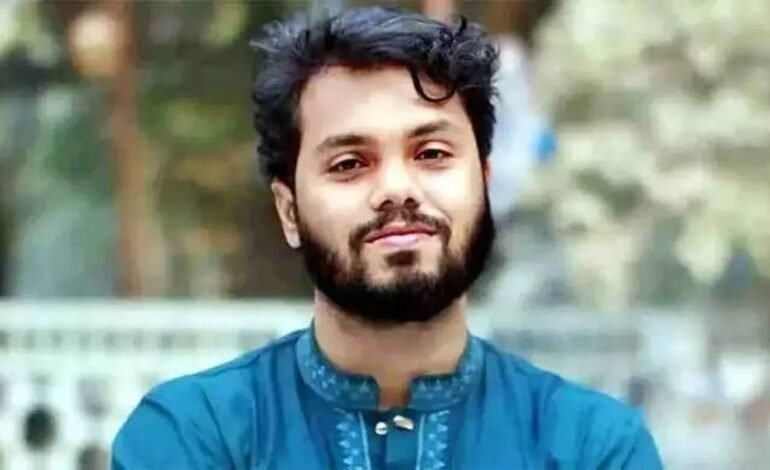
Osman Hadi, a prominent student activist and spokesperson for the group Inqilab Moncho, was shot on 12 December 2025 in Dhaka’s Bijoynagar area while he was travelling in a battery-powered rickshaw during a public appearance. According to police reports, the attackers arrived on a motorcycle, used a fake number plate, and opened fire at Hadi before fleeing the scene; authorities later recovered the motorcycle and the fake plate from a manhole nearby. Hadi was critically wounded in the incident and taken to hospital, after which he was flown to Singapore for further treatment. He died of his injuries on 18 December 2025, prompting nationwide calls for justice and a thorough investigation.
Human Rights and Due Process Considerations
International human rights bodies consistently emphasise the importance of fair trial rights, the prohibition of arbitrary detention, and transparent criminal procedures. These principles are also echoed in Bangladesh’s constitutional guarantees and legal provisions.
By seeking UN support, the government may be aiming to demonstrate its commitment to upholding these principles when public confidence in domestic processes is under significant scrutiny. Ensuring that investigations and any subsequent prosecutions remain transparent, impartial, and respectful of legal norms is a stated priority for a range of civil society groups.
At the same time, human rights advocates note that international engagement should be balanced with respect for domestic legal institutions. External support is most effective when it enhances not replaces national capacities.
Next Steps in the Investigation
As Bangladesh awaits a response from the United Nations on its request, key questions remain about how the future of the investigation will unfold. Some of the immediate priorities include:
- Clarifying the scope of international support
- Ensuring coordination between domestic investigators and external advisors
- Communicating progress to the public openly
- Maintaining due process safeguards as evidence is gathered
Authorities have indicated a willingness to cooperate fully with any advisory mechanisms that the UN may offer. At the same time, senior officials have reiterated that the criminal justice system remains sovereign and that all procedural steps will adhere strictly to national law.
Justice, Trust, and International Engagement
The Bangladeshi government’s appeal to the United Nations for support in the Hadi murder investigation represents a significant moment in the intersection of domestic justice and global standards. By seeking external expertise, Dhaka aims to strengthen the credibility of the process, respond to public concerns, and reinforce its commitment to upholding the rule of law.
As the case progresses, observers within Bangladesh and beyond will be watching how cooperation with international bodies can contribute to a transparent and accountable judicial outcome.