




Zamor: The Boy from Chittagong Who Made It to the French Revolution

The Boy from Chittagong Who Made It to the French Revolution
History often highlights kings, generals, and famous revolutionaries. Yet sometimes remarkable stories emerge from unexpected places. One such story is that of Louis-Benoît Zamor, a boy from Chittagong who was taken to Europe as a slave and later became involved in the French Revolution, which in one of the most defining political upheavals in world history.
Zamor’s life reads like a historical drama: from a child in Bengal to a servant in the French royal court, and ultimately a witness and participant in the revolutionary transformation that toppled the French monarchy.
A Child Taken from Chittagong
Louis-Benoît Zamor was born in the mid-18th century in Chittagong, then part of the Bengal region under colonial influence. At the time, the Indian Ocean slave trade was active, and children were often abducted and sold into slavery. Zamor was reportedly captured as a young boy and taken from Bengal by traders.
Historical accounts suggest he was transported to Europe by sea before eventually arriving in France. His journey reflects the darker side of global trade networks during the 18th century, where enslaved people from Asia and Africa were often displayed in European royal courts as exotic curiosities.
This unexpected journey would place Zamor at the heart of French aristocratic society.
Life in the Court of Louis XV
After arriving in France, Zamor eventually came into the possession of King Louis XV. The king later gifted him to Madame du Barry, his influential mistress.
Madame du Barry had Zamor baptised in the Church of Notre-Dame in Versailles and gave him the name Louis-Benoît Zamor. She also ensured that he received education, which was unusual for someone in his position at the time.
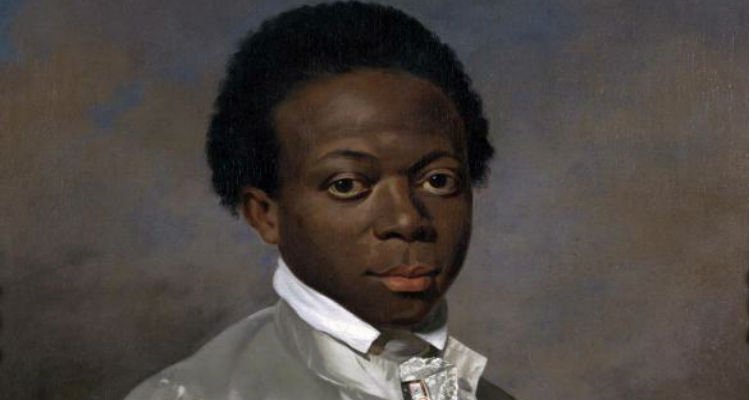
In the royal court, Zamor served as a pageboy. Court paintings and writings from that era show him dressed in elaborate clothing and accompanying du Barry during public appearances.
Despite being treated relatively well compared to many enslaved people, Zamor’s role remained largely symbolic. Like many individuals brought to Europe from colonies, he was often viewed as a curiosity rather than an equal member of society.
Yet his intelligence and independent personality were frequently noted by contemporaries.
Rising Tensions in Revolutionary France
By the late 18th century, France was experiencing severe political and economic crises. Growing inequality between the aristocracy and common people created widespread dissatisfaction.
In 1789, the French Revolution erupted, leading to protests, political turmoil, and eventually the overthrow of the monarchy. Revolutionary ideas such as liberty, equality, and fraternity spread rapidly across the country.
Zamor, who had spent years observing aristocratic life from within the royal court, became increasingly sympathetic to the revolutionary movement.
Many historians believe that his experiences in servitude may have shaped his political views.
Zamor Joins the Revolutionary Cause
As revolutionary fervor intensified, Zamor aligned himself with the Jacobins, one of the most radical political groups during the French Revolution. The Jacobins advocated strong republican ideals and were instrumental in the fall of the monarchy.
In a dramatic twist of history, Zamor reportedly provided information to revolutionary authorities about Madame du Barry, the woman who had once been his patron.
He accused her of maintaining connections with counter-revolutionary aristocrats who opposed the new political order.
These allegations contributed to du Barry’s arrest during the Reign of Terror, a period marked by intense political purges and executions. She was eventually tried and executed by guillotine in 1793.
Prison and Political Turmoil
Zamor’s revolutionary involvement did not guarantee safety. The chaotic political climate of the French Revolution meant that alliances changed quickly.
At one stage, he himself was arrested and imprisoned amid factional struggles between rival revolutionary groups.
However, he was eventually released after six weeks in custody. His survival during such a turbulent period was remarkable, considering the thousands who perished during the political purges.
Life After the Revolution
After the revolution settled and France transitioned through various political changes, Zamor faded from the political spotlight.
Historical records show that by 1815, he was living in Paris and working as a schoolteacher.
This final chapter of his life reflects a remarkable transformation from enslaved child to educator in one of Europe’s most important cultural capitals.
Zamor lived quietly in Paris until his death on 7 February 1820 at the age of about 58.
Despite his extraordinary life journey, his story gradually disappeared from mainstream historical narratives.
A Forgotten Link Between Bengal and Europe
Today, Zamor’s story is rarely discussed in Bangladesh or even in France. Yet it represents a unique historical connection between Bengal and one of Europe’s most important revolutions.
The French Revolution fundamentally reshaped modern political thought, influencing democratic movements across the world. Zamor’s involvement, though small in the grand scheme of events, symbolises the global dimensions of that transformation.
His life also highlights the complex intersections of colonialism, slavery, and political upheaval during the 18th century.
Chittagong’s Revolutionary Legacy
Interestingly, Chittagong later became a center of revolutionary activism in South Asia as well.
In the early 20th century, figures such as Surya Sen led the famous Chittagong Armoury Raid in 1930, challenging British colonial rule in India.
Although separated by more than a century, both Zamor and later revolutionaries from Chittagong demonstrate the region’s enduring connection to movements for political change.
Why Zamor’s Story Matters Today
Zamor’s life story remains relevant today for several reasons:
- Global history: It illustrates how individuals from colonial regions became part of major global events.
- Human resilience: Despite being enslaved as a child, Zamor carved out a place in European society.
- Historical connection: His story represents an early link between Bengal and European political movements.
In a broader sense, Zamor’s journey reflects how ordinary individuals often forgotten by mainstream narratives can become part of history’s most dramatic moments.
In a Nutshell
The story of Louis-Benoît Zamor is both extraordinary and little known. Born in Chittagong and taken to France as a child, he lived through the dramatic fall of the French monarchy and the rise of revolutionary politics.
From royal servant to revolutionary sympathiser and later a teacher in Paris, Zamor’s life journey crossed continents and social boundaries.
More than two centuries later, his story continues to remind us that history is shaped not only by powerful leaders but also by unexpected figures whose lives bridge cultures, continents, and revolutions.


